

Do the digital setup before the travel day
A phone in China is not only for communication. It may hold train tickets, maps, hotel addresses, translation, payment, ride-hailing, attraction orders, and emergency contacts. The goal is not to install every recommended app; it is to make the essential journey work if one account, card, or network fails.
Update the phone, free storage space, enable a secure screen lock, and confirm roaming, eSIM, or local-SIM options before departure. Save critical bookings and addresses offline. Account creation, supported phone numbers, app functions, and network access change, so verify them with the provider rather than relying on a fixed list.
Choose between roaming, travel eSIM, and local SIM
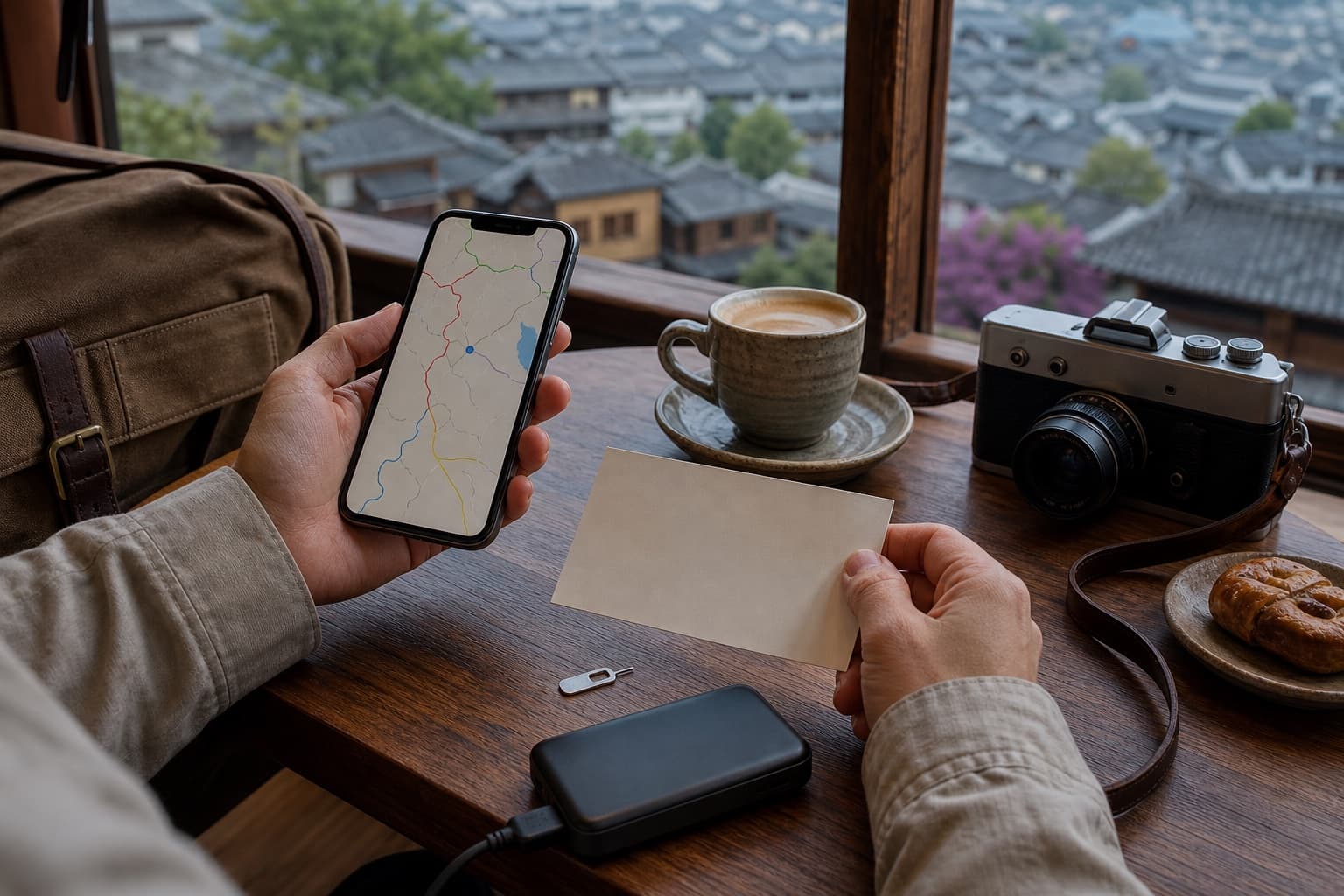
International roaming is usually the simplest because the traveler keeps the home number and can receive bank or account verification messages. A travel eSIM can be convenient on a compatible unlocked phone, but data routing, voice service, and access to services vary by provider.
A mainland Chinese SIM can provide a local number and domestic data. Purchase through an official telecom service point and expect real-name registration with the passport or another accepted document. Plans, activation, coverage, and tourist availability change.
Dual-SIM travelers should decide which line handles data, calls, and verification messages to avoid unexpected charges or missed codes.
Coverage is strongest where the route is easiest
Cities, airports, stations, and main corridors generally have strong mobile service. Remote valleys, mountain roads, trailheads, border areas, and rural guesthouses can have weak or intermittent coverage. A phone showing signal does not guarantee that a payment, map, or large file will load.
Download the next day’s route, booking, contact, and translation while connected to reliable service. Tell someone the expected return time before a remote hike or road segment. Hotel Wi-Fi can help, but it should not be the only way to access the address of the next hotel or the ticket needed to leave.
Build a small, useful app set
Payment: one verified mobile-payment option plus physical-card and cash backup
Rail: the official 12306 English service for passport verification and tickets
Air: the operating airline or trusted booking platform for live changes
Maps: a China-capable map plus saved Chinese addresses and offline references
Translation: downloaded Chinese–English language support and a prepared phrase or allergy card
Ride-hailing: a supported service with the hotel name and destination in Chinese
Communication: a confirmed method for guides, hotels, drivers, and emergency contacts
Weather: official forecast and local hazard or attraction notices
Chinese names and pins matter more than English spelling
The same hotel, station, gate, or village may appear under several English transliterations. Ask the property or operator for the Chinese name, full Chinese address, phone number, correct map pin, and preferred vehicle entrance. Save a screenshot that can be shown without internet.
For rural destinations, a map pin may indicate the village center rather than the actual guesthouse or trailhead. Confirm the final approach, walking distance, road condition, and pickup point. Do not navigate a closed mountain road or restricted route simply because a consumer map still displays it.
Create an offline travel packet

Store passport and visa copies, insurance details, train and flight orders, hotel confirmations, Chinese addresses, driver contacts, the daily itinerary, and emergency numbers in a folder that works without mobile data. Keep sensitive documents protected and share them only with trusted people who need them.
Carry a power bank and charging cable in hand luggage, subject to current airline and railway battery rules. A printed first-night address and emergency contact are still useful when the phone is lost, damaged, out of power, or locked.
Make sure a trusted person outside the trip can recover key account and itinerary information.
Network access and familiar services
Some websites, cloud services, messaging tools, and app features used outside mainland China may not work in the same way on every connection inside mainland China. Roaming or travel-data products can behave differently from a local SIM or hotel Wi-Fi, and provider policies can change.
Before travel, identify which services are essential for work, family contact, banking, health, and account recovery. Check legal, employer, and provider requirements and prepare an approved alternative. Do not publish a promise that a particular eSIM, roaming product, or technical workaround will always provide access.
Protect accounts while staying reachable
Use a strong device passcode, current software, official app stores, and account recovery methods you can access while abroad. Avoid unknown QR codes, unofficial app downloads, public charging prompts that request data access, and messages asking for passwords or one-time codes.
Bank and payment verification may depend on the home phone number. Keep that line active if needed and understand roaming charges. If the phone is lost, use another trusted device to lock or erase it, contact the carrier, and secure banking and payment accounts. Local police and the traveler’s embassy or consulate may be needed if the passport is also lost.
Before departure
Confirm the phone is unlocked and supports the chosen SIM or eSIM
Test payment and transport accounts without sharing security codes
Download offline language, map, and booking information
Save every hotel’s Chinese name, address, phone, and map pin
Carry a compliant power bank and charging cable
Keep the home number available if banks use it for authentication
Prepare one communication and payment backup that does not depend on the primary phone