
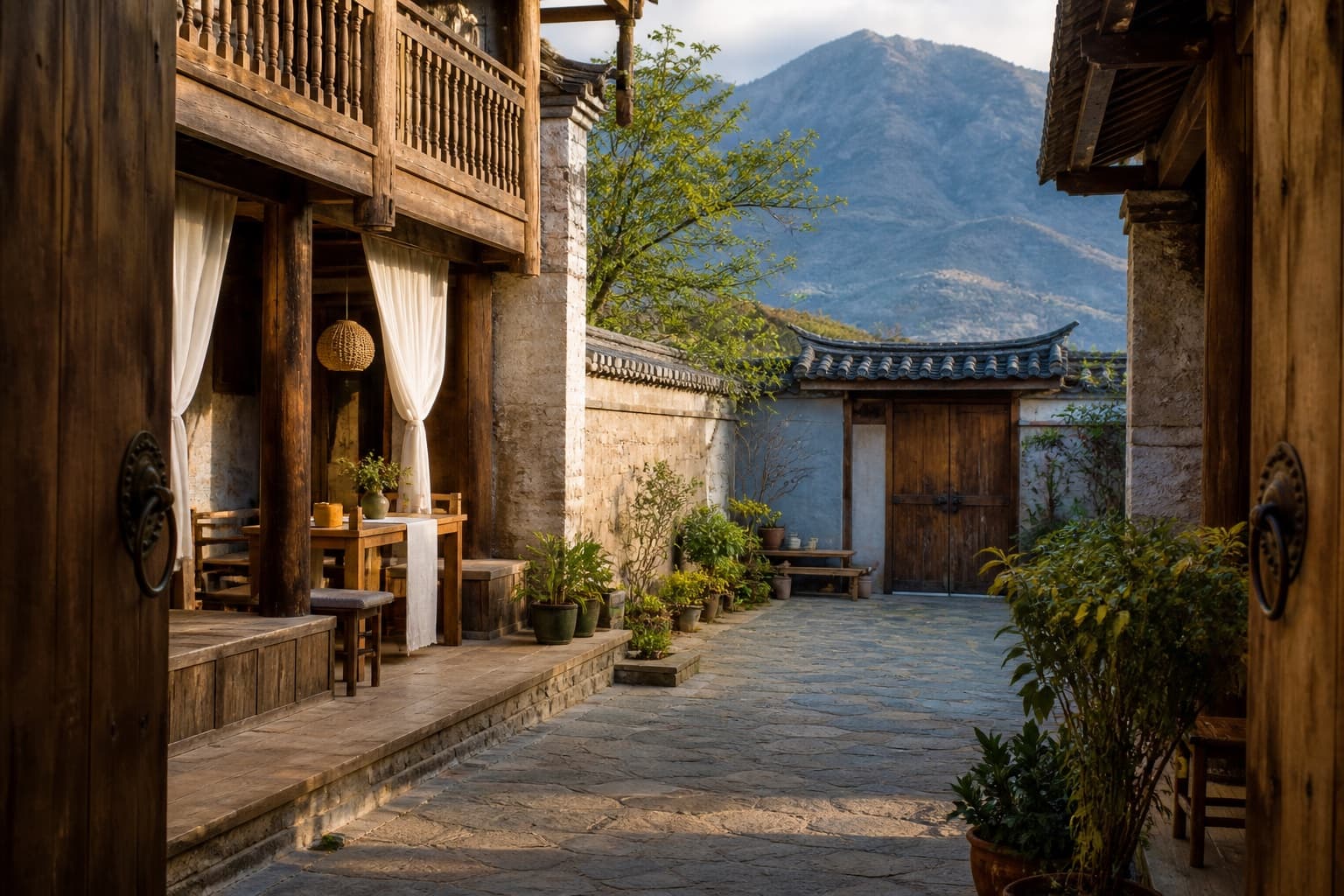
Choose accommodation by role, not only by price
A useful Yunnan hotel does more than provide a beautiful room. It can shorten an early transfer, make a town walkable, protect a high-altitude rest day, connect you with a village or landscape, or provide the comfort needed after a hike.
Prices change with holidays, room category, cancellation terms, and demand, so fixed price bands age quickly. Compare what the stay contributes to the route: location, sleep quality, heating or cooling, accessibility, breakfast timing, luggage access, language support, foreign-guest registration, and the reliability of the booking channel.
Common accommodation styles
International or full-service city hotels for predictable facilities, early departures, and easier payment support
Chinese chain hotels for practical short stays near stations, airports, and urban neighborhoods
Old-town inns for atmosphere and walkable lanes, with possible stairs, noise, and difficult vehicle access
Boutique courtyard guesthouses for design, local hosting, and a slower base
Resorts for space, views, family facilities, or a stay-centered itinerary
Rural guesthouses, farm stays, and trekking lodges for landscape access with simpler facilities and greater weather dependence
Kunming: decide between connection and city experience
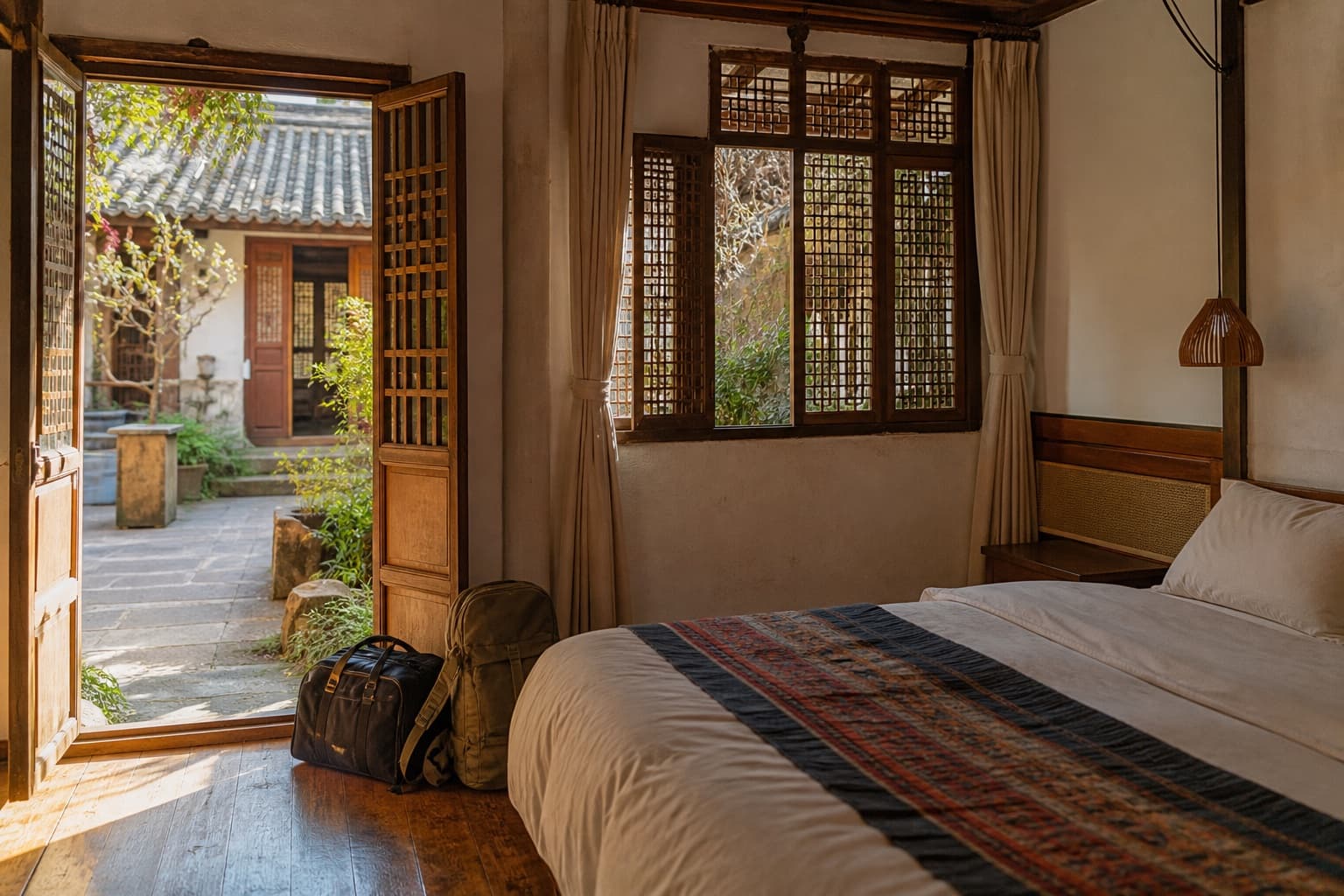
Stay near the airport only when the flight timing justifies it. For a city day, a central neighborhood with restaurants, markets, metro access, or Dianchi-area activities is usually more useful than an isolated transfer hotel.
An airport hotel can protect a late arrival or early departure, but it should not automatically become the base for several Kunming days. Confirm shuttle hours, the actual terminal transfer, breakfast timing, and whether noise insulation suits a recovery night.
If Kunming is the first stop before higher elevations, a comfortable first night and an unhurried next morning can be more valuable than adding another attraction.
Dali and Lijiang: old town, new town, or landscape base?
Inside an old town, you gain atmosphere, food, and evening walks but may face pedestrian lanes, stone paving, music, crowds, stairs, and long luggage carries. Outside the busiest lanes, a courtyard stay can be quieter while remaining walkable. New-town and resort areas often provide easier vehicle access and more predictable rooms.
Around Erhai, Shuanglang, Xizhou, and other Dali bases, check the exact relationship to the lake, road, village, and intended activities. In Lijiang, decide whether the priority is the old town, Jade Dragon Snow Mountain access, a quieter village, or transport convenience. ‘Near’ on a platform map can still require a difficult final approach.
Shangri-La and Xishuangbanna require opposite comfort checks
In Shangri-La and other highland areas, ask about heating, hot water, insulation, room access, stairs, and the distance from reception to the room. A stylish Tibetan-inspired property may still be cold at night or inconvenient for a traveler who is tired at altitude. Do not use supplemental oxygen as a substitute for an appropriate itinerary or medical advice.
In Xishuangbanna, cooling, ventilation, mosquito control, traffic noise, and distance from the evening crowds matter more. A hotel near a famous night market is convenient for nightlife but may be less restful. Rainforest and botanical-garden stays need clear transfer and meal arrangements.
Passport registration and non-hotel stays
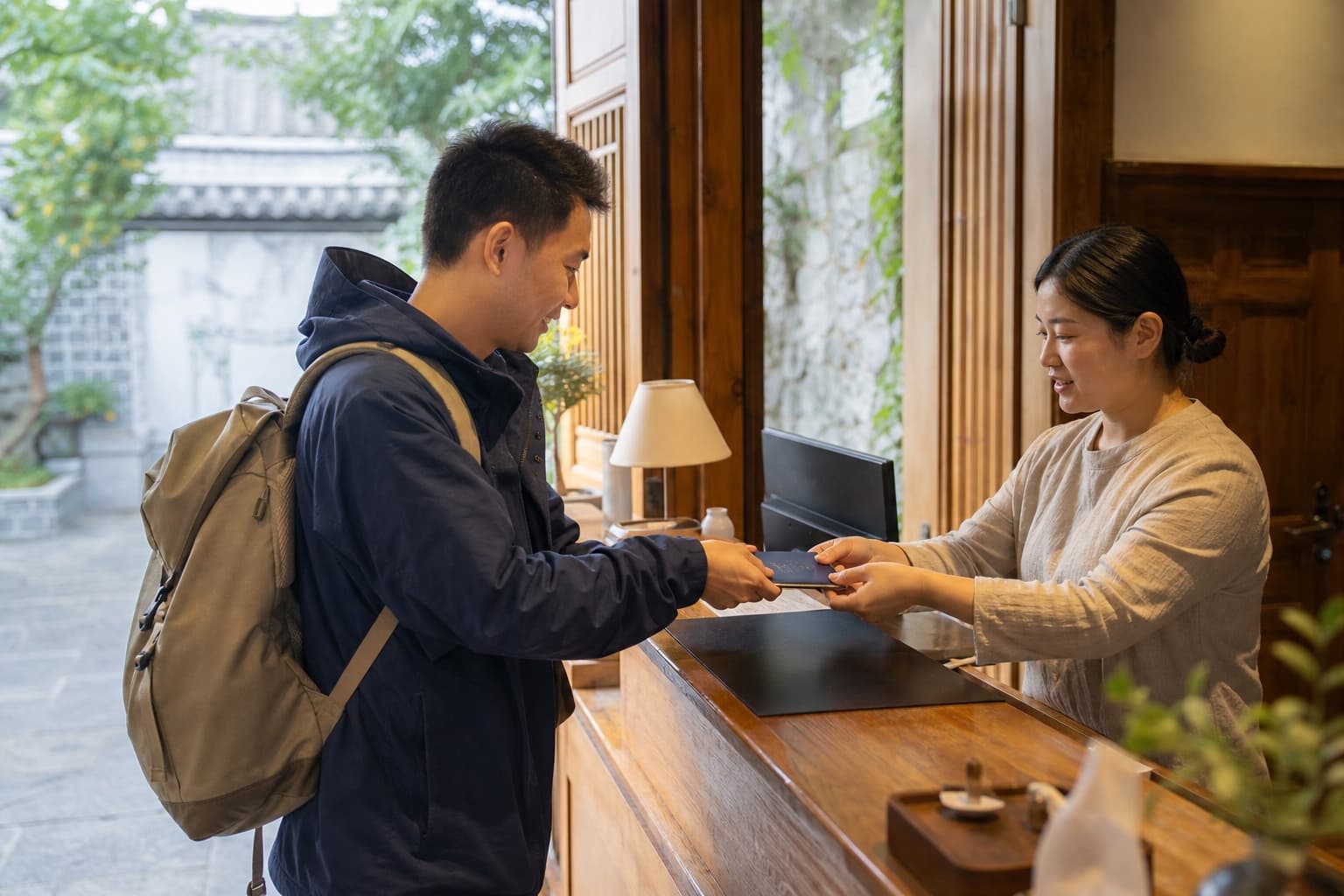
Hotels register foreign guests using the passport or other accepted travel document. Present the original document used for entry and allow time for reception staff to complete the process. China has instructed platforms and accommodation providers not to exclude foreign guests simply on the basis of a supposed special qualification.
For a private home, apartment, or another non-hotel stay, accommodation registration rules still apply. The traveler or host should confirm the current local procedure promptly after arrival; online pilots and local channels change and are not identical across China.
Ask the host before booking how registration will be handled rather than discovering the issue late at night.
Check the room details that photographs hide
Actual bed configuration and whether twin beds can be separated
Heating, air-conditioning, ventilation, and hot-water reliability
Lift access, stairs, bathroom layout, and walking distance from the vehicle
Construction, nightlife, courtyard, road, or temple noise
Breakfast hours and options for early departures or dietary needs
Laundry, luggage storage, and the ability to receive transport or permit documents
Foreign-card, mobile-payment, cash, deposit, and cancellation arrangements
How the property handles foreign-guest registration
Rural stays are part of the itinerary
A village guesthouse, coffee estate, tea mountain lodge, terrace-view room, or trekking stop can be the strongest experience of the trip. It may also have limited menus, simple bathrooms, variable power or internet, no lift, early quiet hours, and weather-dependent access.
Confirm what is provided and what must be carried. Ask about luggage transfer, walking distance, meal times, drinking water, heating, charging, emergency contact, and the road plan if heavy rain or snow arrives. Cultural activities should be genuine and respectful, not staged promises attached to every booking.
Read the booking terms as carefully as the reviews
Recent reviews help identify noise, maintenance, location, and service issues, but confirm the room category and conditions directly. Platform translations can blur bed types, views, window status, and inclusions. Save the Chinese property name, address, phone number, booking confirmation, and any message about late arrival.
During holidays and major events, choose flexible cancellation where possible and reconfirm critical rural stays. Outside busy periods, reduced services or renovation can matter more than price. Do not assume a famous hotel or an old certification guarantees the current experience.