
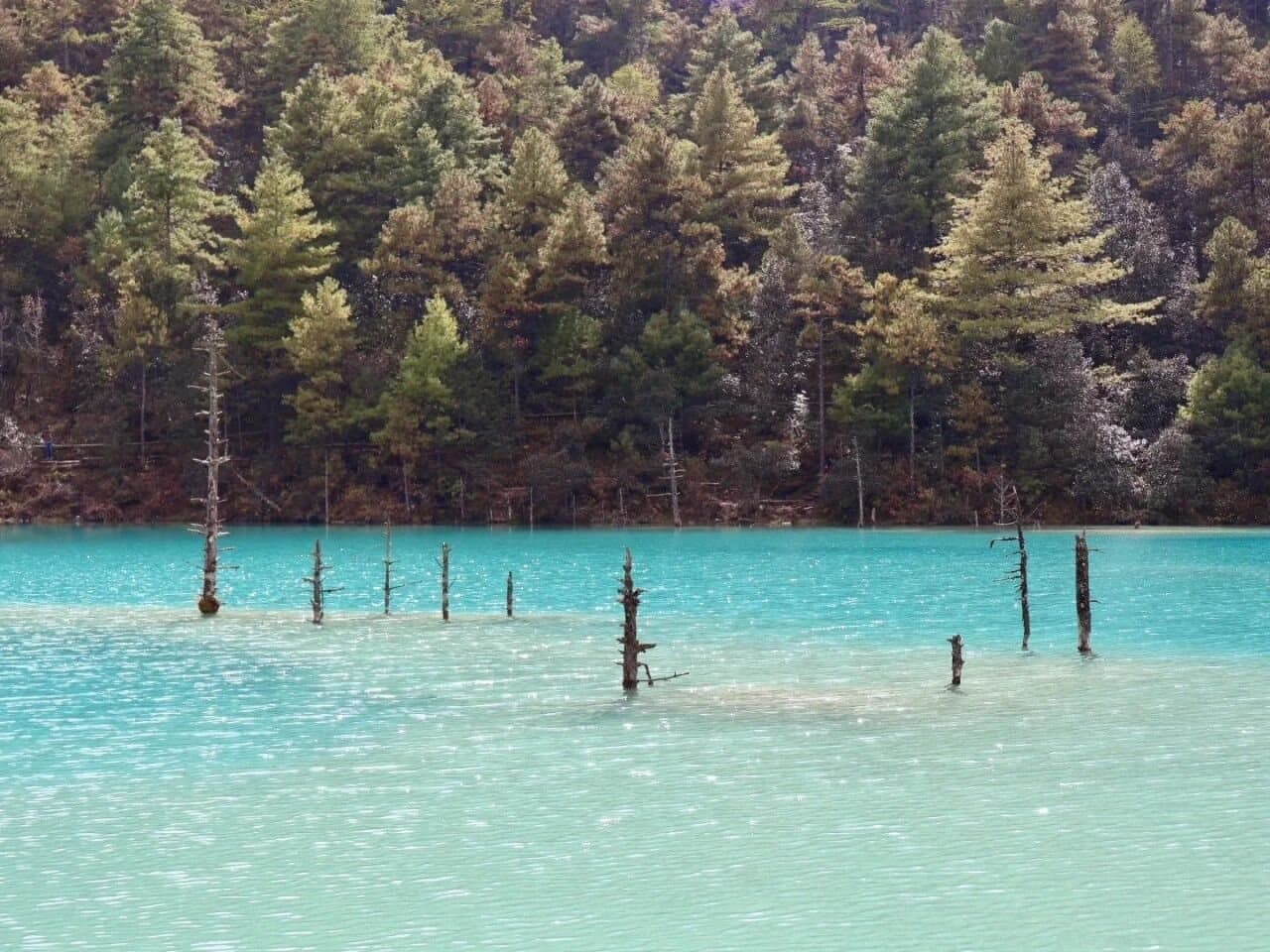
At the foot of Jade Dragon Snow Mountain, there is a valley where water seems to hold its own light. It is called Blue Moon Valley. The first thing most people notice is the color. Not simply blue, and not exactly green, the water shifts between turquoise, jade, milk-blue, and silver depending on the hour, the sky, and the season. On a bright day, it glows like a gemstone. On a cloudy afternoon, it becomes soft and pale, almost dreamlike. When the mountain appears in reflection, the whole valley feels suspended between earth and sky.
Blue Moon Valley is one of the most poetic landscapes near Lijiang. It is not dramatic in the way a cliff or canyon is dramatic. Its beauty is quieter. It reveals itself in layers: still water, white riverbeds, small waterfalls, drifting light, and the distant snow peaks of Jade Dragon Snow Mountain. It is the kind of place that makes people slow down without being told to.
From White Water River to Blue Moon Valley
Before it became widely known as Blue Moon Valley, this place was called Baishuihe — White Water River. The name came from the riverbed itself. Water from the glaciers of Jade Dragon Snow Mountain flows down into the valley, passing over pale limestone and mineral-rich sediment. The riverbed appears white, and the water, clear enough to reveal the bottom, takes on a milky brightness in certain light. From a distance, it can look like a white ribbon flowing through the valley.
Later, the place became associated with the “blue moon valley” imagined in James Hilton’s Lost Horizon, and the newer name stayed. Whether or not literature truly explains the landscape, the name feels strangely fitting. Seen from above, the valley curves gently like a crescent. Seen up close, its water shines with a blue so pure that it hardly seems real.
Locals sometimes say Blue Moon Valley looks like a sapphire dropped by the gods beneath the snow mountain. Standing there, it does not feel like an exaggeration.
A Valley of Four Lakes
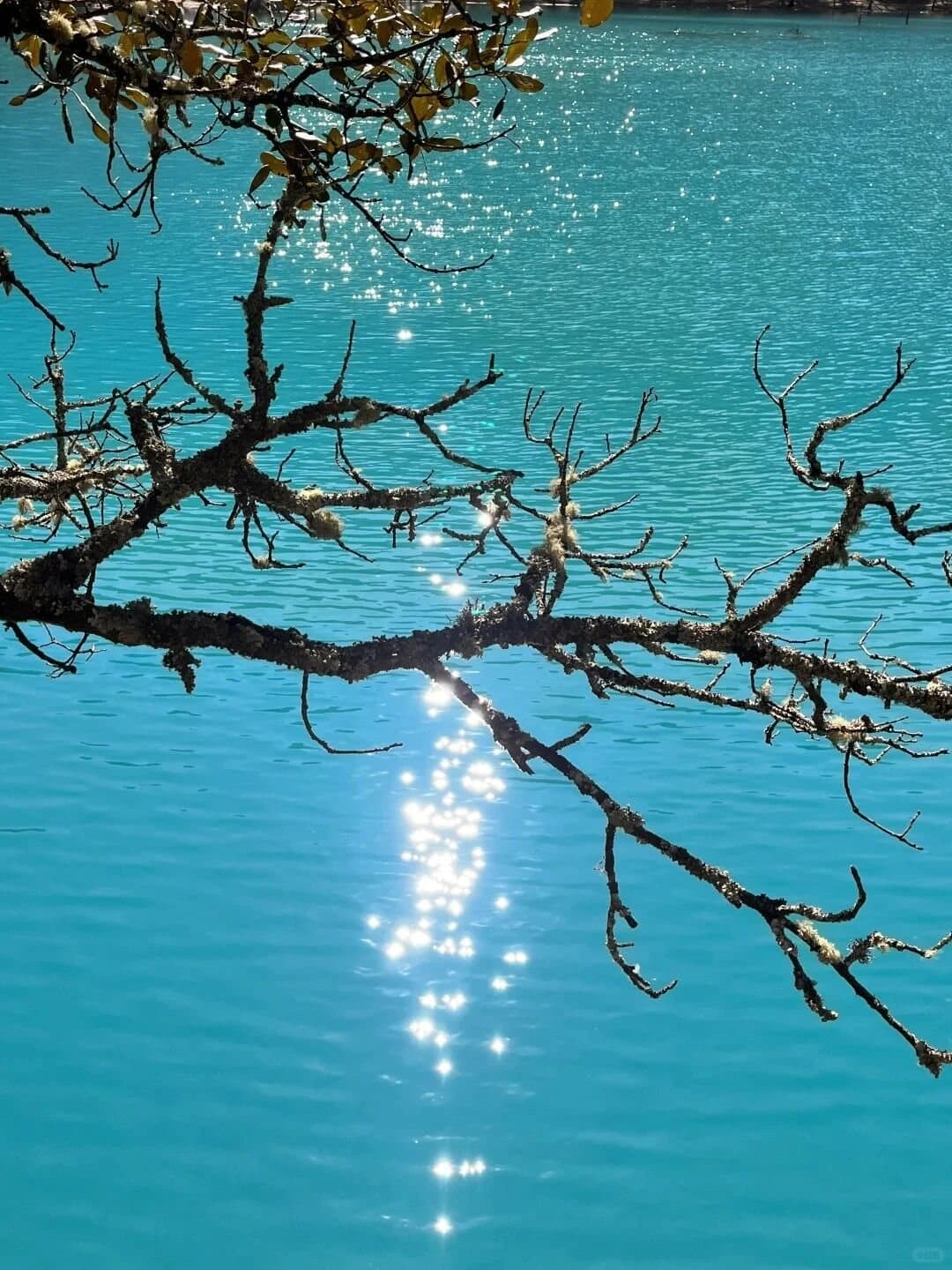
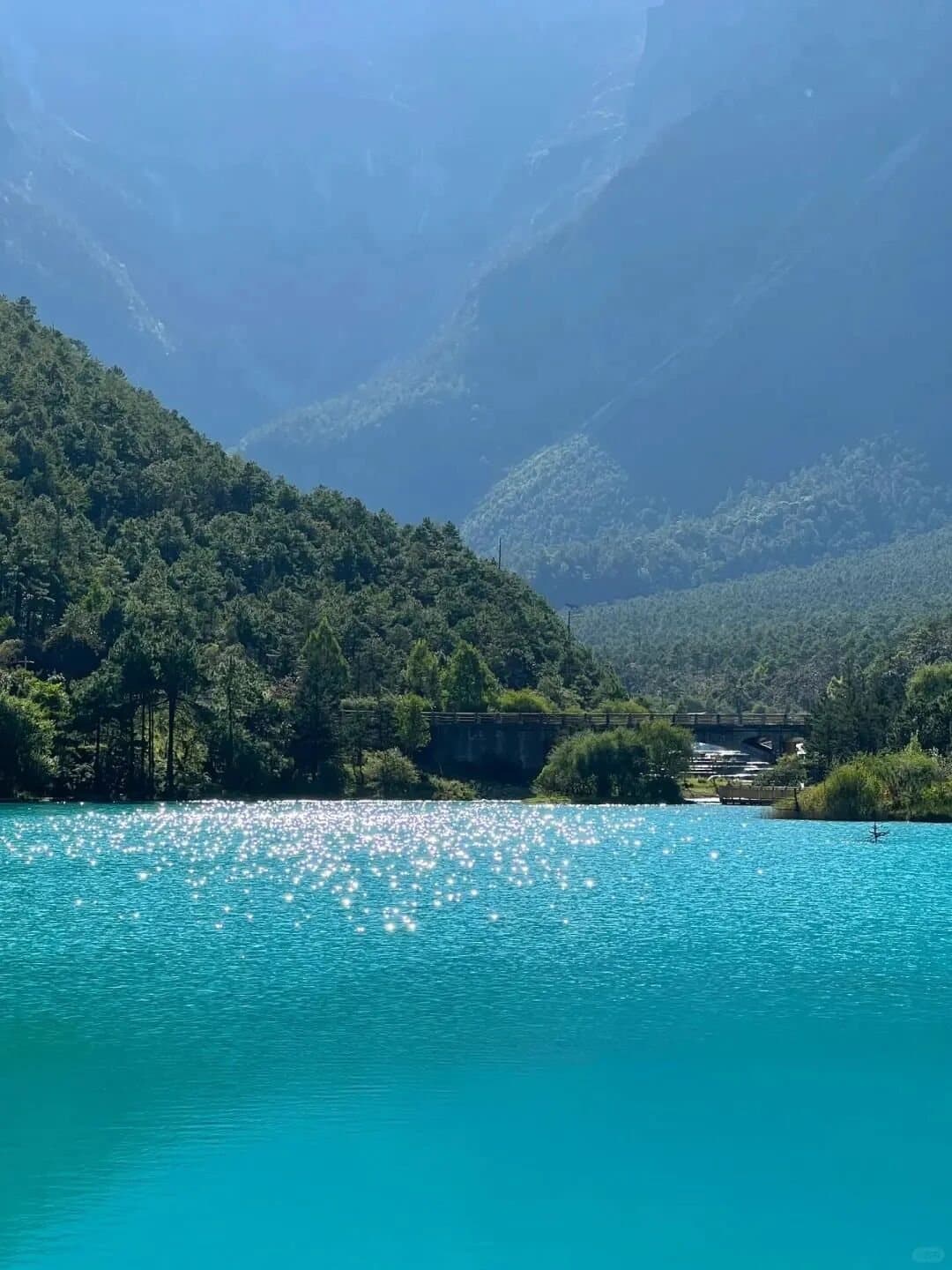
Blue Moon Valley is made up of several scenic sections, often described as four main lakes: Yuye Lake, Jingtan Lake, Tingtao Lake, and Blue Moon Lake. Each has its own mood. Yuye Lake is clear and reflective, with a quiet brightness that makes the snow mountain seem even more distant and serene. On calm days, the reflection of the peaks and sky creates a painterly stillness, as if the landscape were holding its breath.
Jingtan Lake is smaller and more delicate. Water slips gently over pale terraces and layered stone, creating a soft, transparent movement. It feels intimate, almost hidden, like a pause in the valley. Tingtao Lake is more animated. Here the elevation changes create a stronger rush of water, and the sound of streams mixing with the wind through the trees gives the lake its name — a place where one listens as much as one looks.
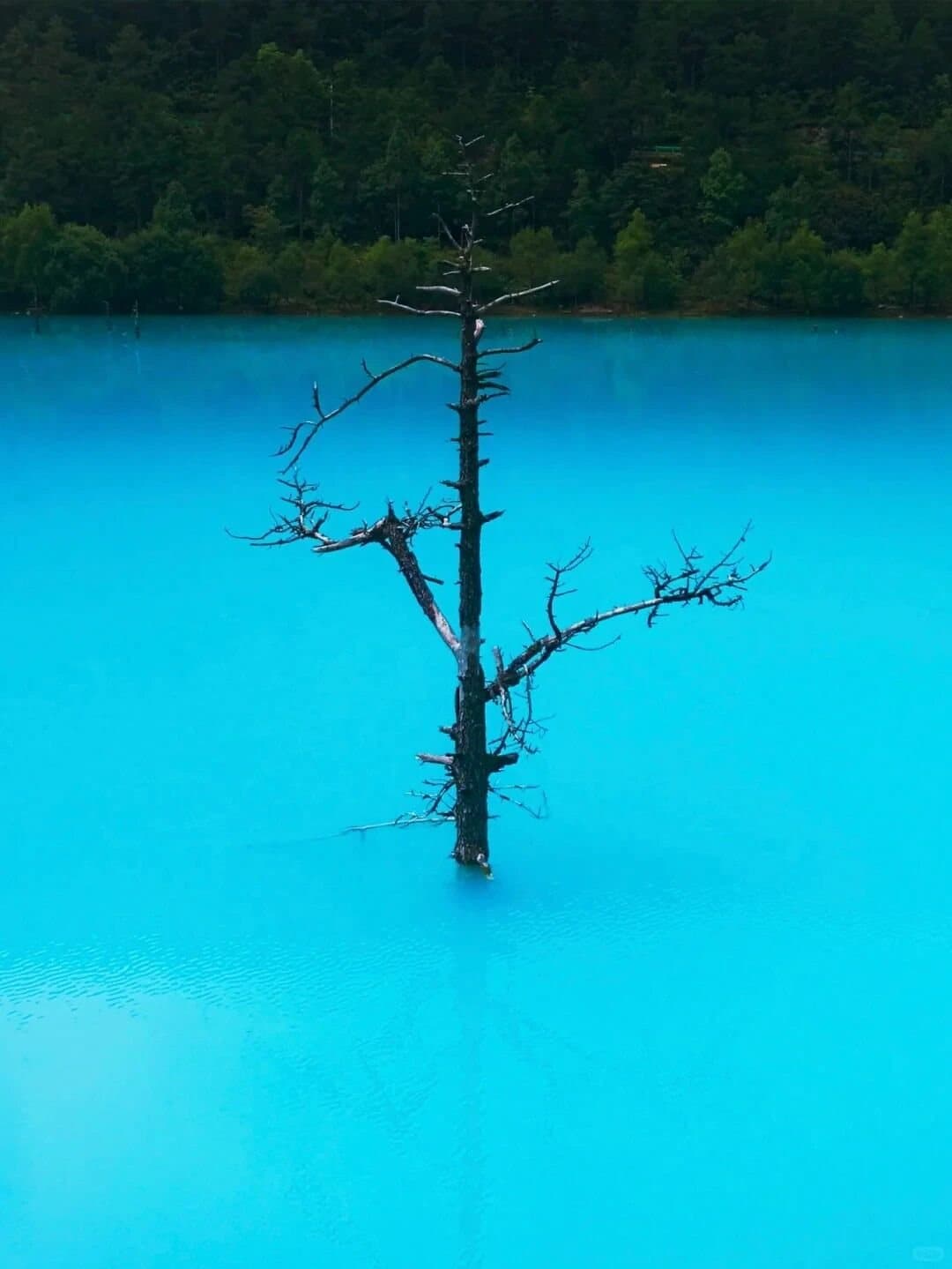
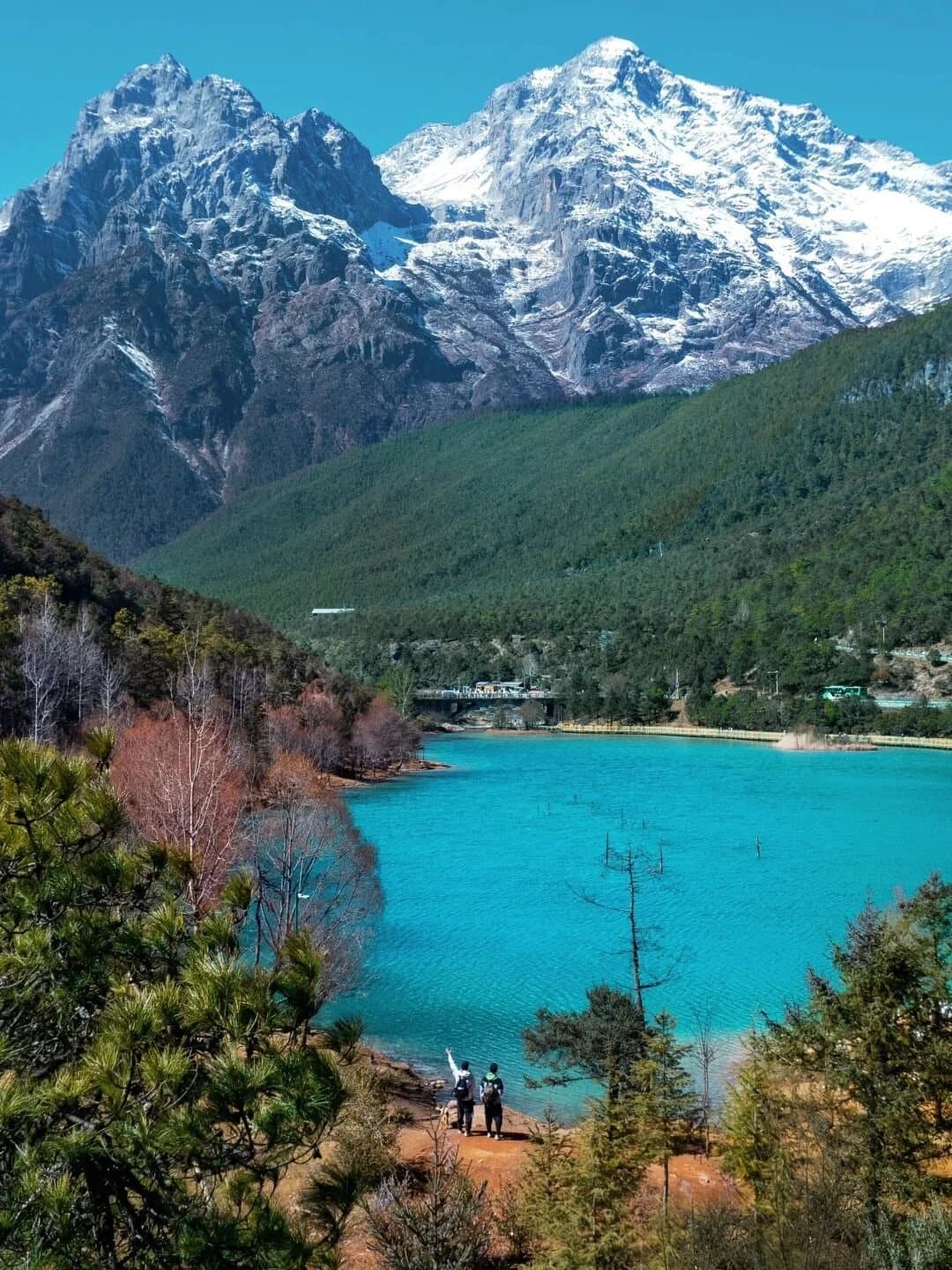
And then there is Blue Moon Lake itself, perhaps the most iconic of all. Surrounded by forest and mountain, the lake glows under sunlight with a jewel-like intensity. In the brightest hours of the day, it seems to gather the color of the sky and deepen it. It is the sort of blue that makes people fall silent for a moment.
Together, these lakes do not feel like separate sights to check off one by one. They feel like variations of the same mood — a valley unfolding through water.
Why the Water Is So Blue
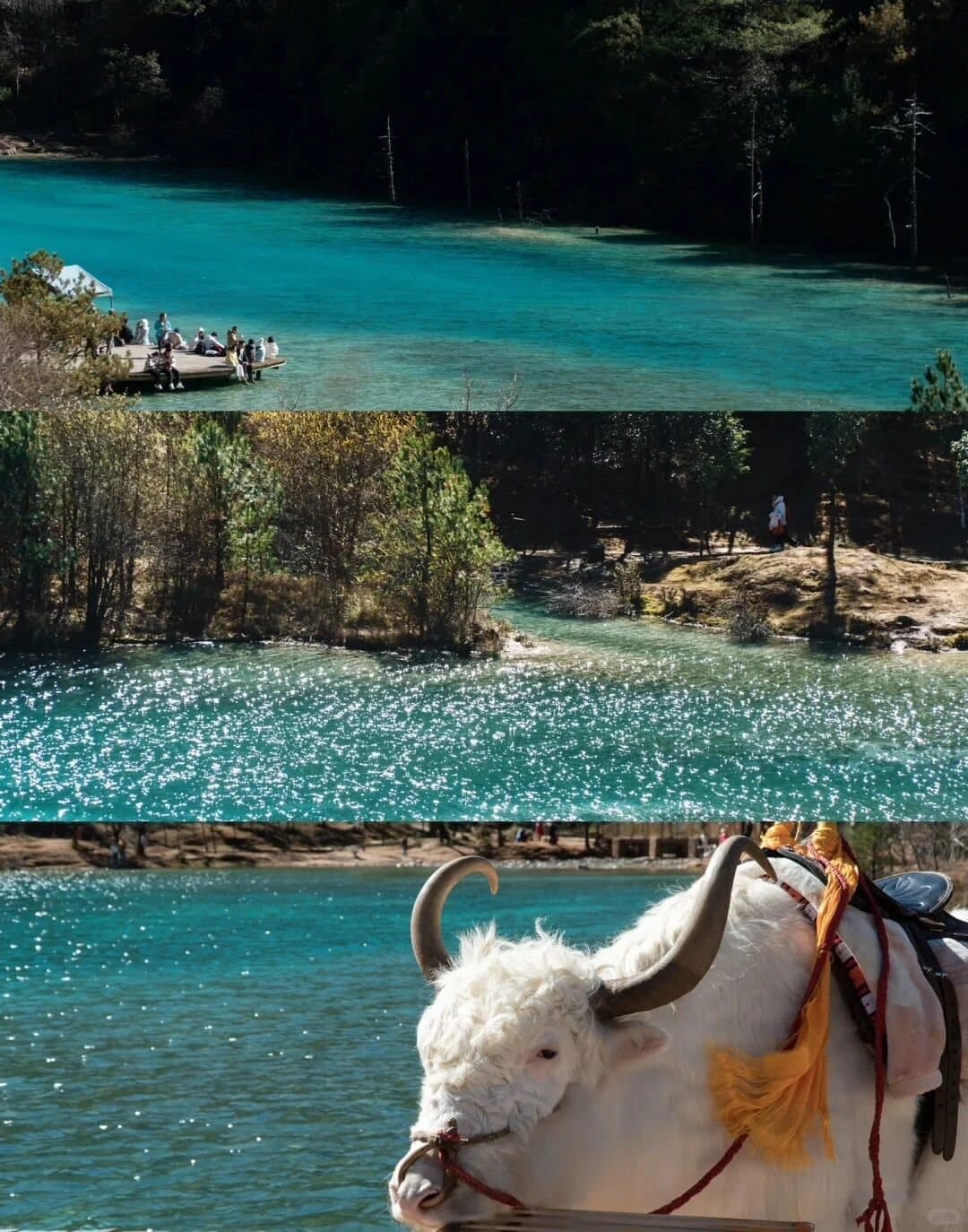
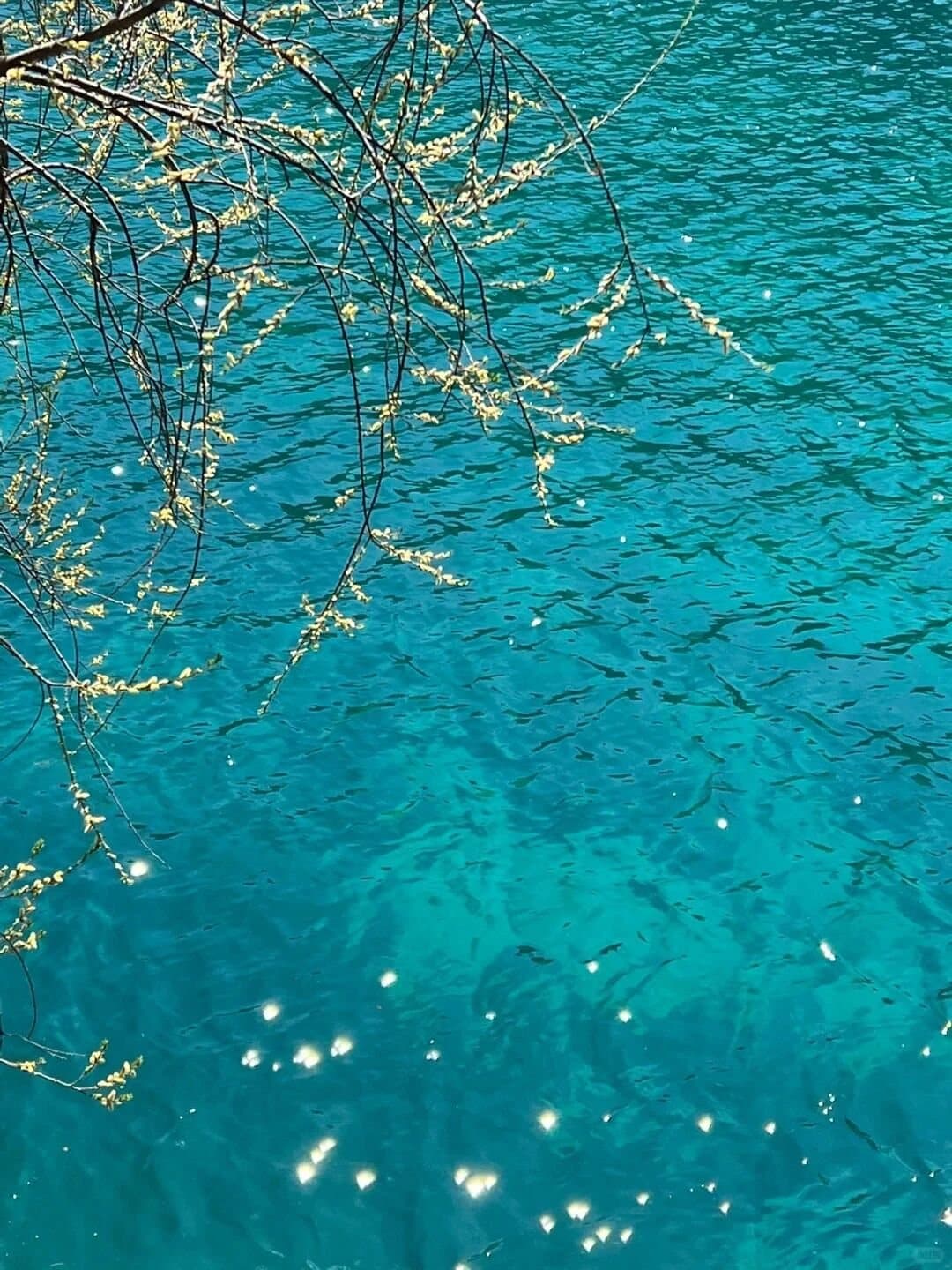
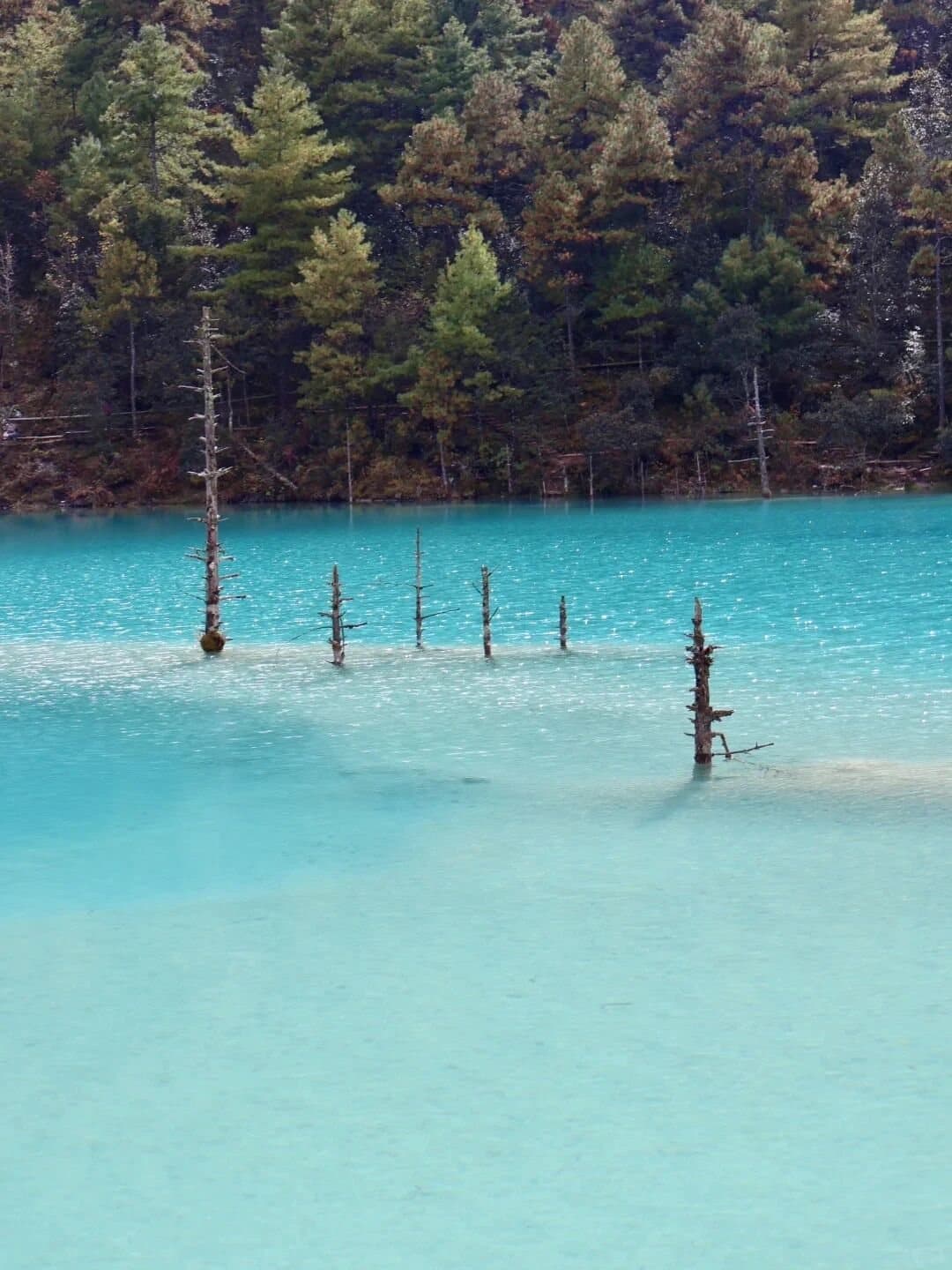
Part of Blue Moon Valley’s magic lies in the way nature plays with light. The water comes from the melting snow and ice of Jade Dragon Snow Mountain. It is cold, clear, and low in visible impurities, which gives it an unusual transparency. Minerals in the water and the pale riverbed beneath it help create the valley’s luminous color, while sunlight and the angle of the sky change its appearance throughout the day.
This is why Blue Moon Valley never looks exactly the same twice. In full sun, it can appear vividly turquoise or sapphire-blue. In softer weather, it may turn milky or silver-blue. At times, the white stones beneath the surface seem to brighten the water from below. At other moments, cloud shadows pass over the lakes and darken them into deeper tones of jade and blue-green.
The valley has its own weather, its own temperament, and almost its own color language. Perhaps that is why people find it so difficult to photograph exactly as they remember it. The beauty of the water is not fixed. It is alive.
The Snow Mountain Above
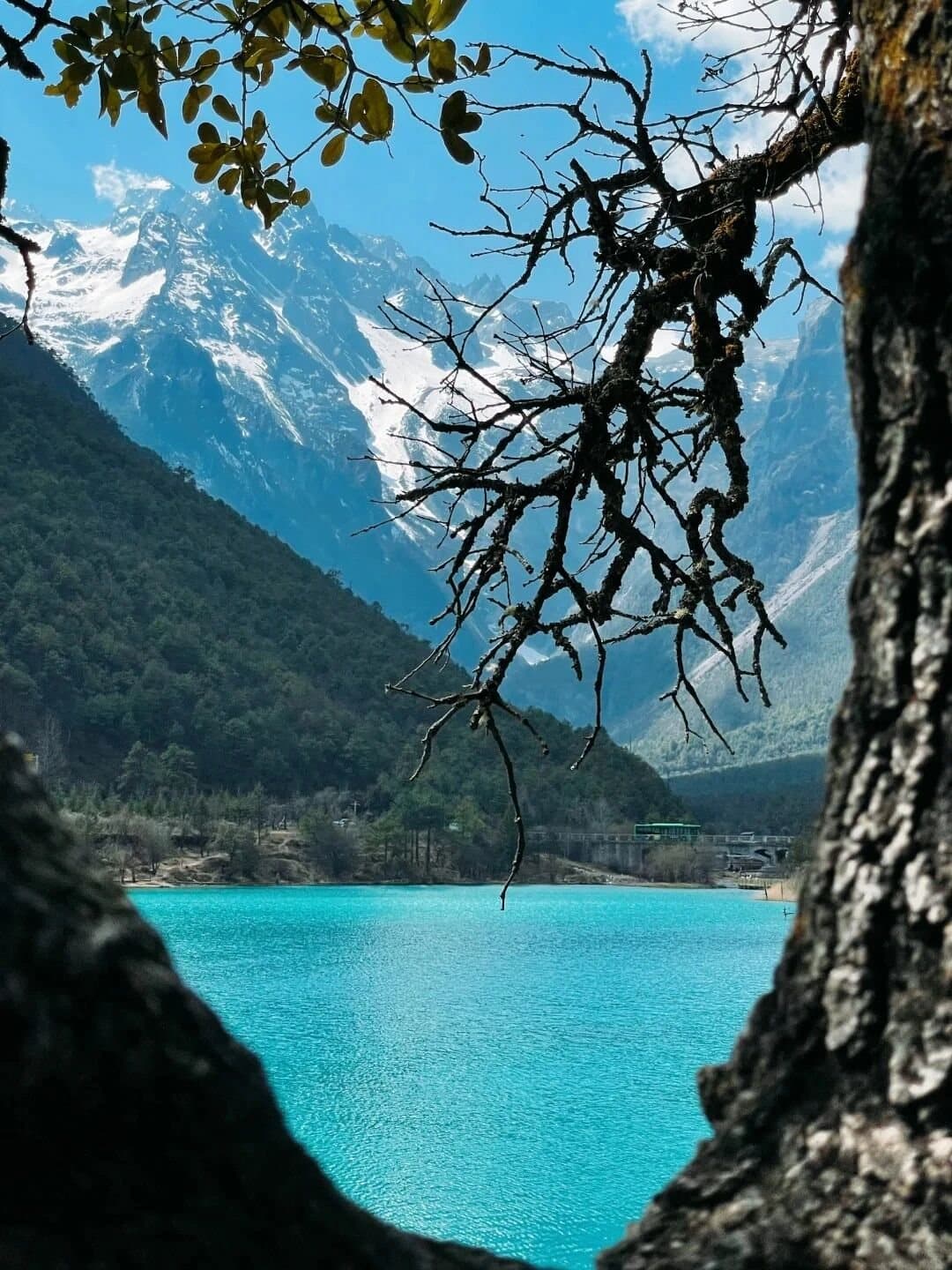
No matter where you stand in Blue Moon Valley, Jade Dragon Snow Mountain is never far away. Sometimes it arrives suddenly. You may be walking slowly along the water, watching the ripples and white stones, and then you look up — and there it is. Vast, bright, and impossibly still above the valley.
This contrast gives Blue Moon Valley much of its power. Below: soft water, gentle movement, drifting reflections. Above: ancient rock, glacier, and snow. The valley feels tender because the mountain feels eternal. The water feels intimate because the peaks feel distant and untouchable. Together, they create a kind of balance that is rare in nature: grandeur without harshness, beauty without noise.
There are small waterfalls separating parts of the valley, low dams and bridges linking one section of water to another, and pathways that allow visitors to walk at an easy pace along the lakes. The route itself is not difficult. This is part of the charm. Blue Moon Valley does not demand effort in order to be admired. It offers its beauty generously. You do not need to climb to understand it. You only need to look.
A Place That Clears the Mind
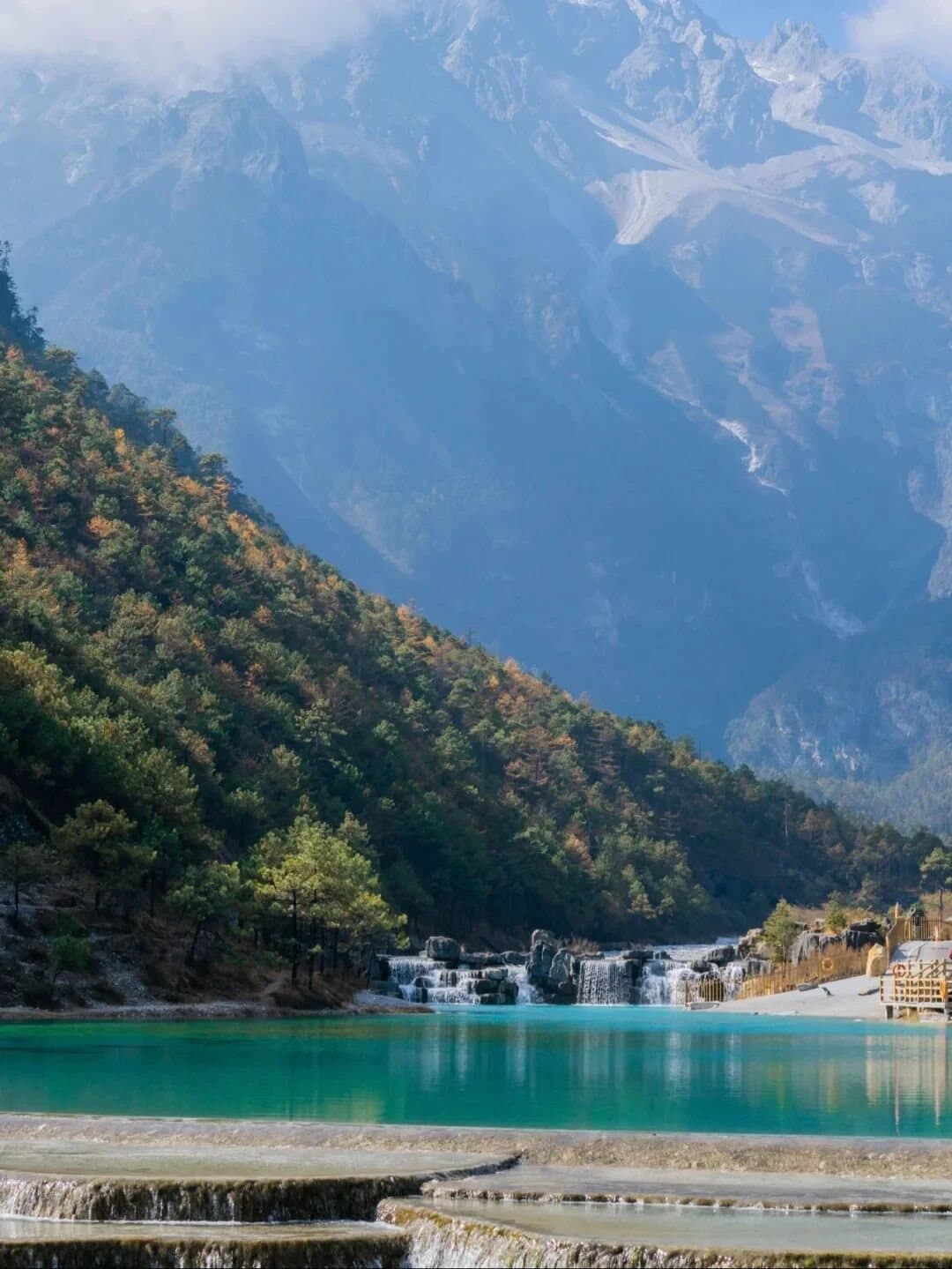
People often like to sit beside water and do nothing. Blue Moon Valley is the kind of place that explains why. The ripples move with a rhythm that feels strangely close to thought. The changing light gives the surface a kind of breathing quality. As the wind rises and falls, the whole valley seems to enter a conversation with itself: water answering sky, mountain answering cloud, light answering stone.
When people stand by a lake and drift into silence, perhaps it is because something inside them begins to move at the same frequency as the water. At Blue Moon Valley, that feeling comes easily. You may arrive expecting a beautiful view. You leave remembering something softer: a sense of clarity, of stillness, of your mind becoming less crowded. The blue of the valley does not feel cold. It feels cleansing. In that way, the place is not only scenic. It is calming.
A Different Kind of Romance
Blue Moon Valley is often described as romantic, and it is — but not in an obvious way. Its romance comes from atmosphere rather than spectacle. From the way white clouds gather around the snow peaks. From the way sunlight touches the water and transforms it minute by minute. From the pale stones rising through the shallows, making parts of the lake seem almost milky. From the sense that this whole valley exists in a softer register than the rest of the world.
Even the name feels like a story. A blue moon beneath a sacred mountain. A hidden sapphire among forests and snow. A place where the earth appears to have dreamed in shades of blue. This is the romance of Blue Moon Valley: not dramatic, but lyrical. It does not overwhelm you. It lingers.
Why Blue Moon Valley Stays With You
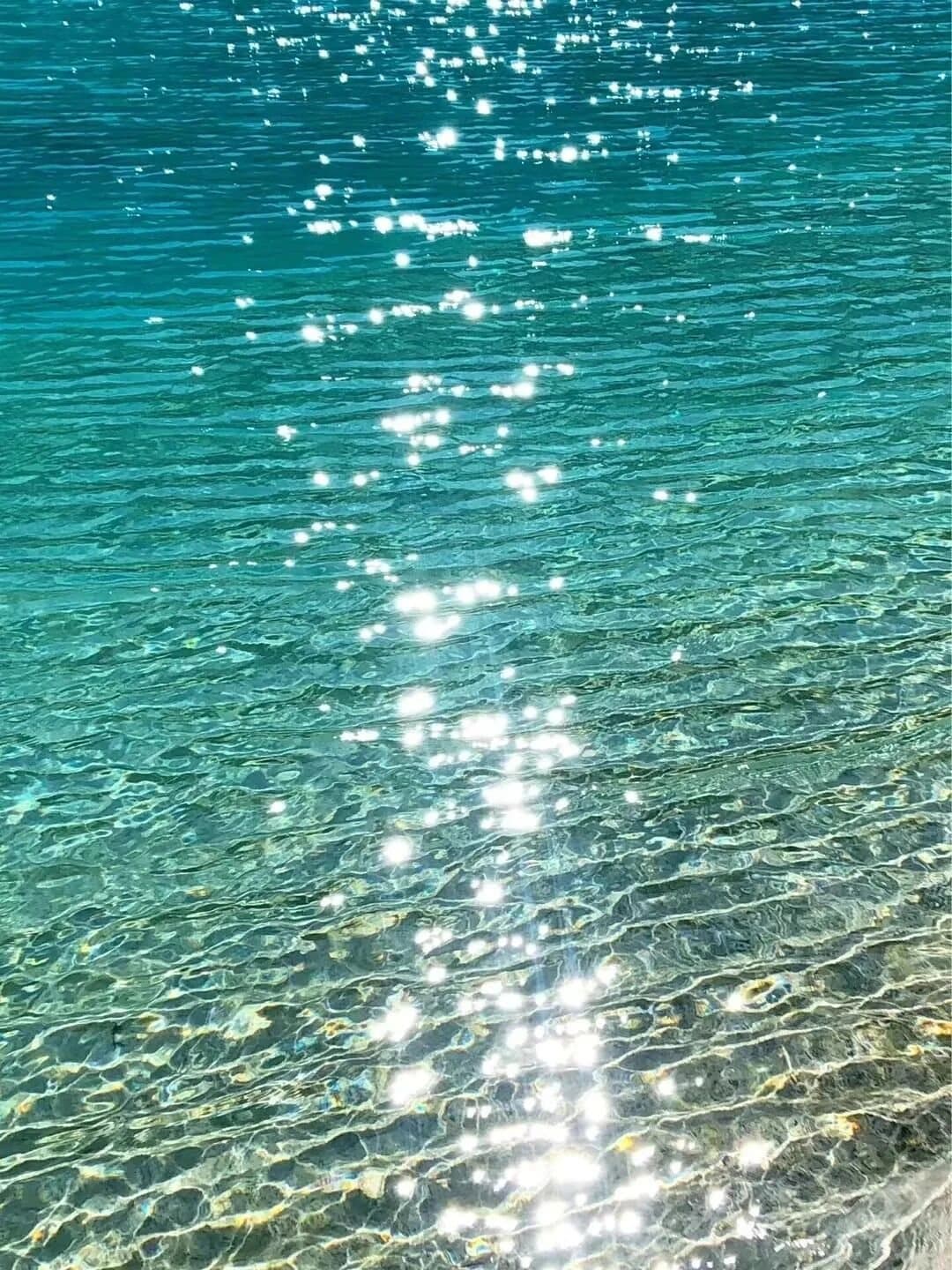
Some landscapes impress the eye. Blue Moon Valley does more than that. It settles somewhere quieter. Perhaps it is because the valley seems to contain several emotions at once: wonder, peace, coolness, purity, and a slight ache of distance. Perhaps it is because the water is never still in the same way twice. Or perhaps it is because the mountain behind it reminds you that beauty can be both fleeting and ancient at once.
The valley is not large. You can walk it slowly in a gentle afternoon. And yet its memory expands afterward. You remember the color first — that impossible blue. Then the white riverbed. Then the little waterfalls. Then the way the snow mountain appeared when you were not expecting it.
Then, later, you remember how quiet your mind became. Blue Moon Valley is beautiful, yes. But more than that, it has presence. It feels like one of those rare places where nature is not only seen, but felt — as light, as breath, as silence, as water.
If Jade Dragon Snow Mountain is the great monument of this landscape, then Blue Moon Valley is its most tender secret. A sapphire beneath the snow. A crescent of blue held gently in the arms of the mountain. A place to pause, to look, and to let your thoughts wander as far as the water does.