
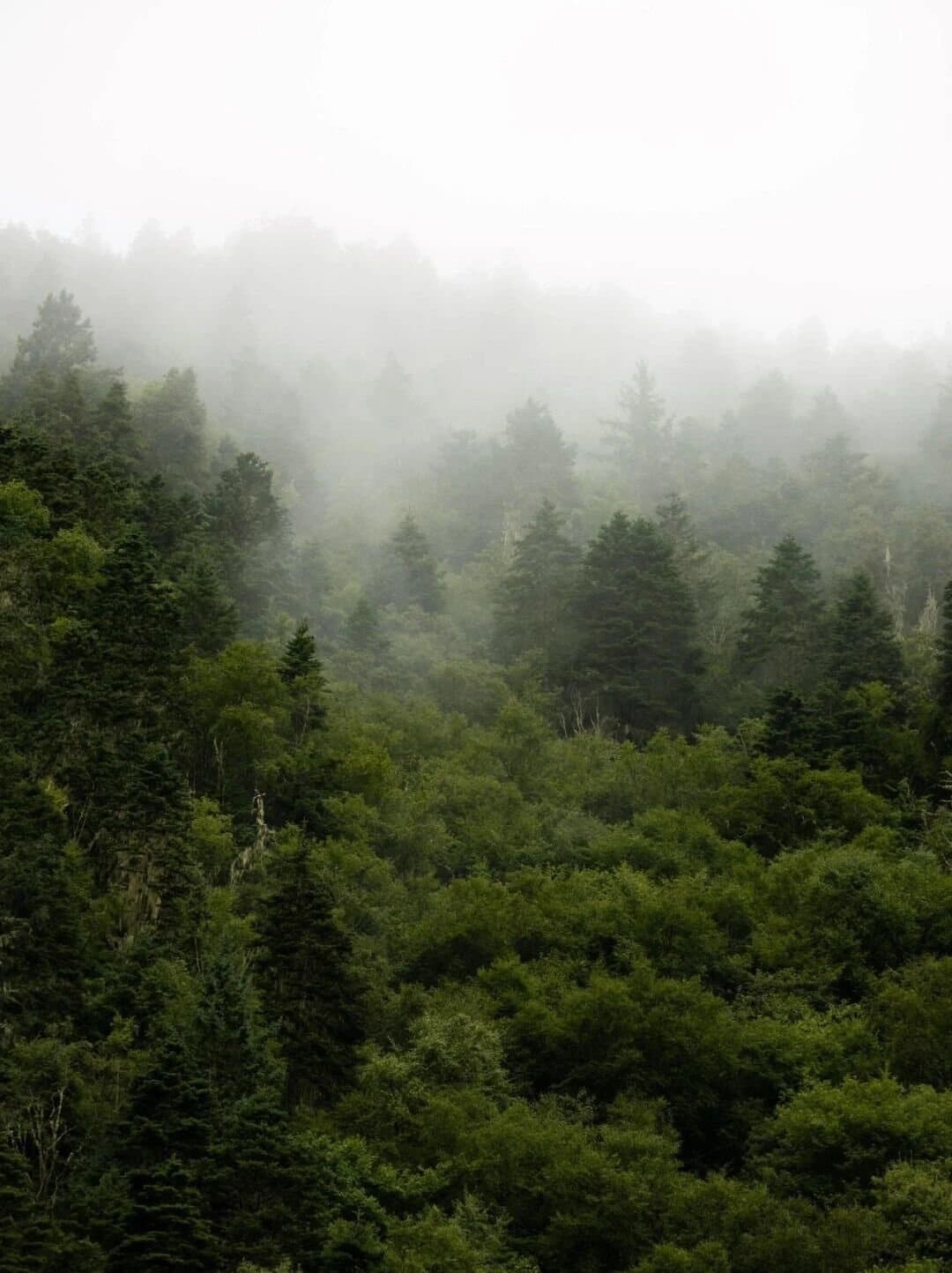
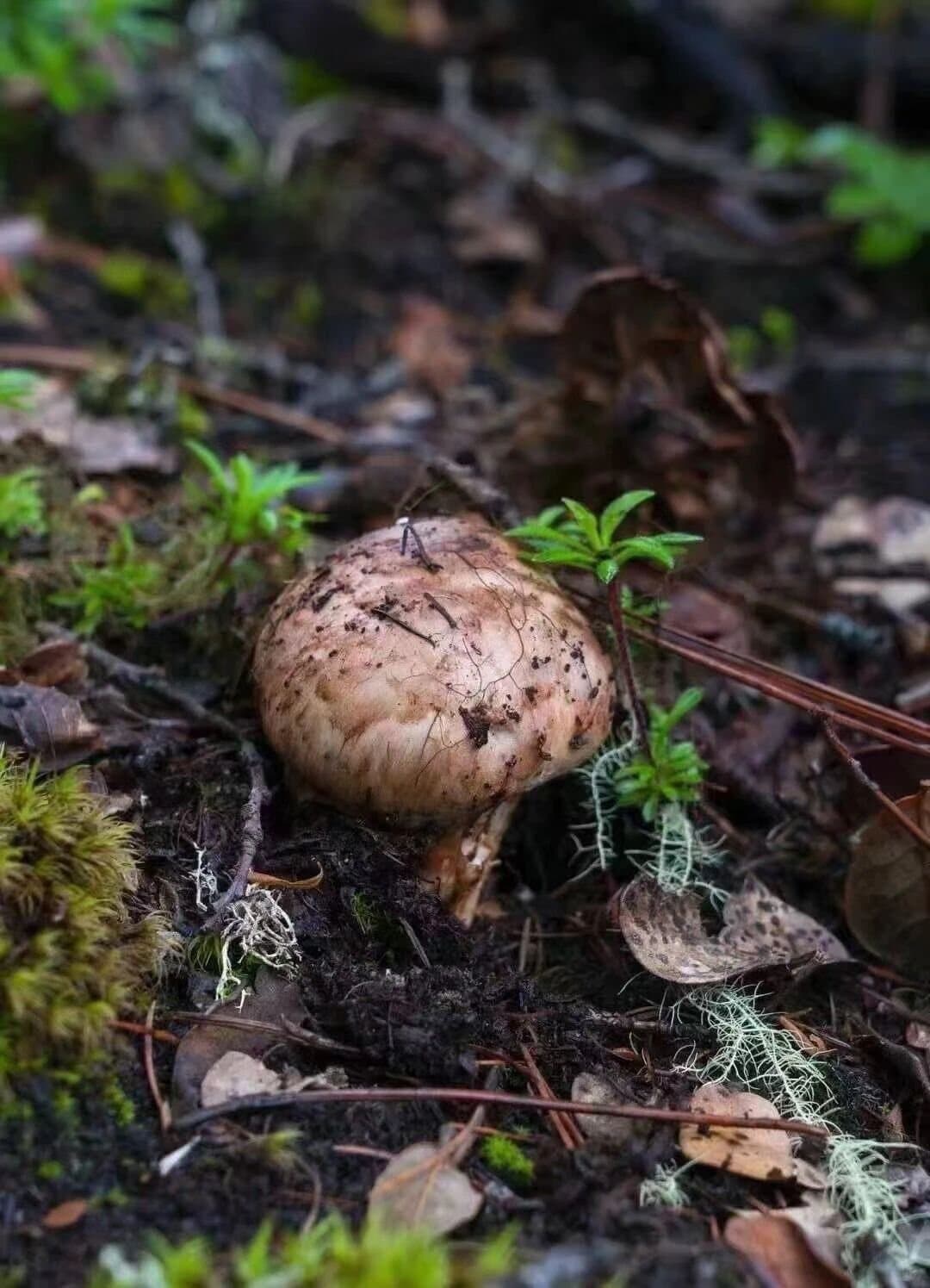
Every year, between July and September, the forests of Shangri-La enter their most secretive season. The summer rains arrive quietly over the southeastern edge of the Qinghai-Tibet Plateau. Mist gathers between the mountains. The soil beneath the old pine and oak forests becomes soft and fragrant. Under layers of fallen leaves, moss, and rich humus, something rare begins to wake: the underground threads of matsutake.
Known in Chinese as songrong, matsutake is one of Yunnan’s most treasured wild mushrooms. It is often called “the king of mushrooms,” not only because of its price, but because of its temperament. It cannot be farmed in the ordinary sense. It refuses to grow in controlled fields. It depends on old forests, clean soil, living tree roots, seasonal rain, and a delicate ecological balance that takes decades to form. That is why Shangri-La has become one of China’s most celebrated homes of matsutake.
A Mushroom That Belongs to the Forest
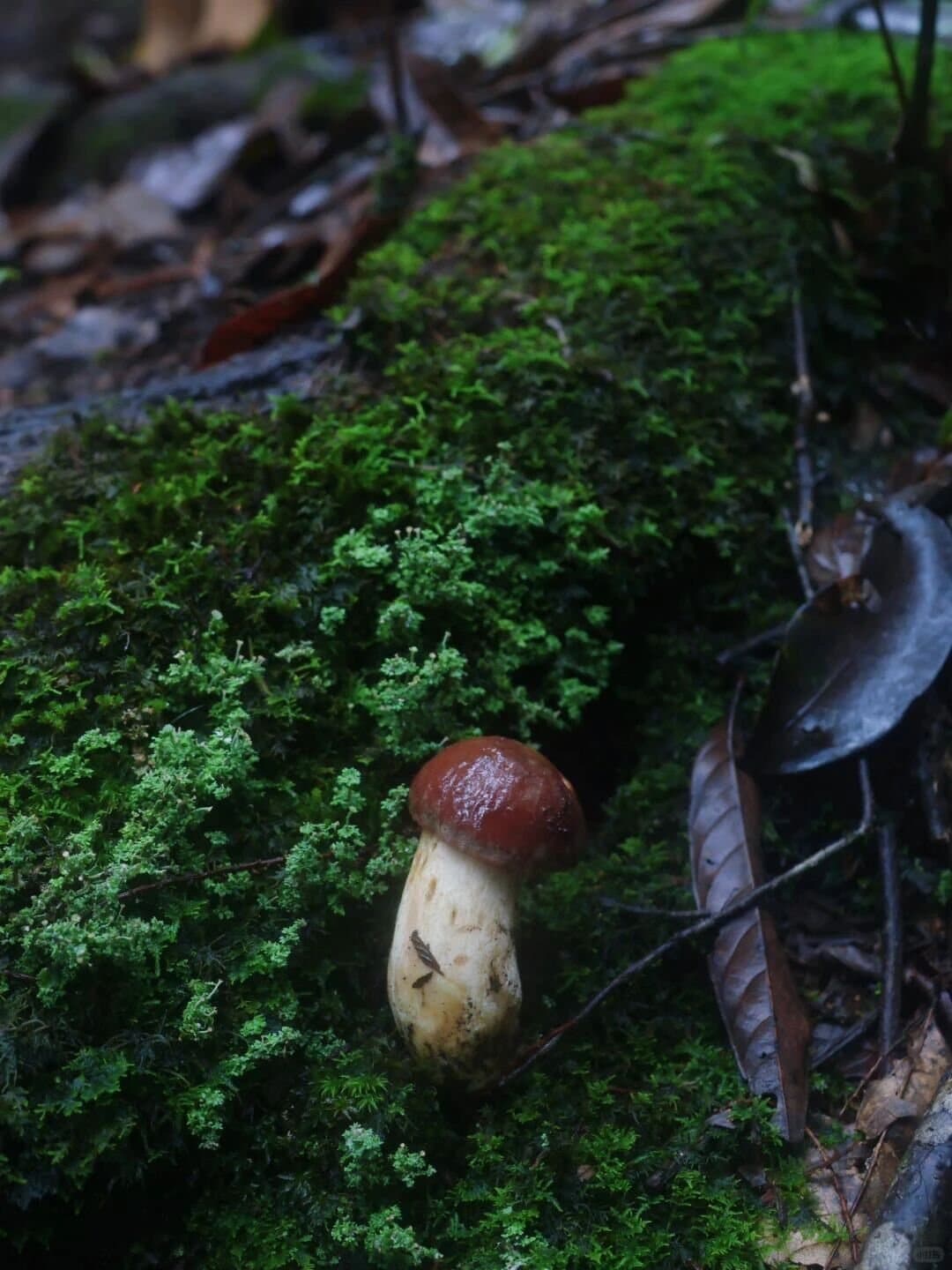
Unlike common cultivated mushrooms, matsutake lives in close relationship with trees. Its underground mycelium connects with the roots of pine and oak trees, exchanging nutrients in a quiet partnership hidden beneath the forest floor. This is one reason matsutake is so difficult to cultivate artificially. It is not simply a mushroom that needs moisture and shade. It needs a mature forest system. It needs the right trees, the right soil, the right altitude, and the right climate. Remove one part of this natural chain, and the mushroom may never appear.
In Shangri-La, these conditions come together with rare precision. Located in Diqing Tibetan Autonomous Prefecture, Shangri-La sits deep in the Hengduan Mountains, where Yunnan rises toward the Tibetan Plateau. Many matsutake-producing forests here grow at high elevations, often around 3,000 meters or above. The air is cool and clean. The forests are far from heavy industry. The mountains hold large areas of old-growth and mixed woodland, where pine, oak, moss, fungi, insects, animals, and people have long shared the same ecological space. For matsutake, this kind of environment is not a luxury. It is a requirement.
Rain, Sunlight, and a Very Short Season
The matsutake season is brief. During the rainy months of July, August, and September, the highland monsoon brings moisture to the forest. Rain soaks into the loose, breathable soil. Sunlight returns between showers. The sharp difference between day and night temperatures helps the mushroom develop its dense texture and concentrated aroma.
But once a matsutake begins to emerge, time moves quickly. From a small hidden bud to a mature mushroom, the process may take only about a week. If it is picked too early, its fragrance has not fully developed. If it is left too long, the cap opens, the texture changes, and its market value drops. At its best, matsutake exists in a narrow window between secrecy and decay.
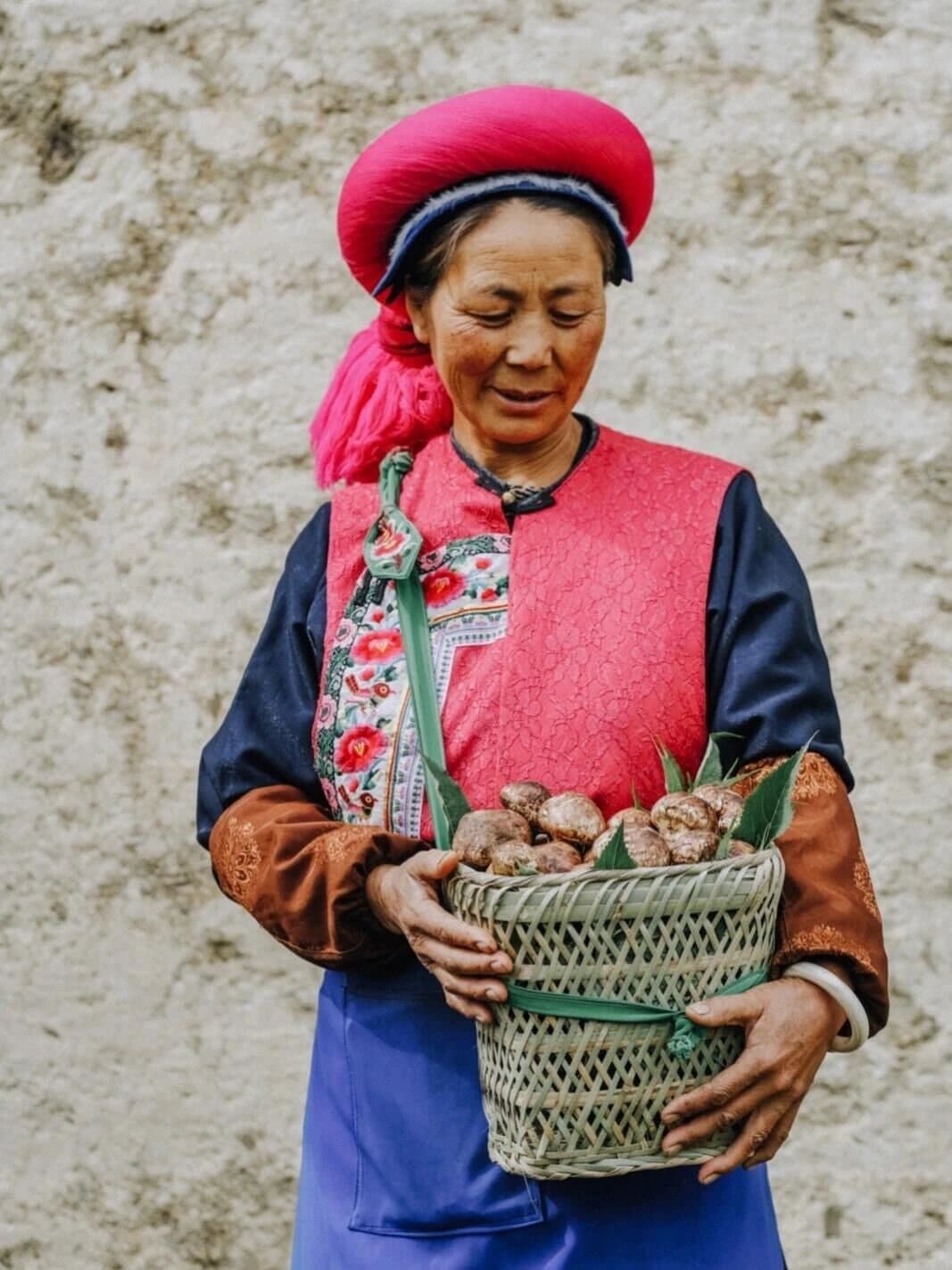
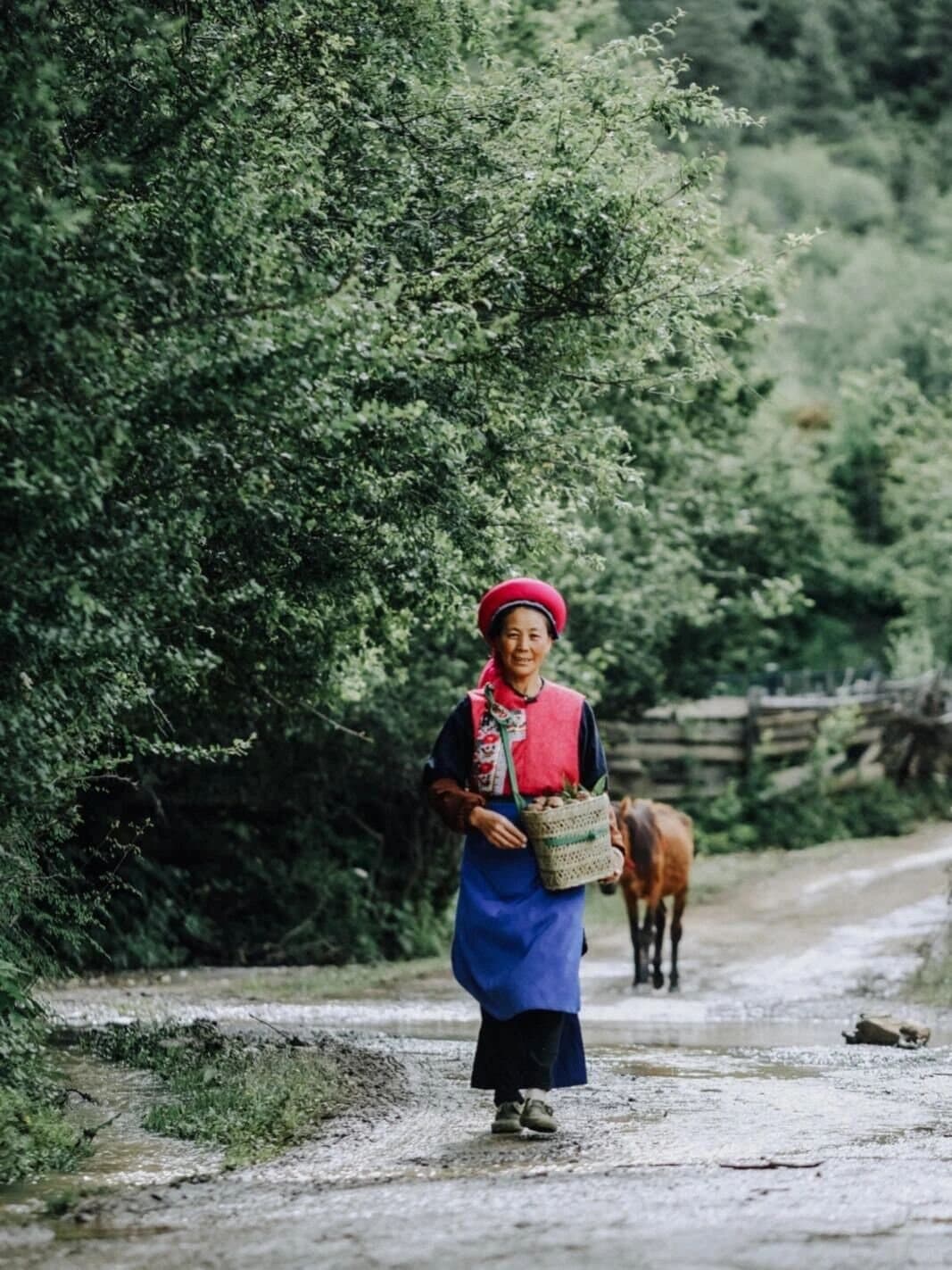
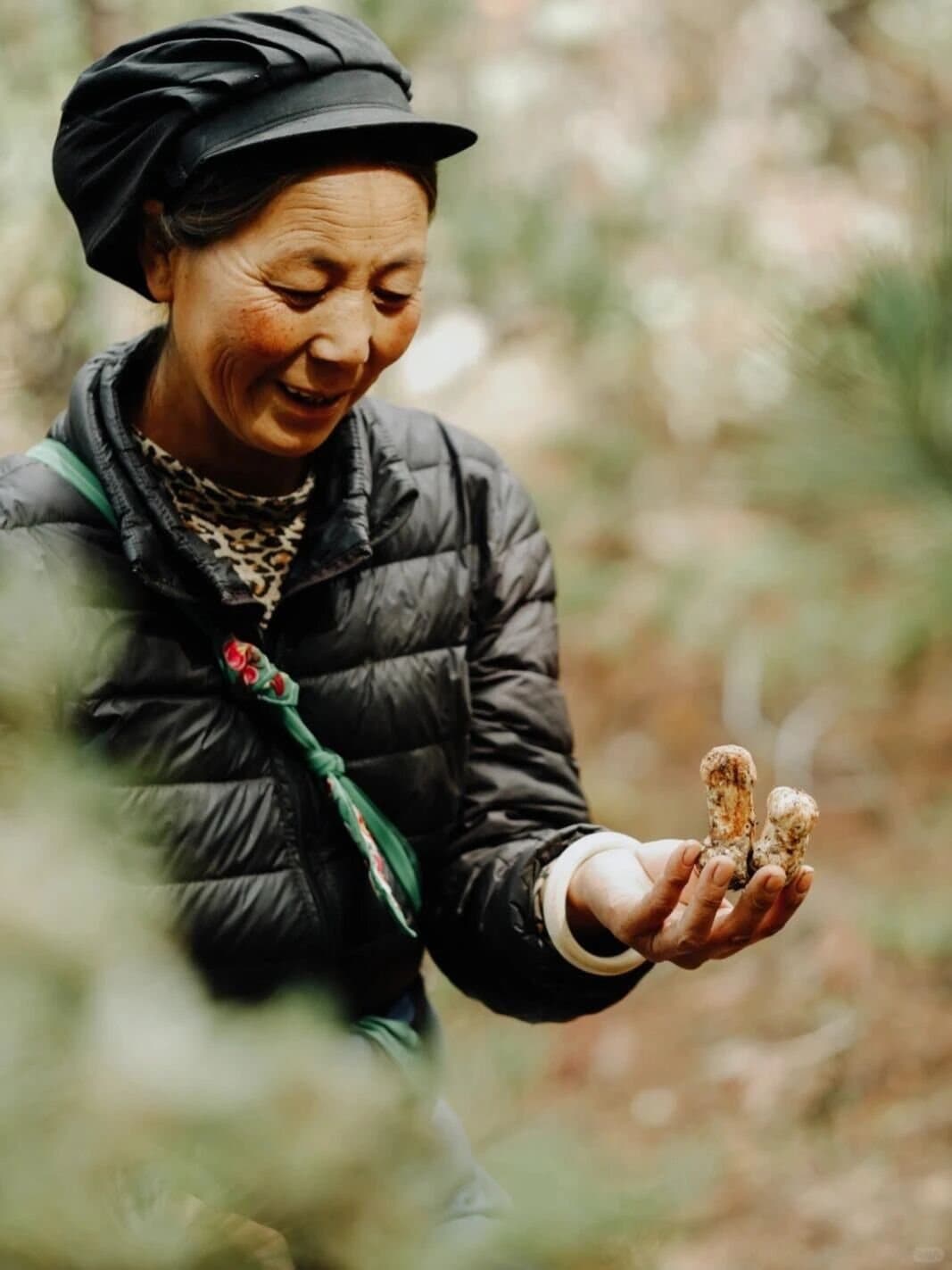
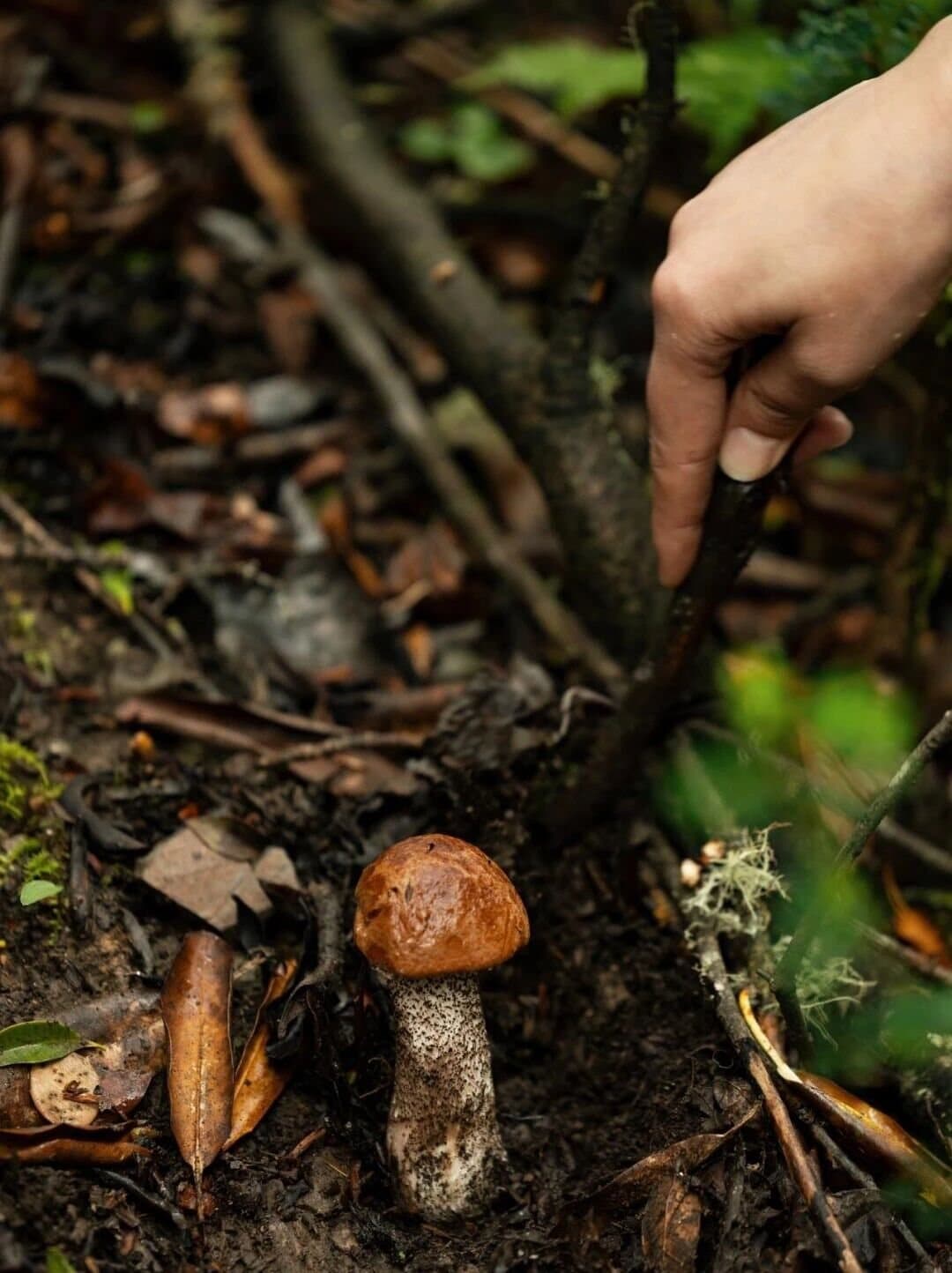
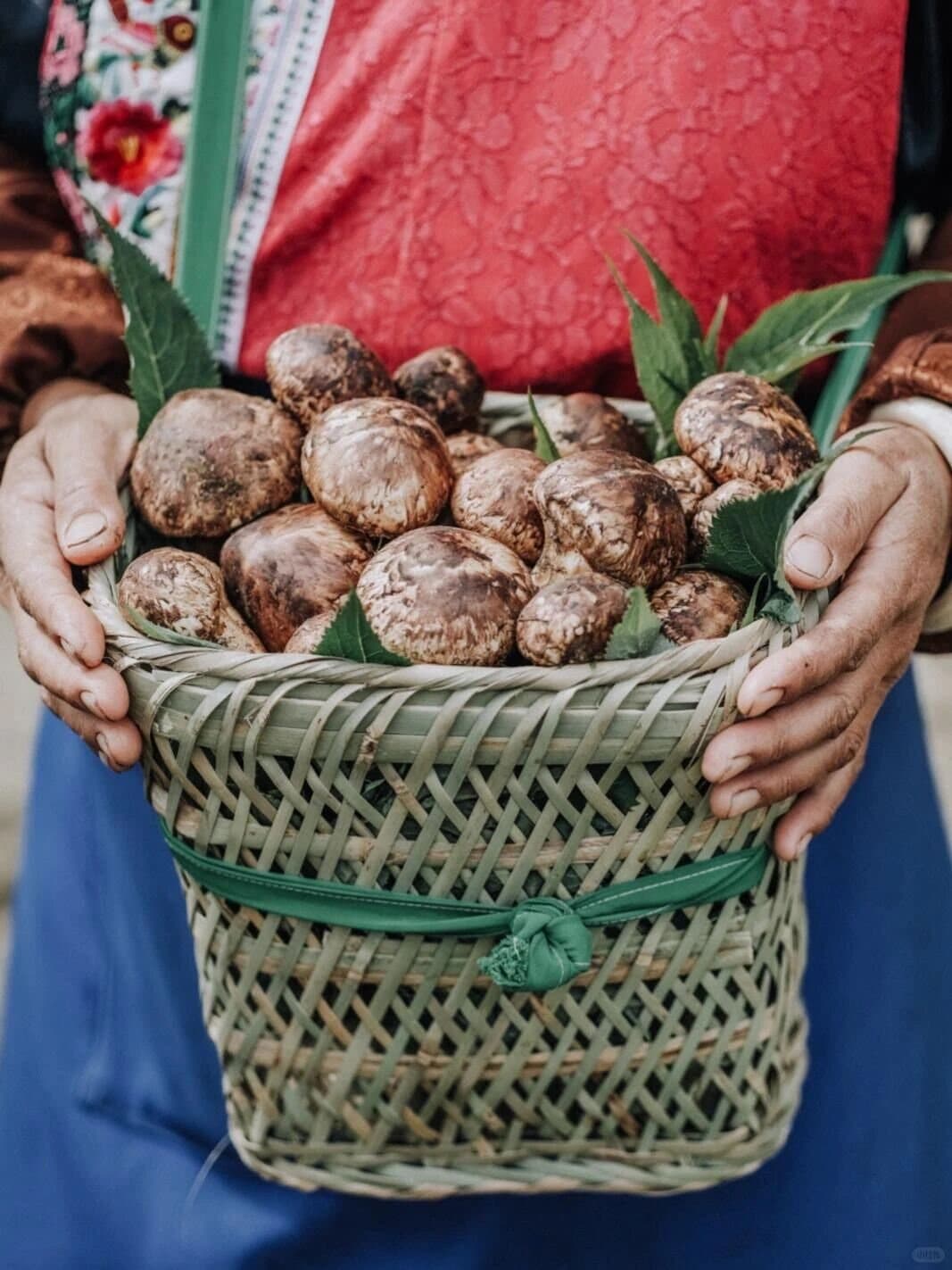
This is part of its magic. At dawn, before the forest has fully warmed, local foragers walk into the mountains. They move carefully over the soft forest floor, looking for tiny signs: a slight rise in the soil, a crack in the moss, a brown tip just visible under fallen leaves. Experienced matsutake gatherers do not search with force. They search with memory, patience, and respect. A good matsutake is often hidden. The forest does not give it away easily.
The Taste of a High Mountain Forest
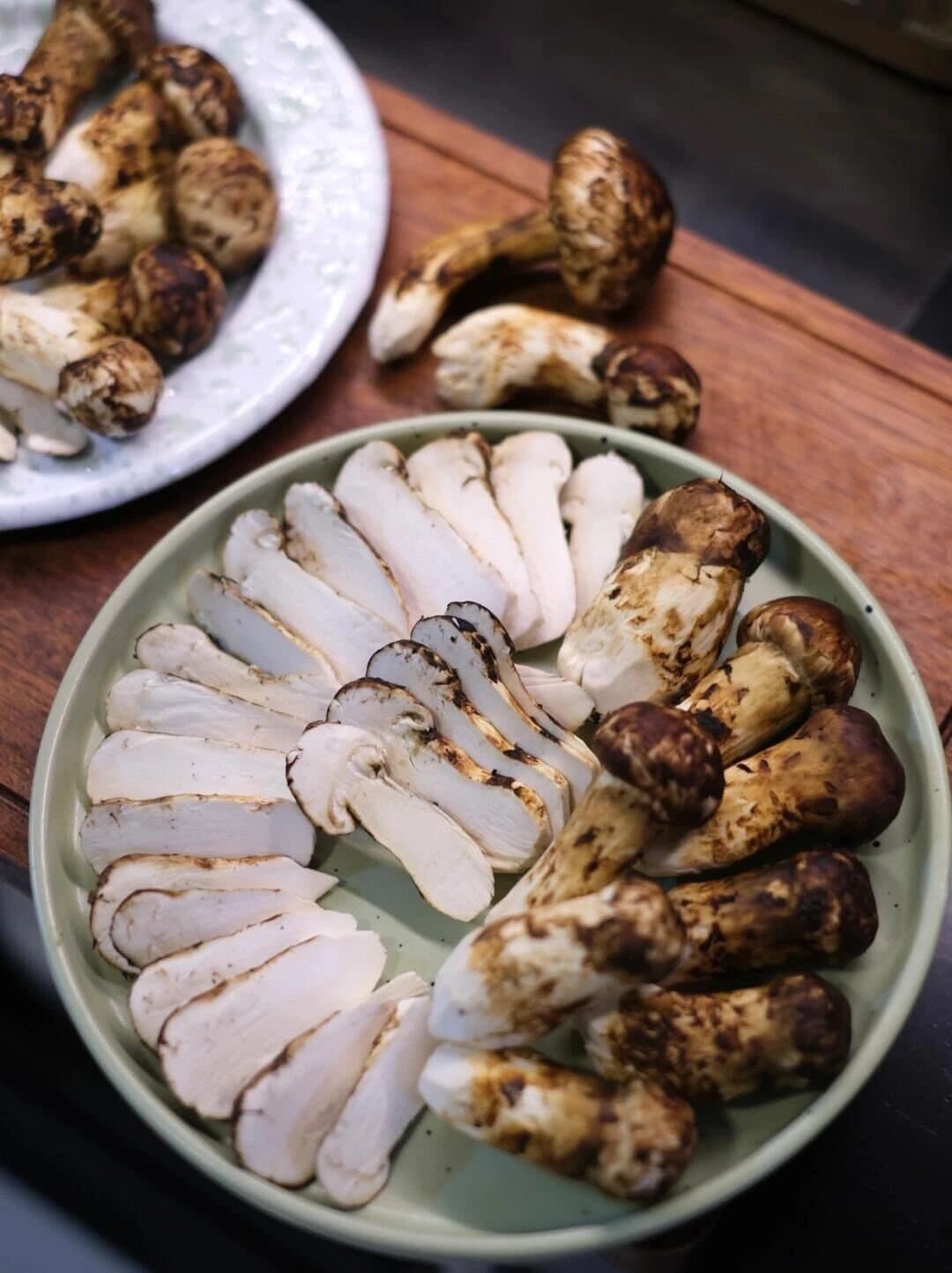
Fresh matsutake carries a scent that is hard to describe: clean, woody, slightly spicy, and deeply earthy. It smells like rain on pine needles, like cold mountain air, like the forest floor after summer storms. In local homes and restaurants, people prepare it simply. It may be grilled over charcoal with only a pinch of salt. It may be sliced into a chicken soup, steamed with rice, or cooked in a clay pot to preserve its clear mountain fragrance. Some people enjoy it thinly sliced when exceptionally fresh, allowing the natural sweetness and crisp texture to come through.
The best way to understand matsutake is not through heavy seasoning. It is through restraint. To eat matsutake in Shangri-La is to taste the place it comes from: the altitude, the rain, the old trees, the soil, and the short summer season that makes it possible.
Why Shangri-La?
Many mountain regions in China produce wild mushrooms. Yunnan itself is famous for its extraordinary fungal diversity. But Shangri-La has become especially associated with matsutake because of a rare combination of natural and cultural conditions.
The high altitude keeps the climate cool. The rainy season brings enough moisture for fruiting. The large areas of mixed pine and oak forest provide the living tree partners matsutake needs. The soil, enriched by years of fallen leaves and organic matter, supports a hidden underground network of fungal life.
Just as important is the way people have lived with the forest. For generations, local communities have understood that matsutake is not something to be taken carelessly. Traditional harvesting knowledge often includes rules that protect the future of the mushroom: pick mature specimens, leave the young ones to grow, avoid damaging the underground mycelium, and cover the soil again after harvesting.
These practices may seem simple, but they carry a deep ecological wisdom. A matsutake is not a single object. It is the visible fruit of an invisible forest system. If the underground network is harmed, the harvest of future years may disappear.
Today, Shangri-La matsutake is also protected and managed through geographical indication standards, traceability systems, and quality controls. These efforts help preserve both the reputation of the product and the fragile ecosystem behind it.
A Seasonal Gift, Not a Permanent Supply
Part of the value of matsutake lies in its refusal to be available all year. In modern travel, we often expect everything to be convenient, packaged, and ready whenever we want it. Matsutake reminds us of a different rhythm. It appears only when the season is right. It asks people to wait for rain, to walk into the forest, to understand the land, and to accept that nature does not work on demand.
This is why matsutake is more than a luxury ingredient. In Shangri-La, it is a seasonal story. It tells of old forests and highland weather. It tells of Tibetan villages, early morning foragers, mountain markets, and kitchens filled with the scent of pine and steam. It tells of a place where food is still closely connected to landscape.
Every fresh matsutake that emerges from the soil carries a little of Shangri-La’s mountain spirit with it. Born in the deep forest, shaped by rain and altitude, and gathered within a fleeting summer window, Shangri-La matsutake is not simply found here. It belongs here.