
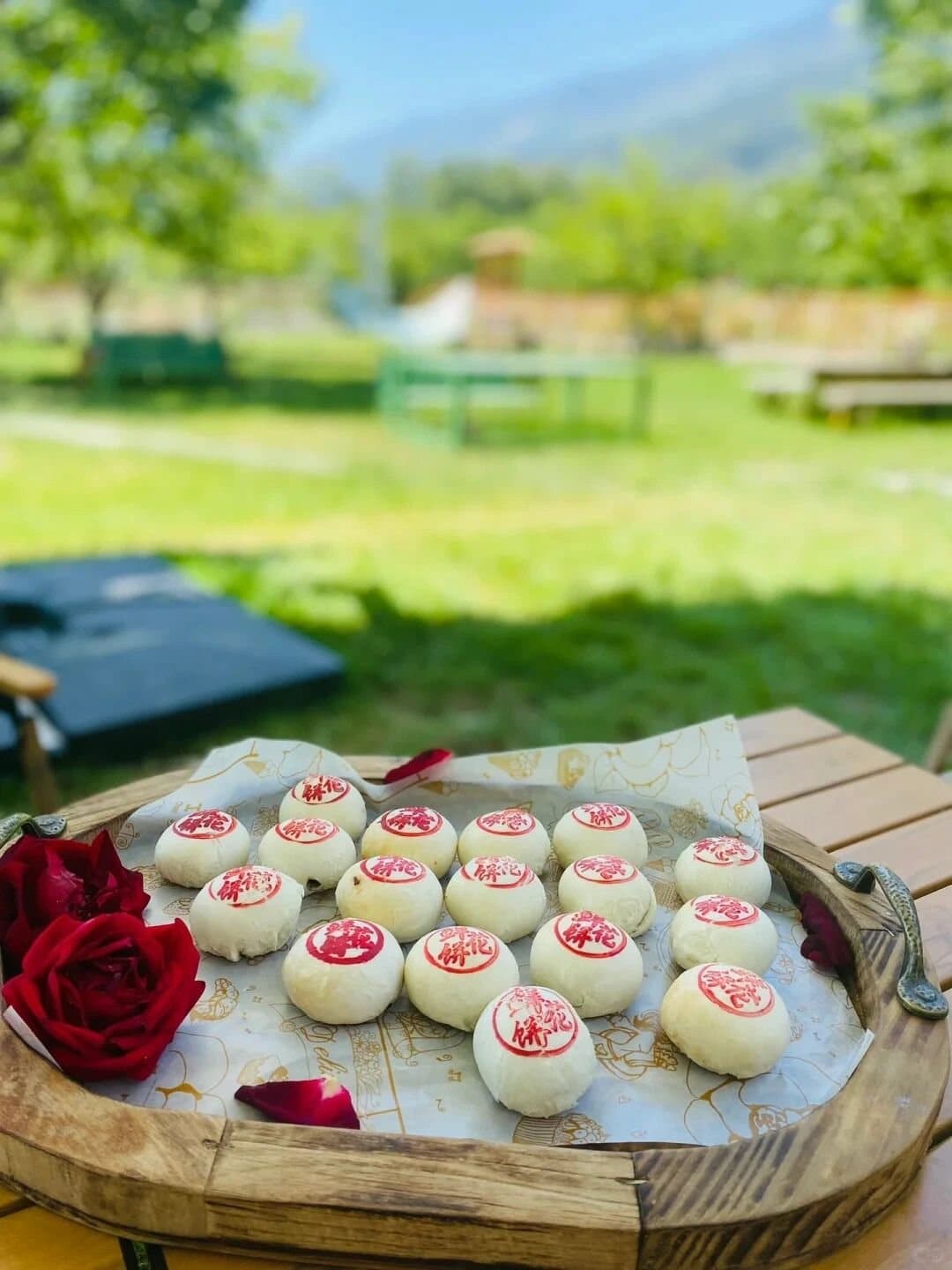
In Yunnan, flowers are not only something to look at. They are something to eat. Across the province, flowers appear in kitchens as naturally as vegetables do. They are fried with eggs, stirred into soups, steamed, pickled, brewed into tea, infused into wine, made into sauces, and baked into pastries. In a place where spring seems to last longer than elsewhere, eating flowers is not a novelty. It is part of daily life.
Among all of Yunnan’s flower-based foods, the most beloved is the flower pastry. Known in Chinese as xianhua bing, this small golden pastry carries a fragrant filling made from edible roses. Its crust is flaky and tender, its filling sweet but not heavy, and the moment it is opened, the scent of roses rises softly with the warmth of the pastry. It is one of the simplest and most poetic ways to taste Yunnan.
A Pastry Made From Flowers
Flower pastry is a traditional Chinese baked sweet, but in Yunnan it has become something especially local. The idea is beautifully direct: take fresh edible flowers, preserve their fragrance, wrap them in layers of delicate pastry, and bake them until the crust turns golden. What emerges from the oven is more than a dessert. It is a way of holding onto a season that disappears too quickly.
The filling is usually made with edible rose petals, sugar, and sometimes honey. The texture is soft and slightly sticky, with tiny petals still visible inside. The taste is floral, sweet, and faintly earthy, like a memory of the field where the flowers once grew. A good flower pastry should never taste artificial. It should taste like a rose warmed by sunlight.
Why Yunnan Loves Eating Flowers
Yunnan’s relationship with flowers is shaped by climate. The province is famous for its mild weather, strong sunlight, highland air, and long growing seasons. In Kunming, Dali, Chuxiong, Yuxi, and many other areas, flowers are not rare seasonal decorations. They are part of markets, farms, courtyards, festivals, and meals.
This abundance has shaped a particular way of living. Yunnan people do not only admire nature from a distance. They bring it into the home, onto the table, and into everyday rituals. A flower can be a gift, a dish, a medicine in folk tradition, a tea, a scent, a pastry, or simply a small pleasure bought from the market on the way home.
To eat flowers is to accept the season as it comes. It is also a quiet kind of wisdom: beauty does not have to be preserved forever to be meaningful. Sometimes it can be picked at dawn, folded into pastry, shared with tea, and remembered through taste.
The Edible Rose Fields
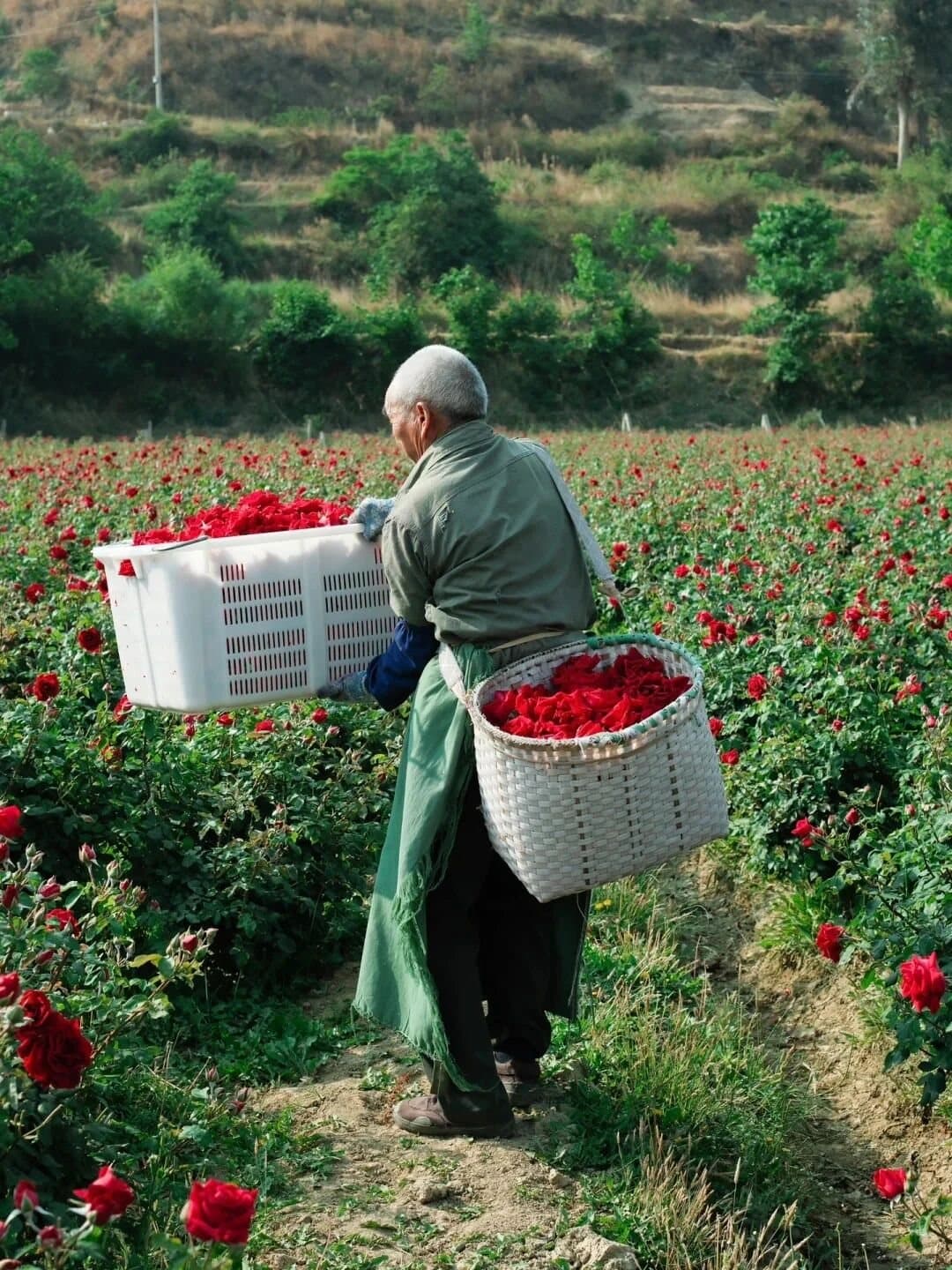
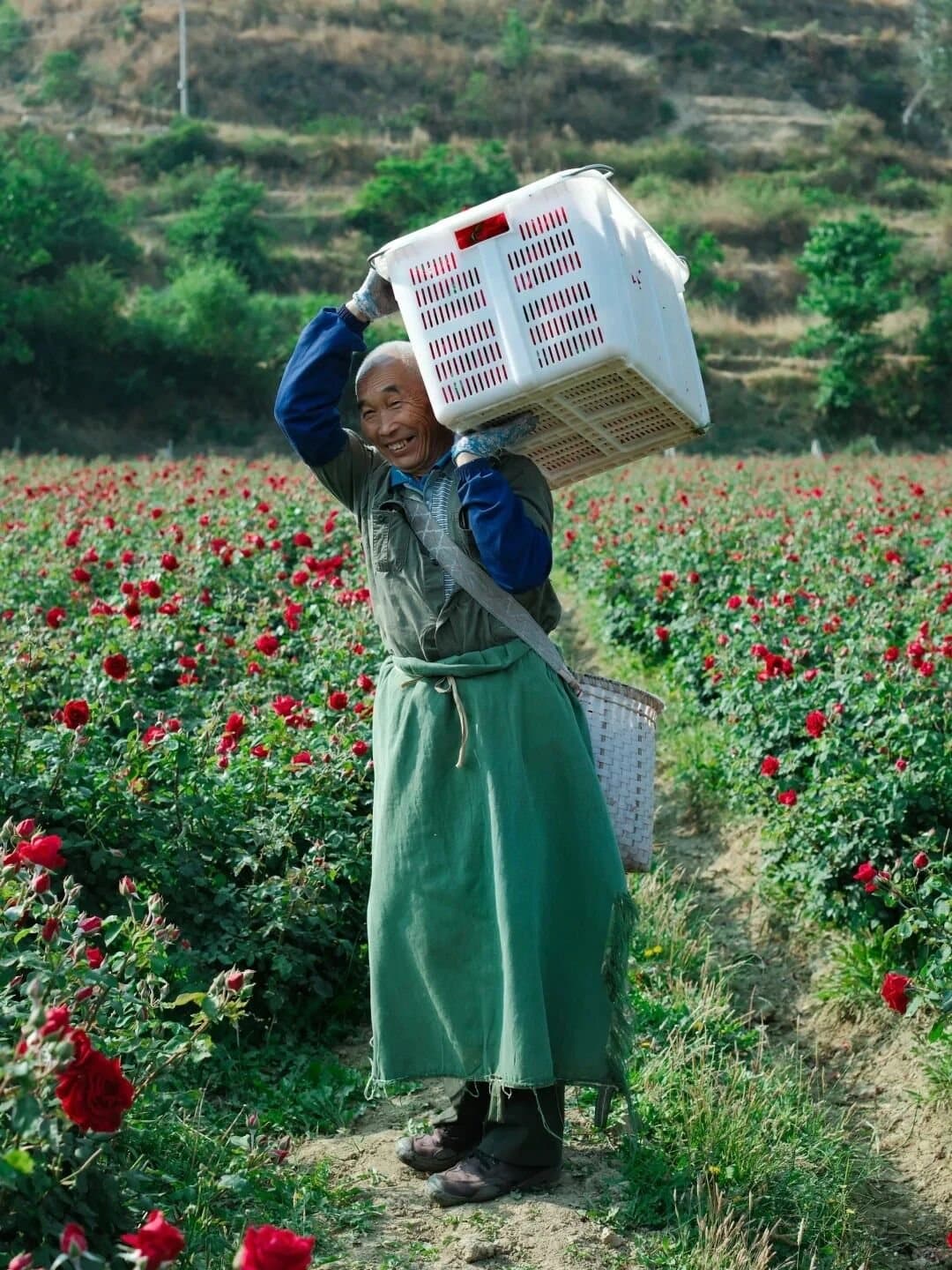
The roses used for flower pastries are not ordinary ornamental roses. They are edible roses, cultivated for fragrance and flavor. In Yunnan, these roses grow especially well under the province’s bright sun and gentle climate. Every year, around April and May, the rose harvest begins.
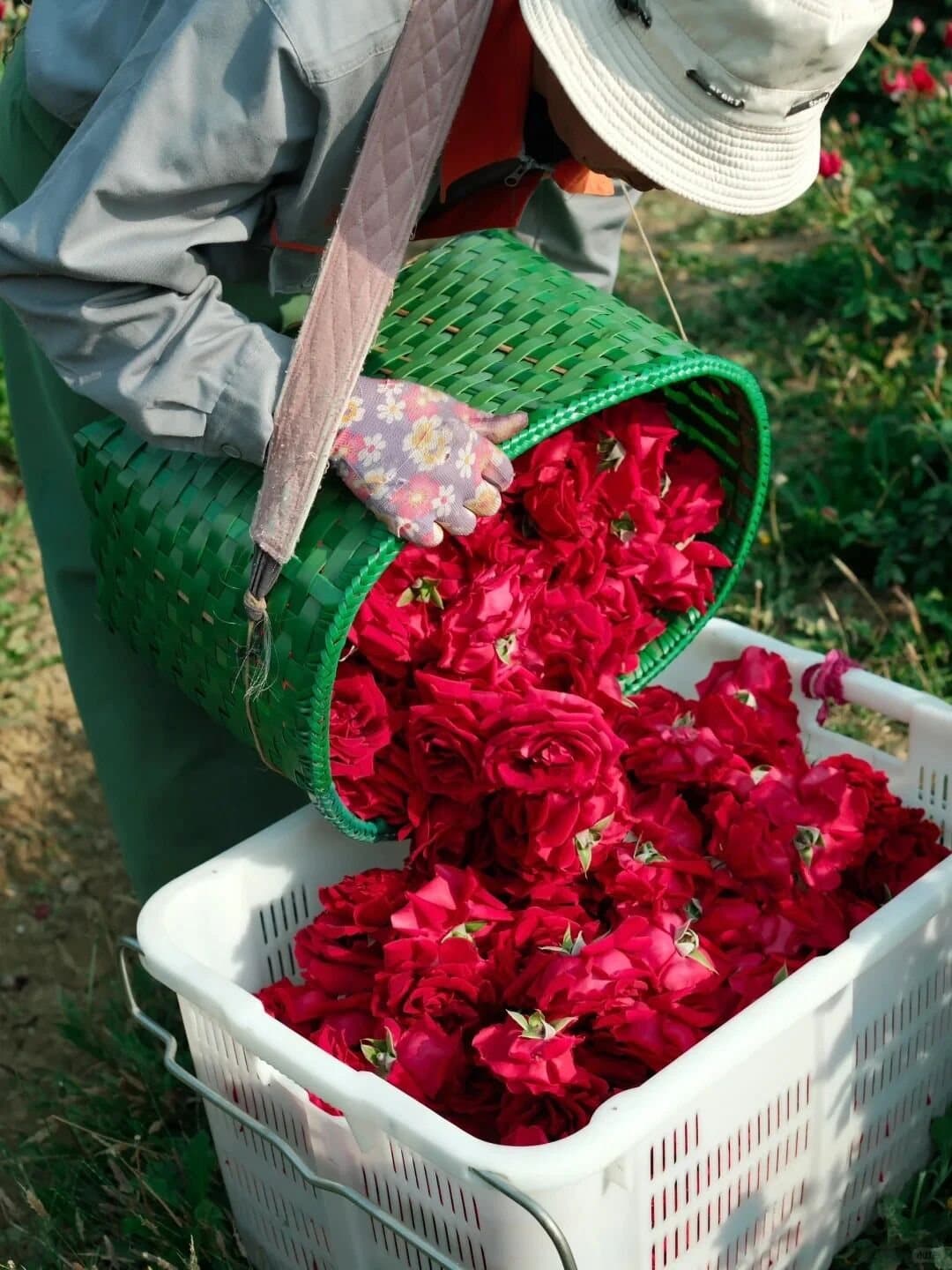
The best picking often happens early in the morning. Before the day warms, before the fragrance begins to fade, flower pickers walk into the fields and gather blossoms at their most fragrant. The petals are soft, vivid, and delicate. The air is filled with the scent of roses, soil, and morning dew.
This timing matters. A rose is at its most alive for only a short moment. Pick it too late, and some of its fragrance has already escaped into the air. Pick it with care, and that fragrance can be carried all the way into the pastry. From flower field to oven, the process is a race against time.
From Petals to Filling
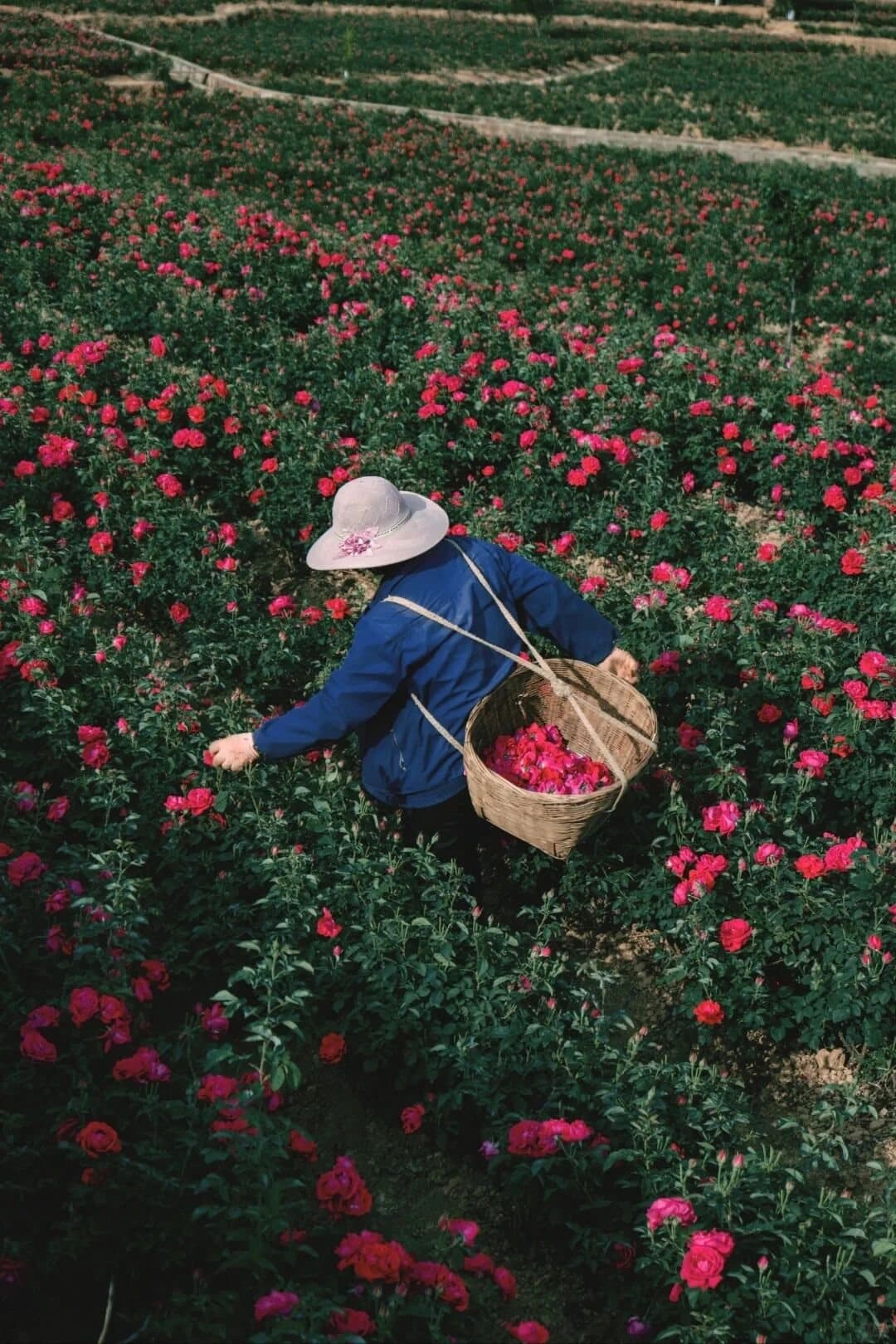
After the roses are picked, the petals are separated from the stem and calyx. The fresh petals are then mixed gently with sugar. Some makers add honey to soften the flavor and balance the natural bitterness of the petals. The mixture is pressed and rested, allowing the rose fragrance to deepen and the texture to become rich and jam-like.
This step is where the pastry begins to develop its soul. Too much sugar, and the rose disappears. Too little, and the bitterness may become sharp. The best filling keeps the brightness of the flower while turning it into something warm, fragrant, and lasting. It is not simply a sweet paste. It is preserved spring.
The Art of the Pastry
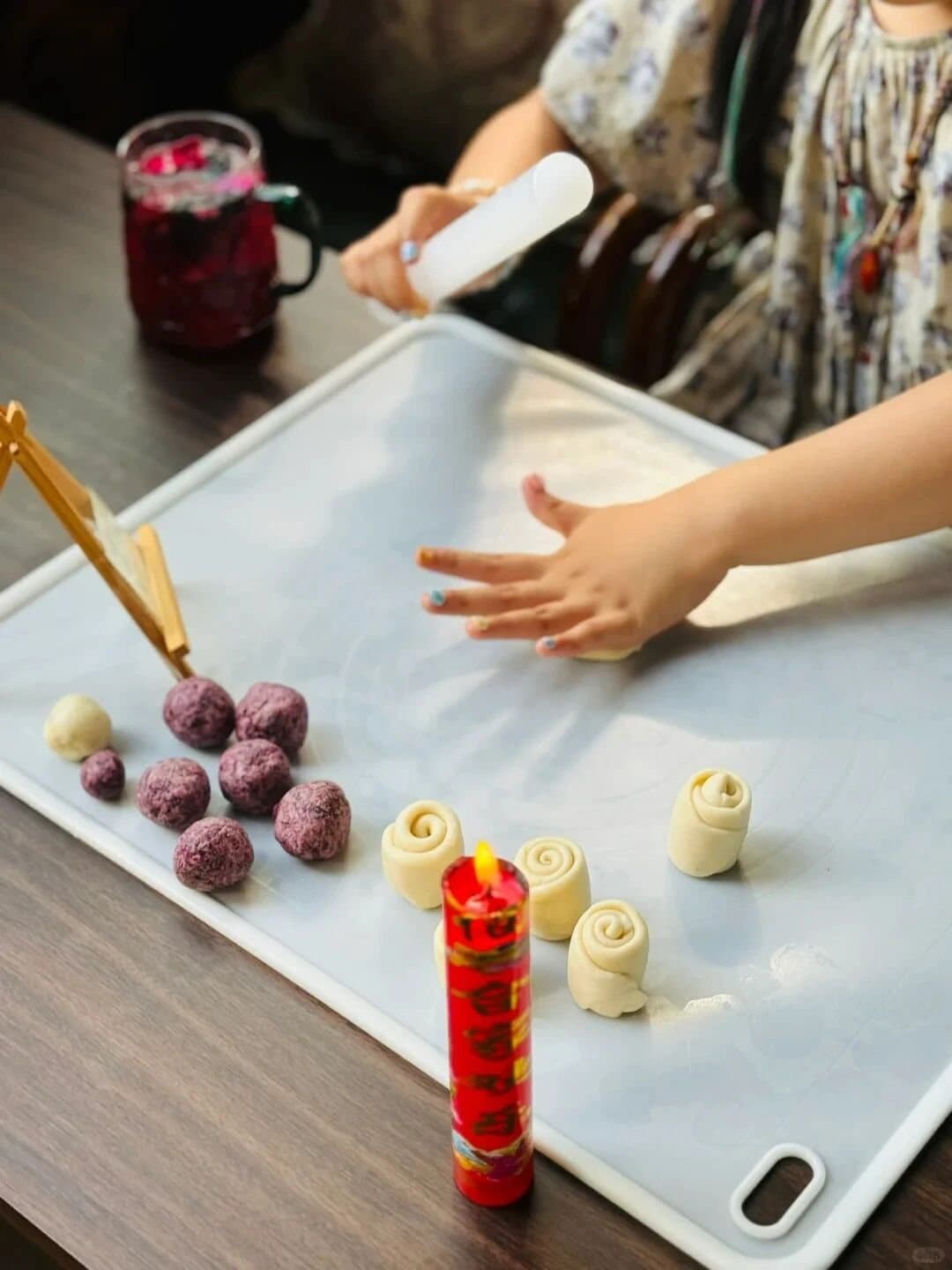
The pastry crust is just as important as the filling. Traditional flower pastries often use a layered dough made with flour, water, and fat to create a flaky texture. The outer layer should be delicate but strong enough to hold the rose filling. When baked, it becomes crisp on the outside and soft within, breaking into fine layers with each bite.
Before going into the oven, the pastry is usually sealed carefully, sometimes brushed lightly, and pricked with small holes so the steam can escape during baking. Then comes the waiting. Inside the oven, the dough turns golden. The rose filling warms. The fragrance begins to spread.
A fresh flower pastry is best eaten when still slightly warm. The crust gives way first, then the rose filling opens slowly on the tongue. It is sweet, floral, and surprisingly gentle. A cup of tea beside it is enough. Nothing more is needed.
A Taste of Yunnan’s Slow Life
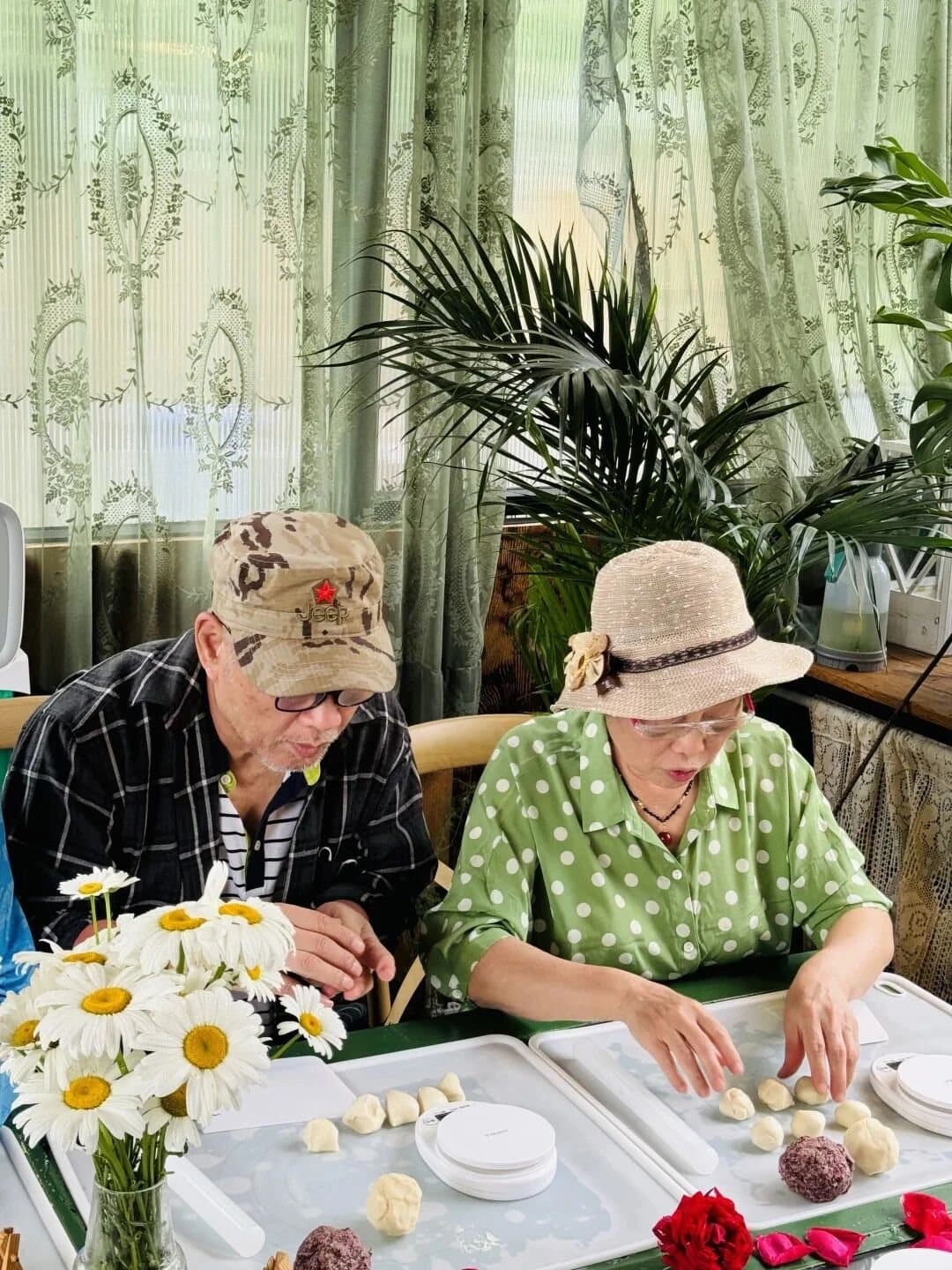
Making flower pastries by hand is one of the most enjoyable food experiences in Yunnan. In some farms, workshops, and guesthouses, travelers can learn the process from the beginning: picking roses, preparing the filling, kneading the dough, wrapping the pastry, waiting for it to bake, and finally tasting the result with tea.
The beauty of the experience is not only the pastry itself. It is the slowness. While waiting for the pastries to bake, you may sit in a courtyard, watch clouds pass over trees, feel the wind move through the grass, and realize that this is also part of the recipe. The pastry tastes better because you have touched the flowers. Because you have waited. Because you have allowed time to become visible.
In a fast world, making flower pastry feels almost like a small act of resistance. You cannot rush fragrance. You cannot hurry the oven. You cannot force a flower to bloom before its time.
More Than a Souvenir
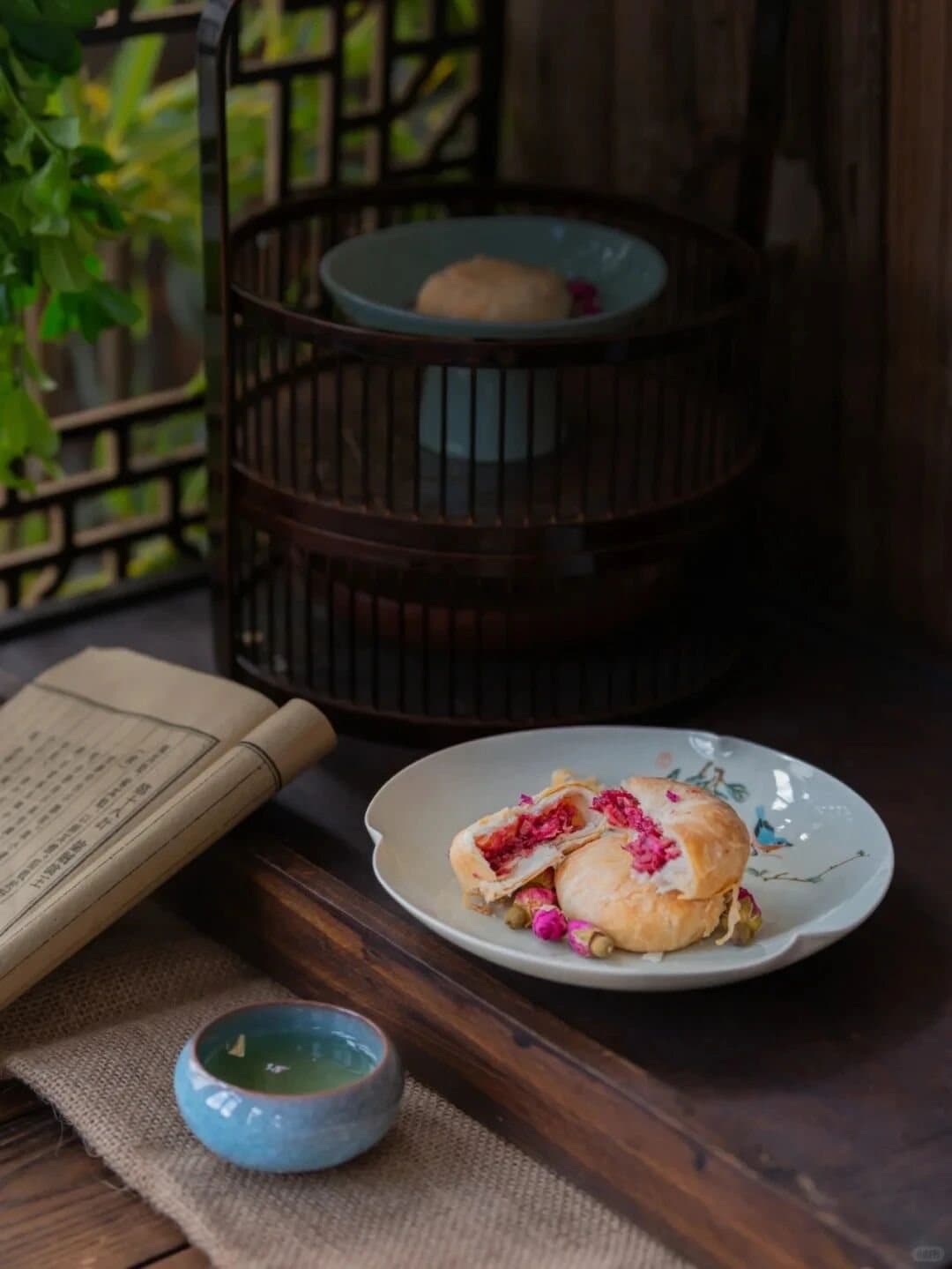
For many visitors, flower pastry is one of the first foods they buy in Yunnan. It is easy to carry, beautiful to gift, and closely associated with the province. But the best flower pastries are more than souvenirs. They are small edible stories about Yunnan’s land and seasons.
They speak of rose fields under highland sunlight. Of morning harvests. Of hands pressing petals with sugar. Of pastry layers folded patiently by bakers. Of tea tables, family visits, festival gifts, and quiet afternoons. They also reveal something about Yunnan’s idea of beauty. Here, beauty is not only visual. It can be fragrant, edible, handmade, and shared. It can appear in a market stall, a farmhouse kitchen, a bakery window, or a warm pastry placed beside a pot of tea. Yunnan’s flowers do not only bloom in gardens. They bloom on the tongue.
The Season Inside a Pastry
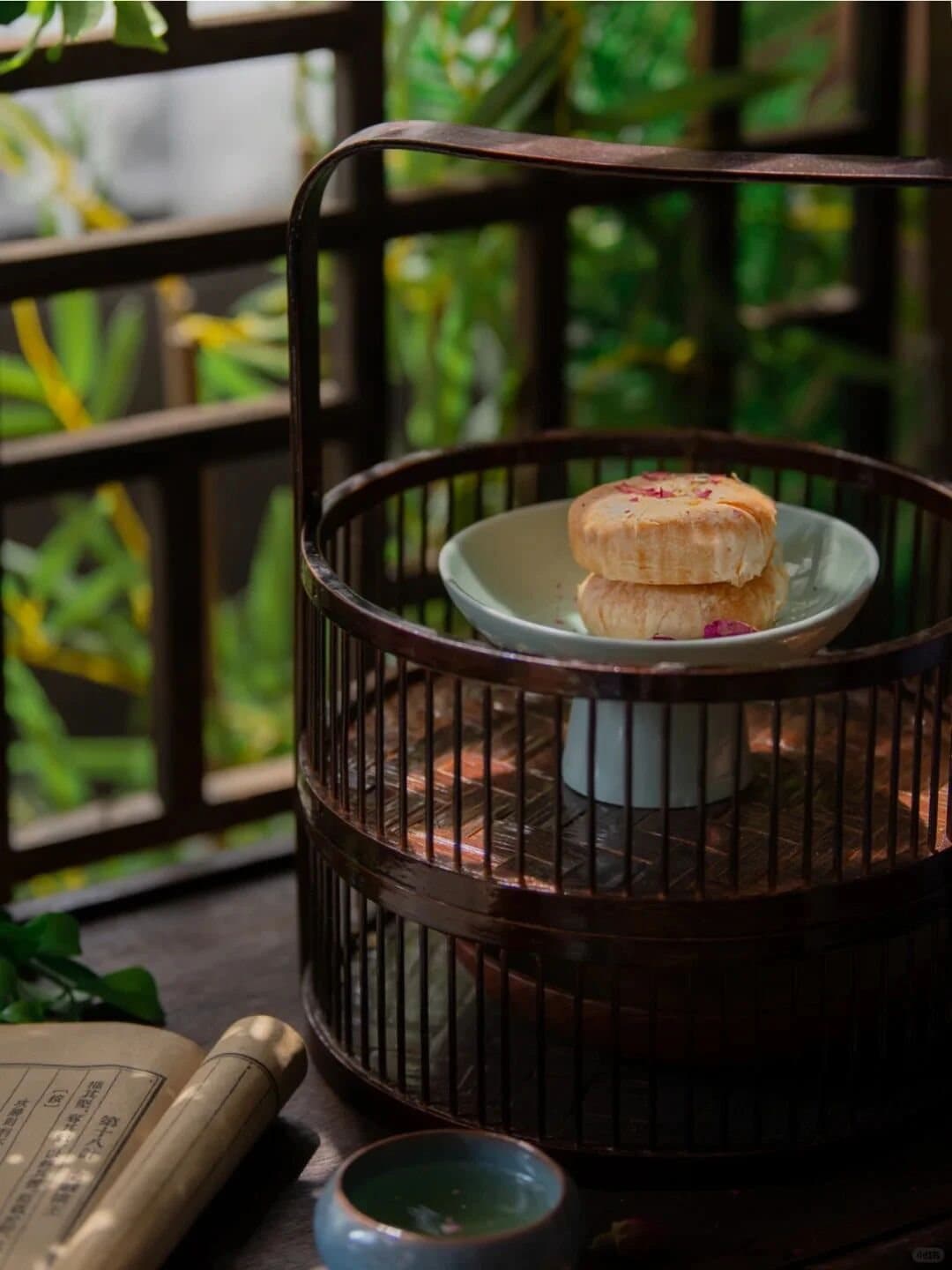
A flower lasts only a short time. A season passes even faster. Perhaps that is why flower pastry feels so tender. It tries to keep what cannot truly be kept: the brief fragrance of a rose, the light of spring, the feeling of standing in a field before the sun grows hot.
Of course, the pastry cannot stop time. But it can gather a little of it. One bite, and the flower returns. One cup of tea, one warm pastry, one quiet afternoon — sometimes that is enough to understand a place. In Yunnan, people have long known how to turn nature’s briefest gifts into daily comfort. A flower becomes a filling. A filling becomes a pastry. A pastry becomes memory.
Year after year, spring comes and goes. The roses bloom, are picked, baked, and shared. And somewhere between the flaky crust and the soft rose center, time seems to pause for a moment. This is the charm of Yunnan’s flower pastry: a small golden pastry, carrying the fragrance of an entire season.