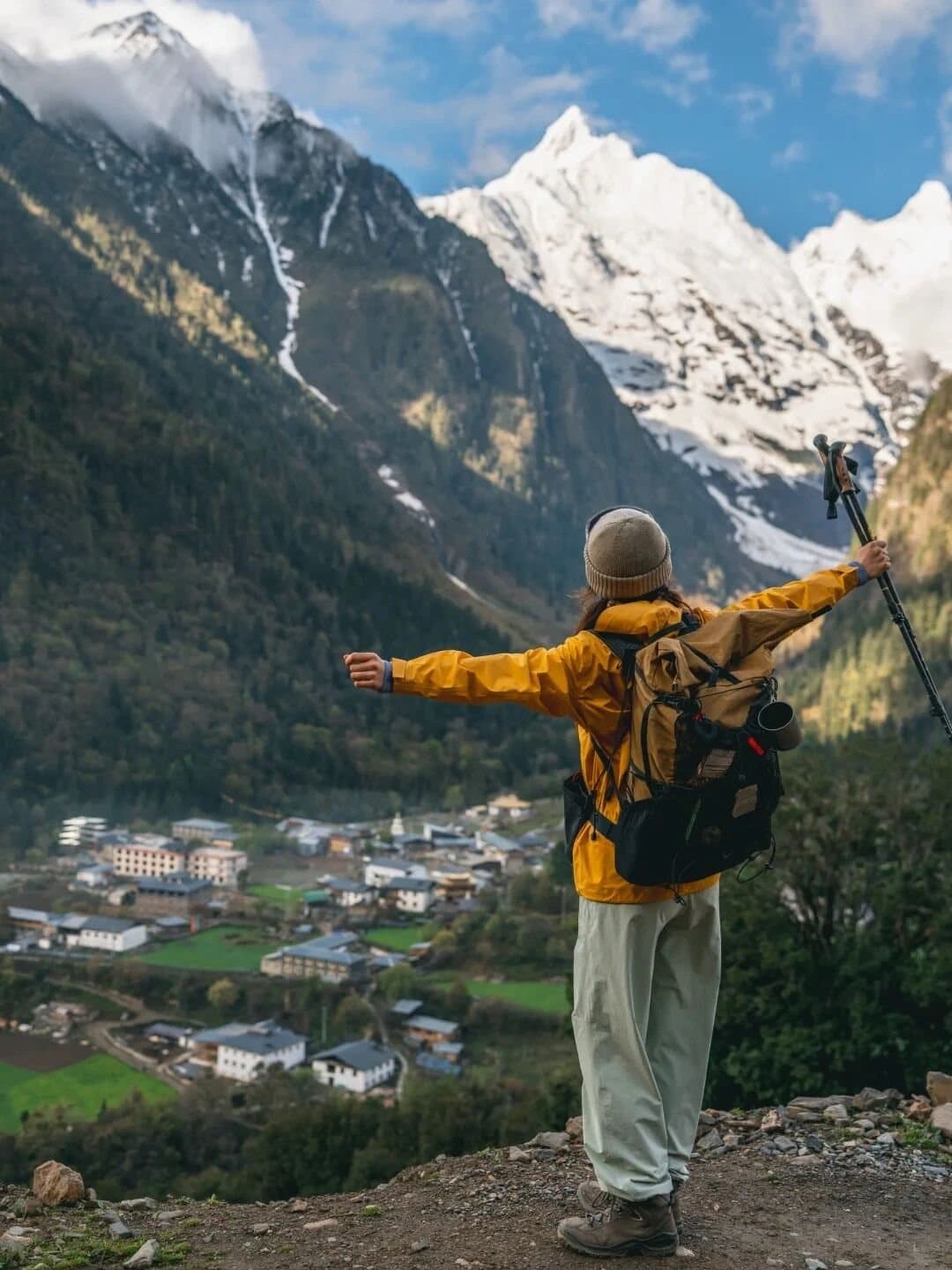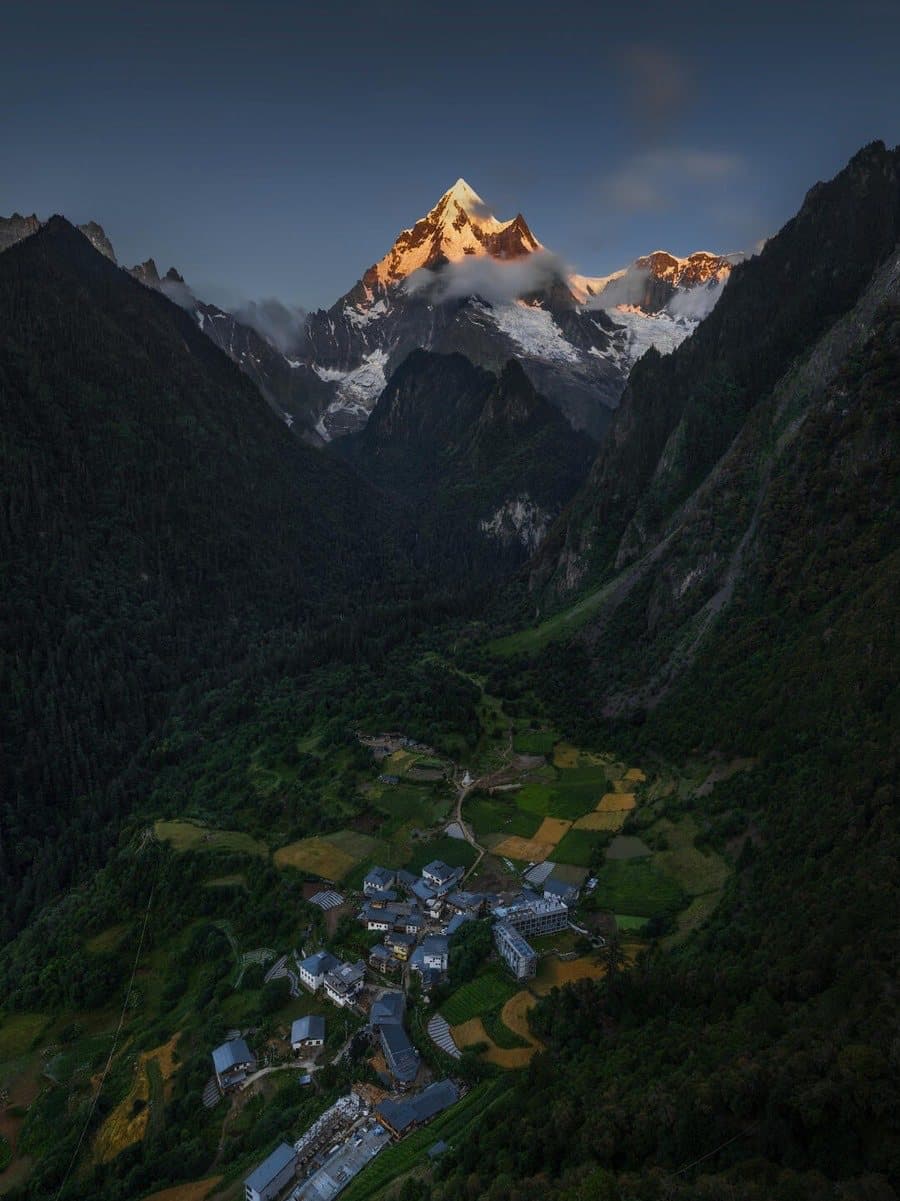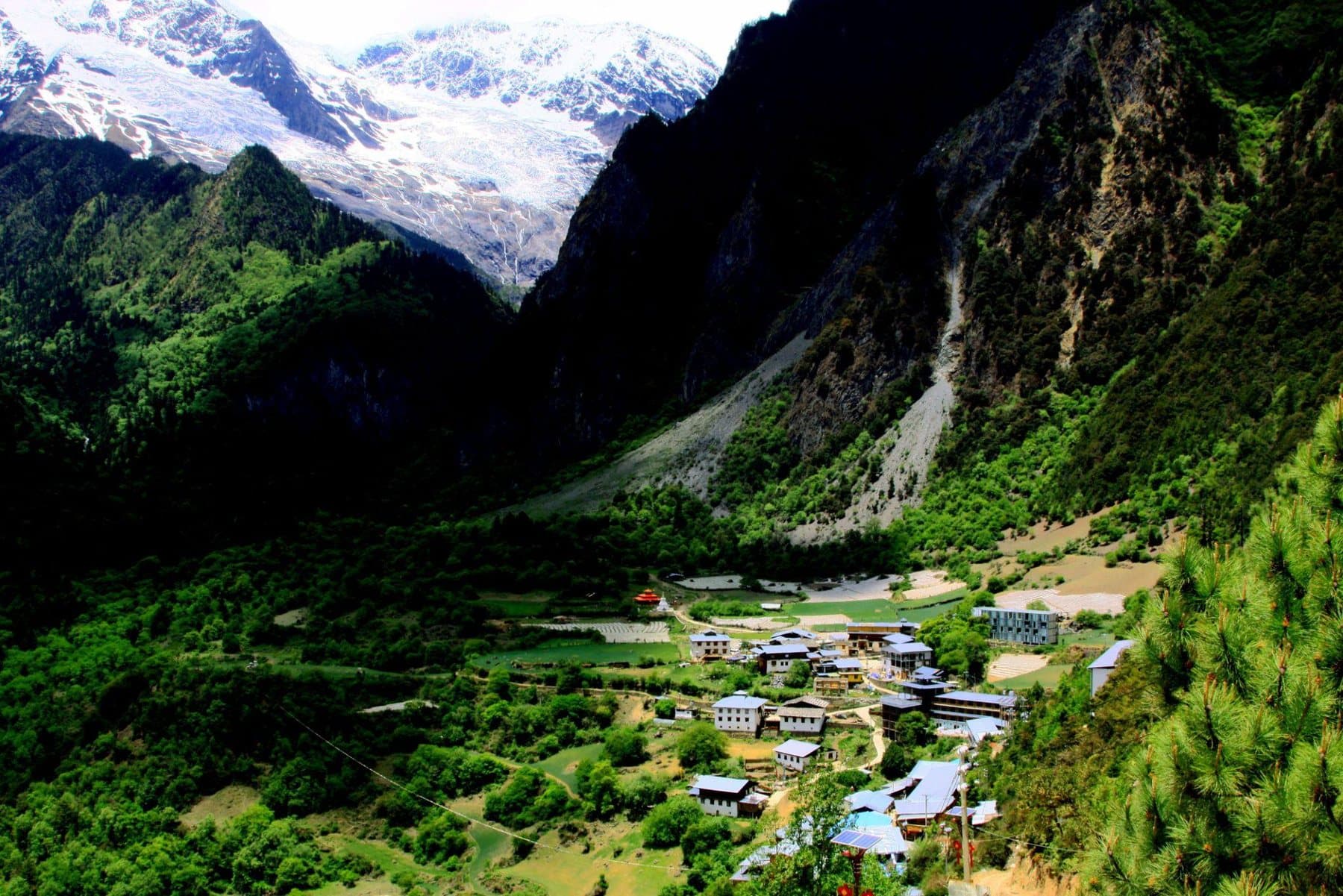
Deep in the folds of the Hengduan Mountains, there is a village that still feels half-hidden from the world. Its name is Yubeng. Tucked beneath the sacred peaks of Meili Snow Mountain in northwestern Yunnan, Yubeng is not a place you simply arrive at. For a long time, there was no easy road into the village. To reach it, people had to walk through forests, across mountain paths, and into a valley watched over by snow.
Even today, after travel has become easier, Yubeng still feels different from most destinations. It is not only a hiking village. It is not only a beautiful valley. It is a place where landscape, legend, and faith seem to breathe together. For many travelers, Yubeng is one of the most unforgettable places in Yunnan.
For Tibetan pilgrims, it is part of a sacred inner pilgrimage around Kawagarbo, the highest and most revered peak of Meili Snow Mountain. And for those who come from faraway cities, carrying questions they may not even know how to ask, Yubeng often becomes something quieter: a place where the body grows tired, the mind grows still, and the mountains begin to speak.
A Village Hidden by the Mountain
Local legends give Yubeng more than one meaning. One story says the name is connected to turquoise, describing a place where green mountains, forests, and fields seem to gather like precious stones in a hidden valley. Another story connects the name to sacred scriptures, suggesting a place where Buddhist teachings once appeared or were revealed.
Both meanings feel true. Yubeng has the purity of a secret landscape: wooden houses, prayer flags, grazing animals, forested slopes, glacial streams, and snow peaks rising beyond the clouds. But it also carries the weight of devotion. This is a village shaped not only by geography, but by belief.
In local memory, Yubeng was once a village hidden by the mountain deity. One old tale tells of a mysterious man who would come to nearby villages to borrow grain. Each year he borrowed it; each year he returned it. But no one knew where he lived. Curious villagers eventually followed the trail of grain leaking from his bag and discovered, beyond dense forest and mountain shadows, a village quietly resting under the snow peaks.
That village was Yubeng. Whether taken as history or myth, the story captures something essential: Yubeng feels discovered, not built. As if the mountains allowed it to be seen only when the time was right.
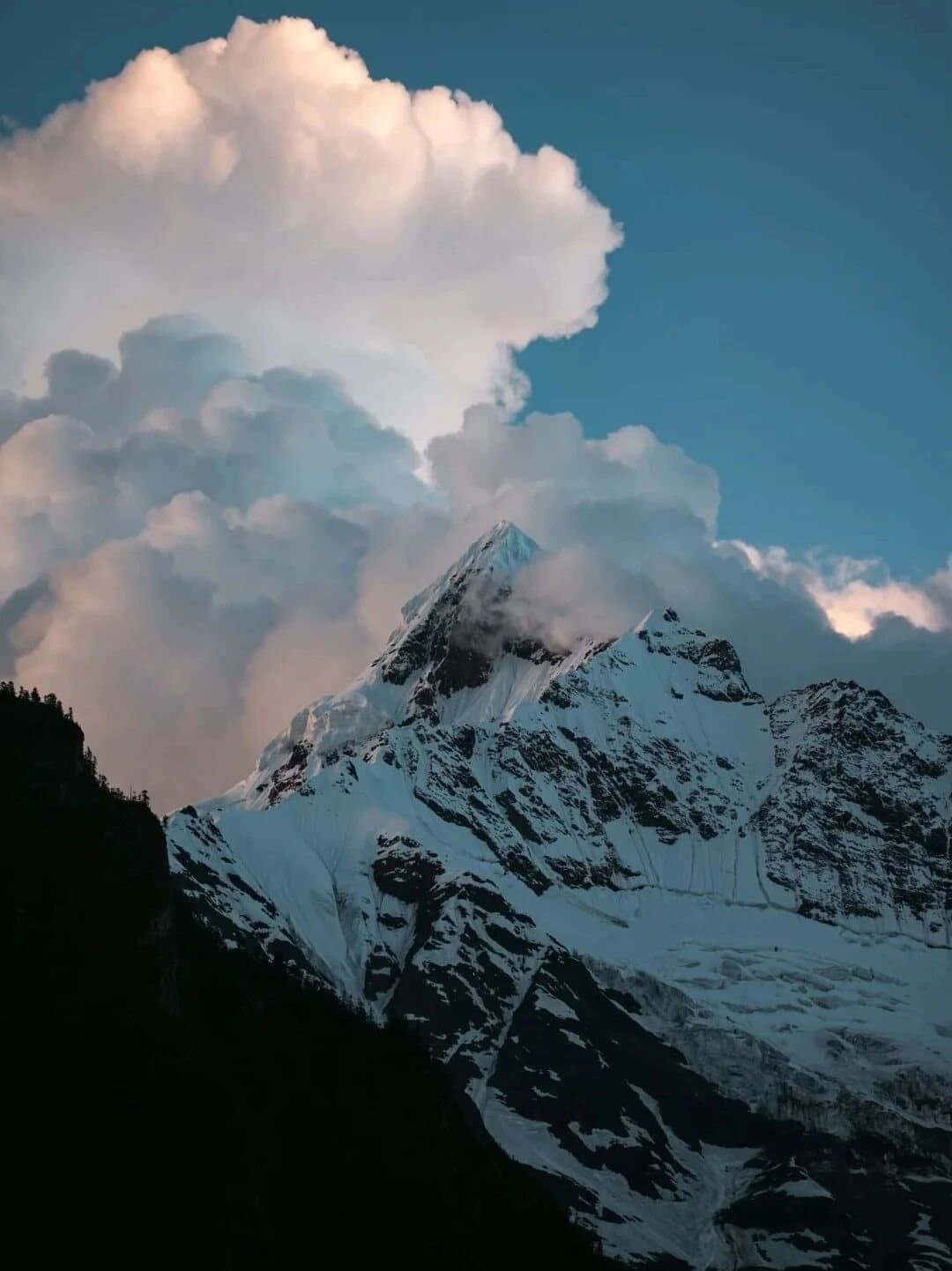
The Beginning of the Walk
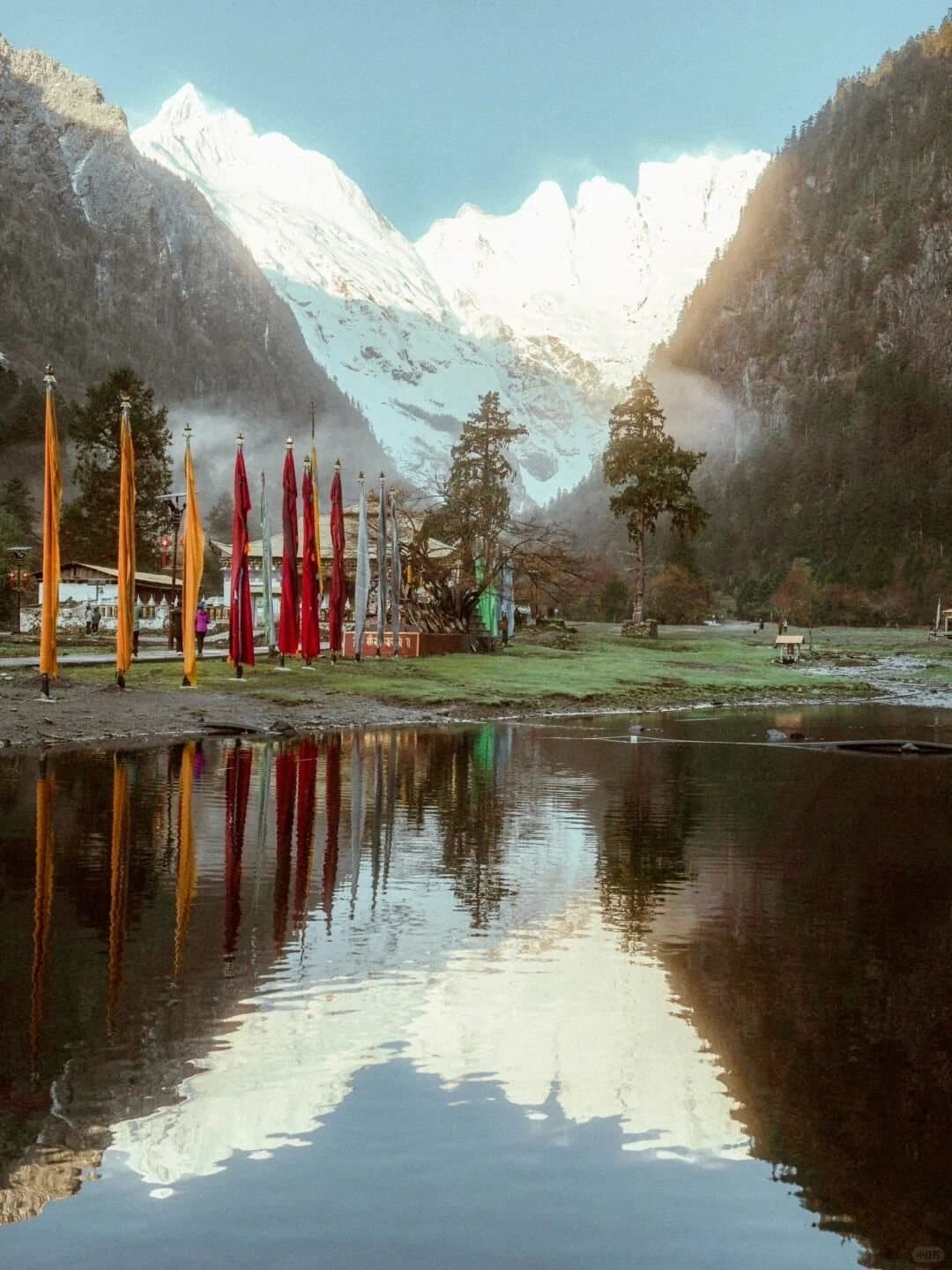
The journey into Yubeng is part of its meaning. In a world that often rewards speed, Yubeng asks for slowness. The road does not give itself away all at once. The mountains demand breath, patience, and humility. On the trail, people entering the village pass those who are leaving. The ones coming out often look different from those going in. Their shoes are muddy. Their faces are sunburned. Their eyes are calmer.
There is an unspoken exchange on the path: those who return seem to carry a quiet blessing; those who enter are still full of expectation. The climb is not just physical. Every step pulls you farther away from ordinary noise. Phone signals fade. The air thins. The forest thickens. The rhythm of walking replaces the rhythm of the city.
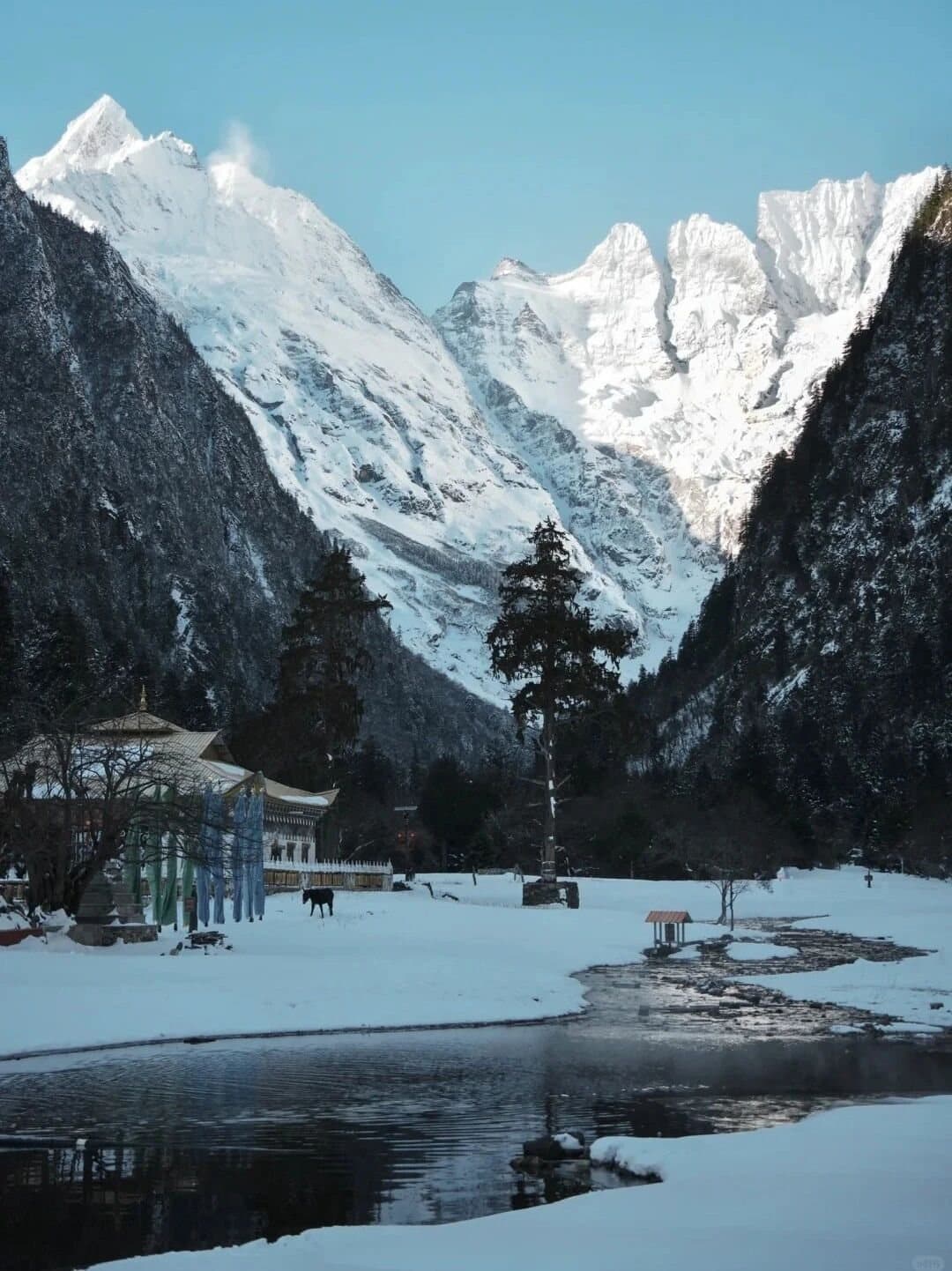
And then, after the final rise, Yubeng appears. White-walled houses sit between green slopes and dark forests. Prayer flags move in the wind. Above the valley, the sacred mountains remain silent. It feels less like arriving at a village and more like being admitted into another world.
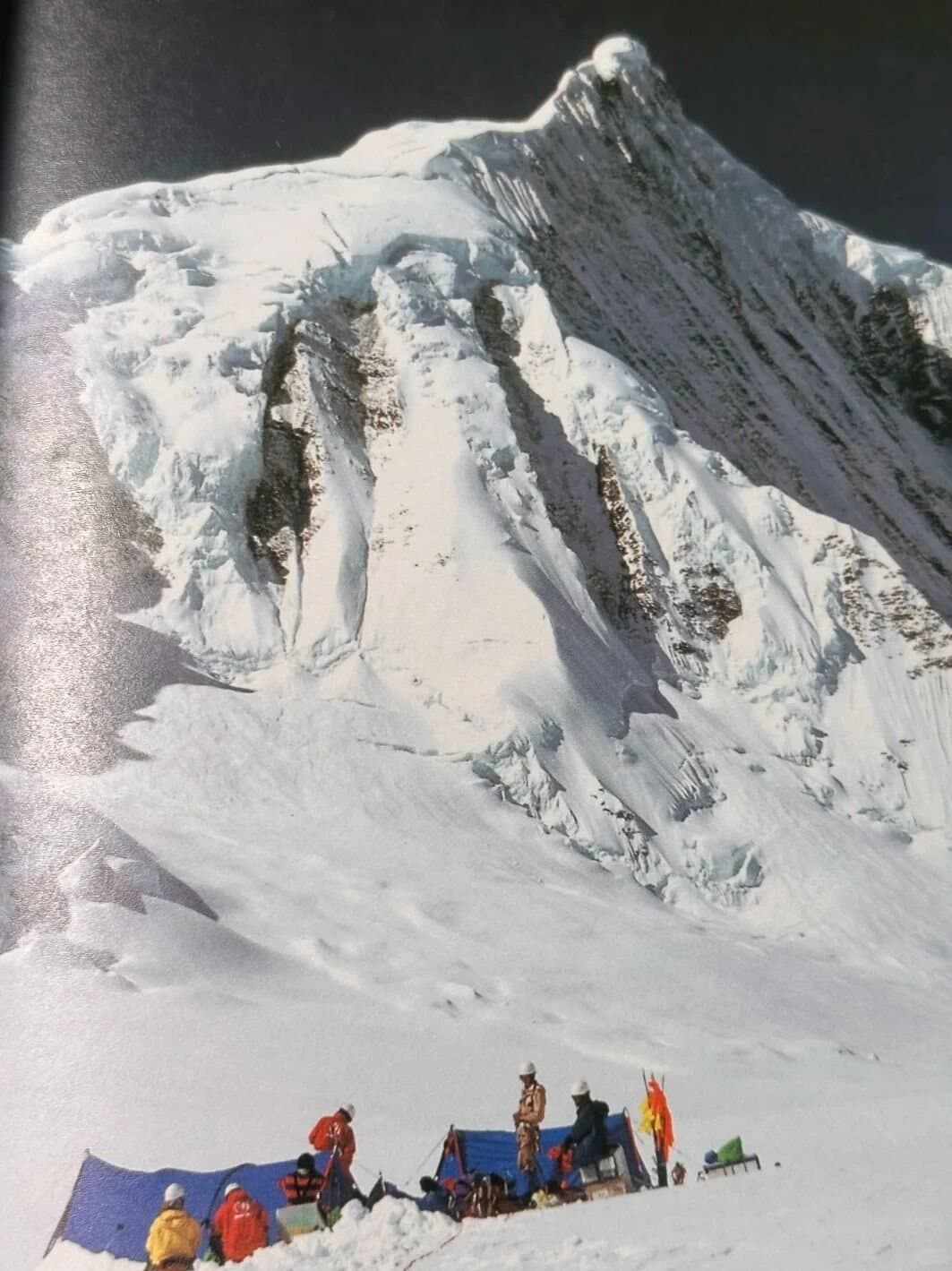
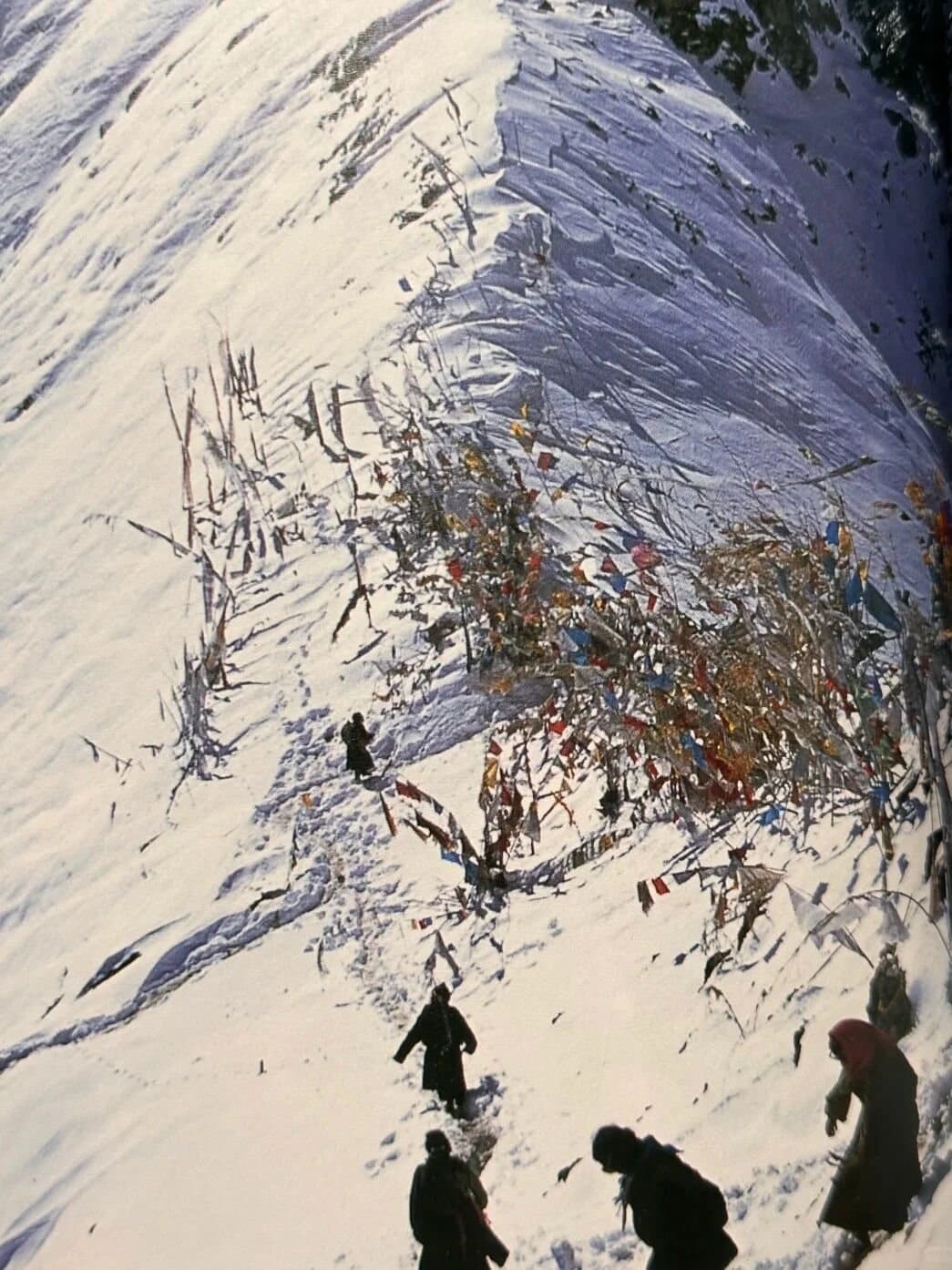
Three Paths Into the Sacred Landscape
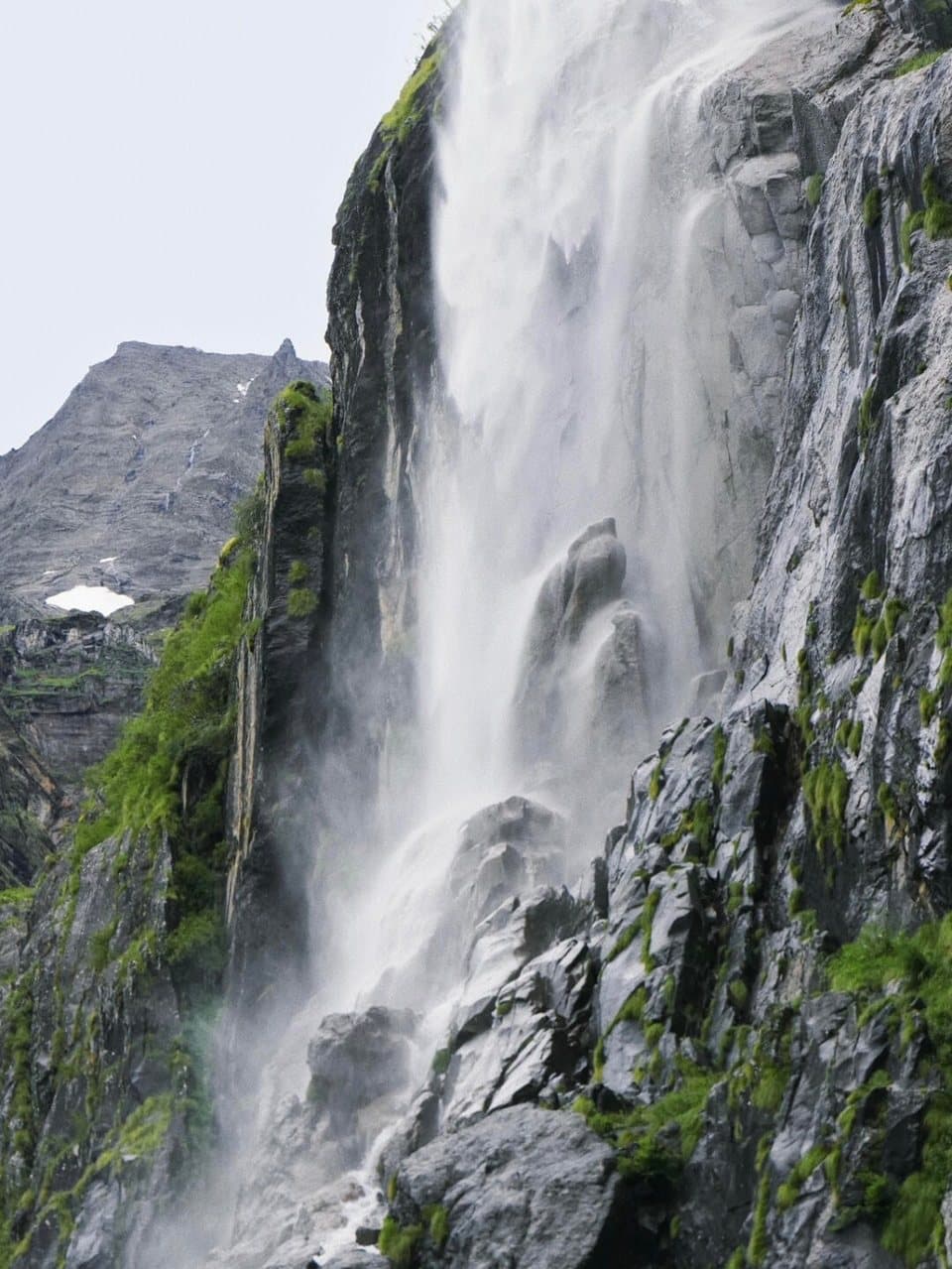
From Yubeng, three classic trails lead deeper into the mountains: Sacred Waterfall, Ice Lake, and Sacred Lake. Each route has its own character. The trail to Sacred Waterfall is the most spiritual. Many Tibetan pilgrims walk this route as part of their devotion. The waterfall falls from the slopes near Meili Snow Mountain, its spray drifting through cold mountain air. Pilgrims may circle the site, pray, or pass beneath the falling water as a symbolic cleansing.
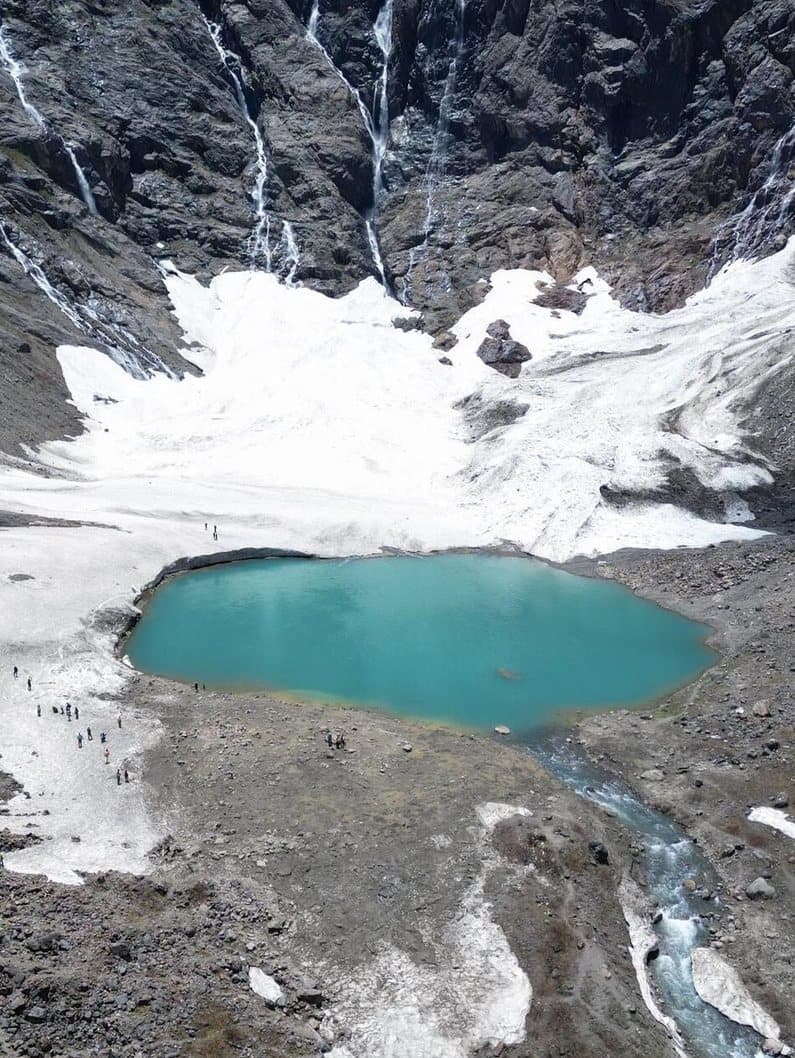
For travelers, the waterfall is not simply a scenic point. It is a reminder that in Yubeng, water is not only water. A trail is not only a trail. A mountain is not only a mountain. The route to Ice Lake is more demanding. It leads through old forests and alpine terrain toward a glacial lake beneath the snow peaks. The water is cold and clear, often carrying a deep green-blue color. Around it, the mountains stand with a kind of ancient stillness.
Here, beauty feels severe. There is little softness in the landscape. The lake, the ice, the rocks, and the wind all seem to belong to a world older than human language. Sacred Lake is the most difficult and least visited of the three. Hidden at a higher elevation, it requires stronger fitness, better preparation, and more respect for the mountain environment. Those who reach it often describe not excitement, but silence.
In Yubeng, the deeper you walk, the less the journey feels like sightseeing. It becomes a conversation with nature, with belief, and with yourself.
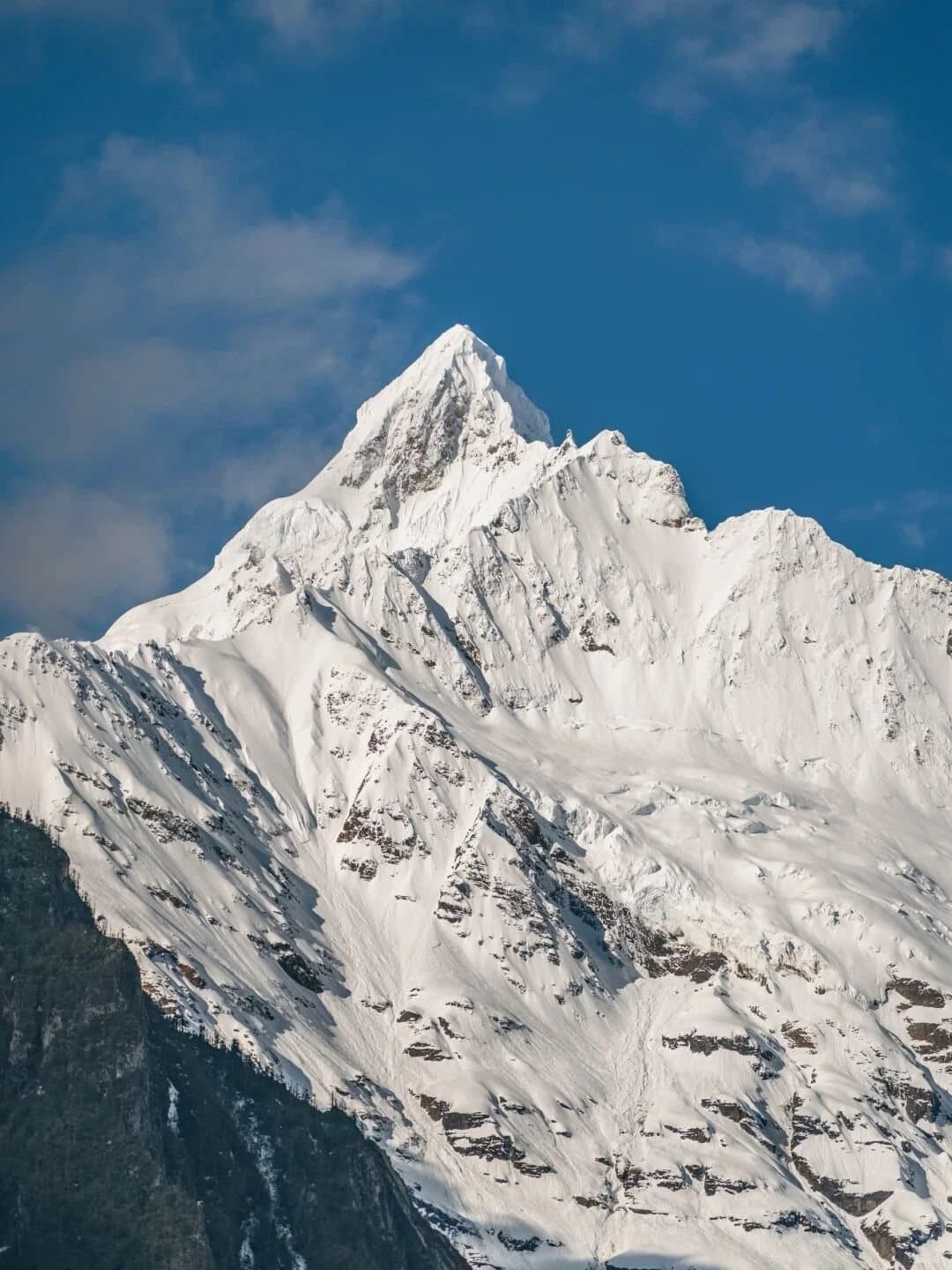
Kawagarbo: The Mountain That Must Not Be Conquered
Above Yubeng rises Kawagarbo, the main peak of Meili Snow Mountain. At 6,740 meters, it is the highest peak in Yunnan. But for local Tibetan communities, Kawagarbo is not simply a mountain to be measured by altitude. It is a sacred presence, a mountain deity, and one of the most revered peaks in Tibetan Buddhist belief.
Many mountains in the world are famous because people have climbed them. Kawagarbo is famous because it has not been climbed. For generations, local people have believed that some places should not be conquered. To climb Kawagarbo is not seen as a heroic act, but as a violation of the sacred relationship between humans and the mountain.
This belief became impossible for the outside world to ignore after the tragic events of 1991. That year, a Chinese-Japanese mountaineering team attempted to climb Kawagarbo. Seventeen climbers were caught in a massive avalanche and lost their lives. Years later, remains and belongings began to emerge from the glacier below, as if the mountain were slowly returning what it had taken.
The tragedy changed the way many people looked at Meili Snow Mountain. It was no longer only a challenge for mountaineers. It became a question: Are all heights meant to be reached? Is every unknown place meant to be conquered? Or are some places powerful precisely because they remain beyond us?
In 2001, climbing Kawagarbo and the Meili Snow Mountain area was officially prohibited. Since then, the peak has remained unclimbed. Its summit is still untouched. Its silence remains intact.
The Inner Pilgrimage
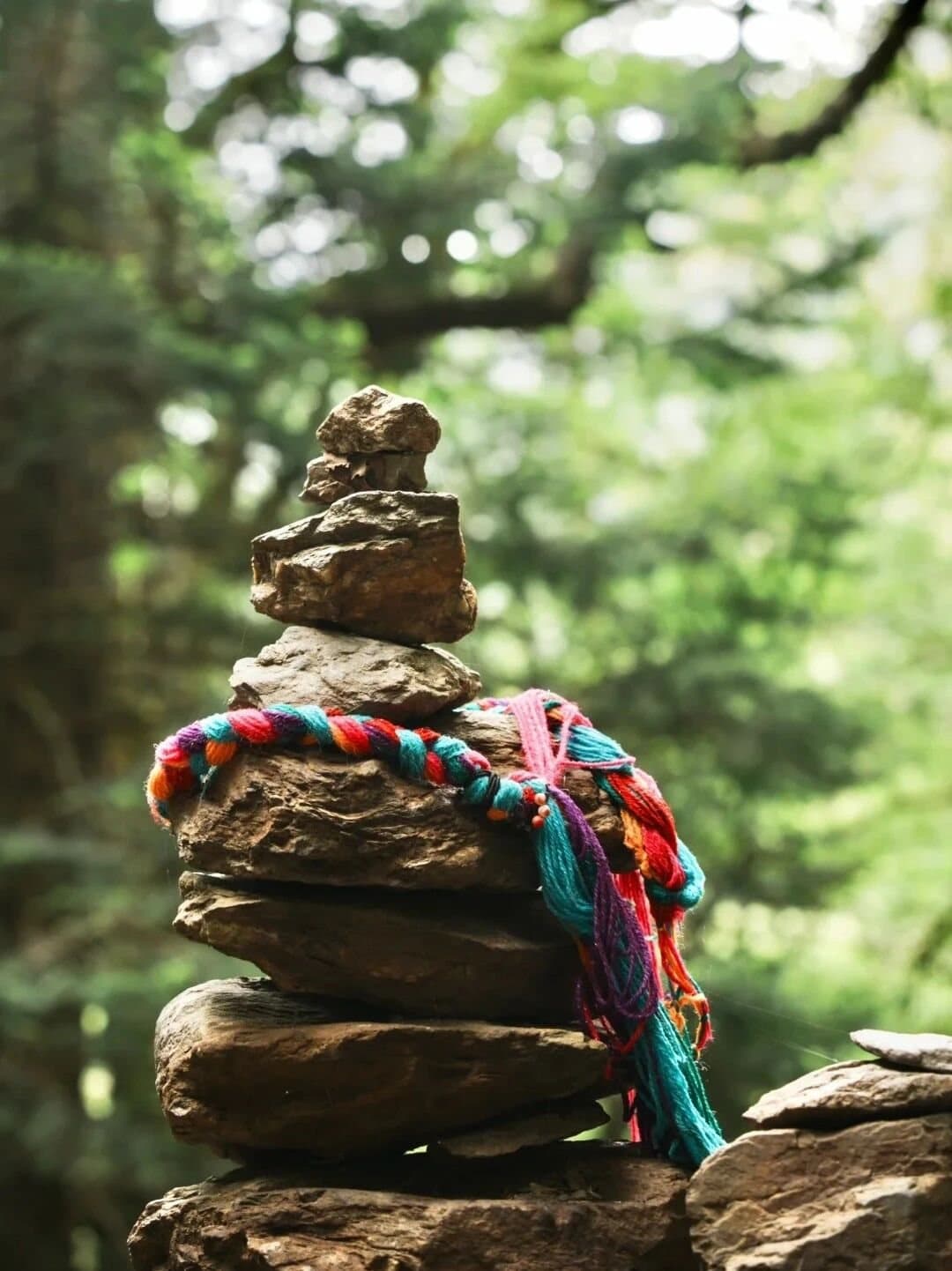
The Yubeng trek is often associated with the “inner kora” of Meili Snow Mountain. A kora is a pilgrimage circuit, a way of walking around a sacred object, temple, lake, or mountain. In Tibetan Buddhist practice, walking is not merely movement. It can be prayer. It can be purification. It can be a way of placing the body inside devotion.
The longer outer kora around Meili Snow Mountain can take many days. The inner route, centered around Yubeng and nearby sacred sites, is shorter, but still carries deep spiritual meaning. For pilgrims, the purpose is not to conquer distance.
It is to move with reverence. For modern hikers, this may be one of the most important lessons Yubeng offers. The mountain does not need to be defeated. The trail does not need to be rushed. The destination does not need to be consumed. To walk in Yubeng is to learn another kind of travel. A slower one. A humbler one. A way of moving through the world without trying to own it.
Why Yubeng Stays With You
Many people come to Yubeng for the photos: the snow mountain, the village, the waterfall, the lake, the sunrise over Meili. But most people leave with something harder to describe. They remember the sound of their own breathing on a steep path. They remember the feeling of being very small beneath a mountain that does not need them. They remember the prayer flags, the dogs sleeping beside the road, the cold air in the morning, the sudden quiet after hours of walking.
Yubeng changes the scale of things. The worries that felt urgent in the city become less sharp here. The body grows tired, but the mind becomes clear. The mountain does not answer your questions directly. It simply stands there, ancient and unmoved, until you begin to hear your own thoughts differently.
This is why Yubeng is more than a beautiful trekking route in Yunnan. It is a reminder. Some places are not meant to be conquered. Some journeys are not meant to be rushed. Some mountains exist not so that humans can stand above them, but so that we can remember how to look up.
In Yubeng, walking becomes a form of listening. And beneath the sacred snow peaks of Meili, every step feels like a small return: to the mountain, to silence, and perhaps, to yourself. https://www.easytourchina.com/images/Photo/meili-snow-mountain/p368d20190419104719.jpg