
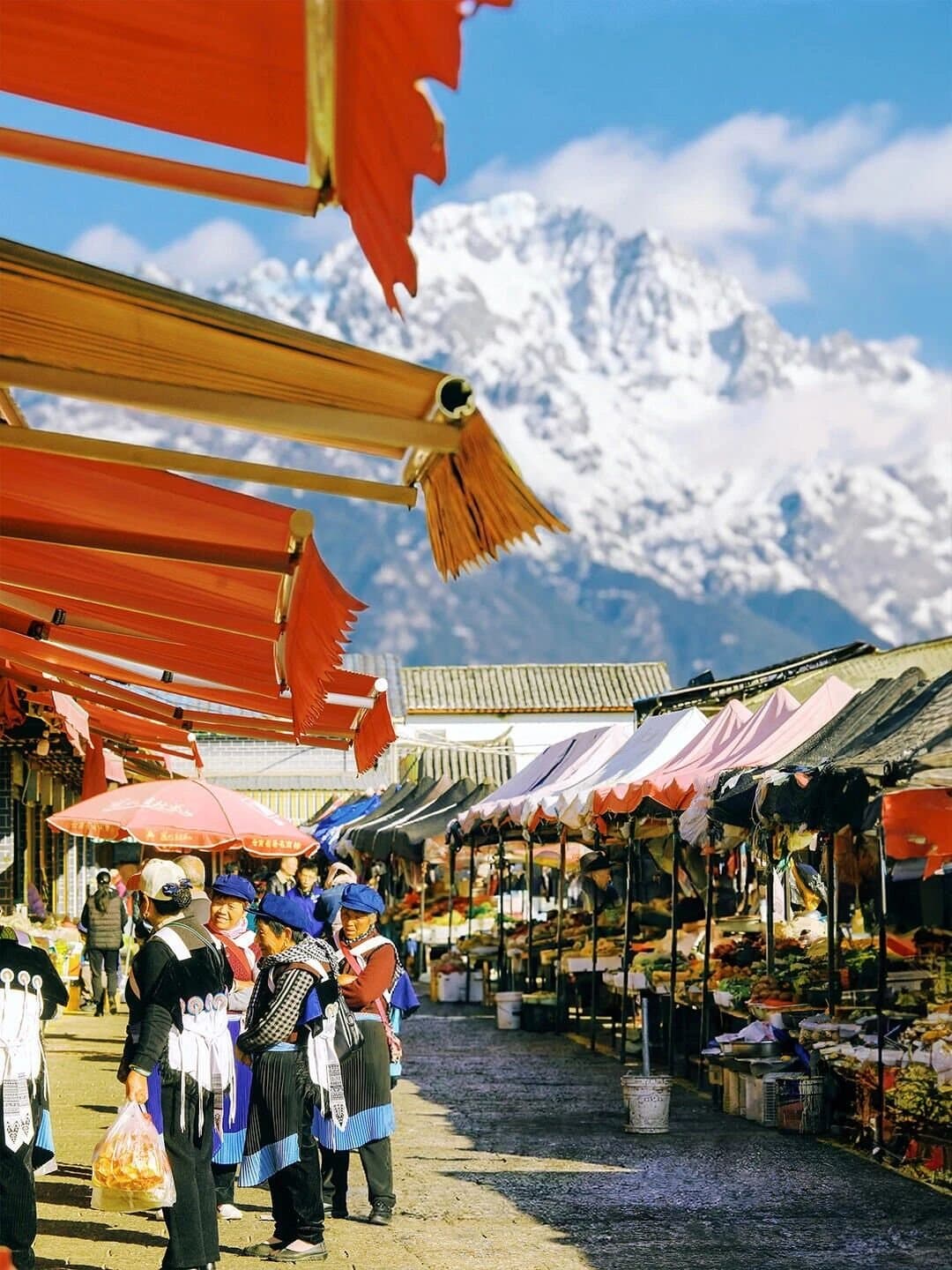
If flowers are the romance of spring in Yunnan, wild greens are its honesty. In this province, spring does not only arrive in parks, mountains, or famous scenic spots. It arrives quietly in market baskets. After the first days of spring, the vegetable stalls begin to change. Tender shoots, wild herbs, tree blossoms, edible flowers, and unfamiliar mountain greens appear one by one, as if the land itself has started speaking again.
For travelers, this is one of the most intimate ways to understand Yunnan. You do not always need a detailed itinerary. Sometimes, you only need to follow where the locals shop.
The Spring That Appears on a Market Stall
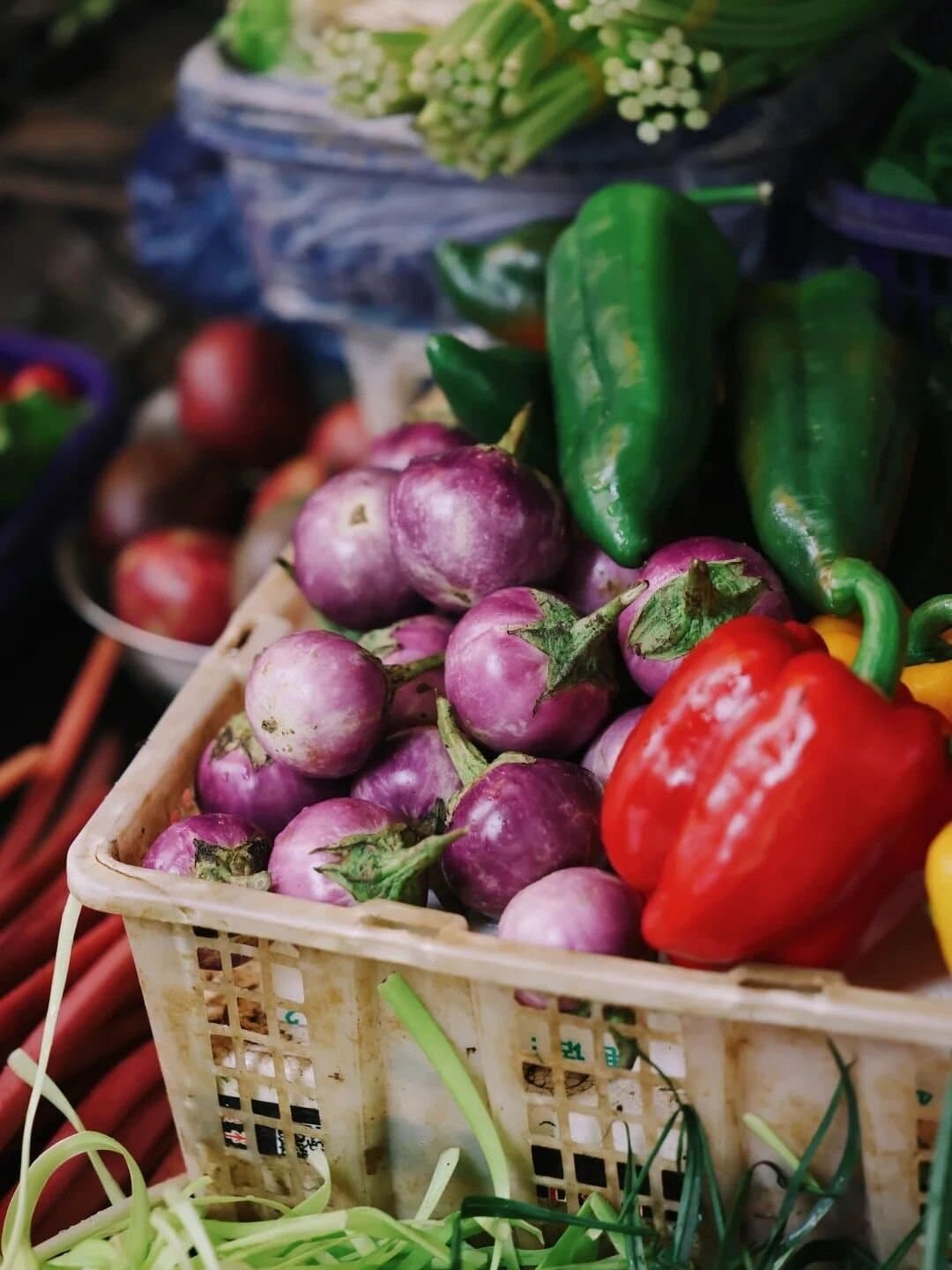
Yunnan is famous for flowers, but its spring vegetables reveal another side of the province: earthy, practical, seasonal, and deeply connected to daily life. After winter, the first tender greens are especially treasured. Fern shoots, Chinese toon buds, fish mint roots, broom flowers, goji leaves, young tree shoots, banana blossoms, and countless local greens begin to fill the markets. Some are bitter. Some are fragrant. Some are crisp. Some look strange at first sight but become unforgettable once cooked by someone who knows them well.
In Yunnan, many people do not separate food from landscape. A plate of stir-fried fern shoots carries the smell of the mountain after rain. A handful of broom flowers fried with egg tastes like a brief yellow spring. Chinese toon mixed with tofu is simple, sharp, and aromatic. Fish mint, loved by locals and feared by some visitors, tastes like the wild edge of the soil itself. To eat spring in Yunnan is to eat what has just returned to life.

Kunming: Spring Begins at Zhuanxin Market
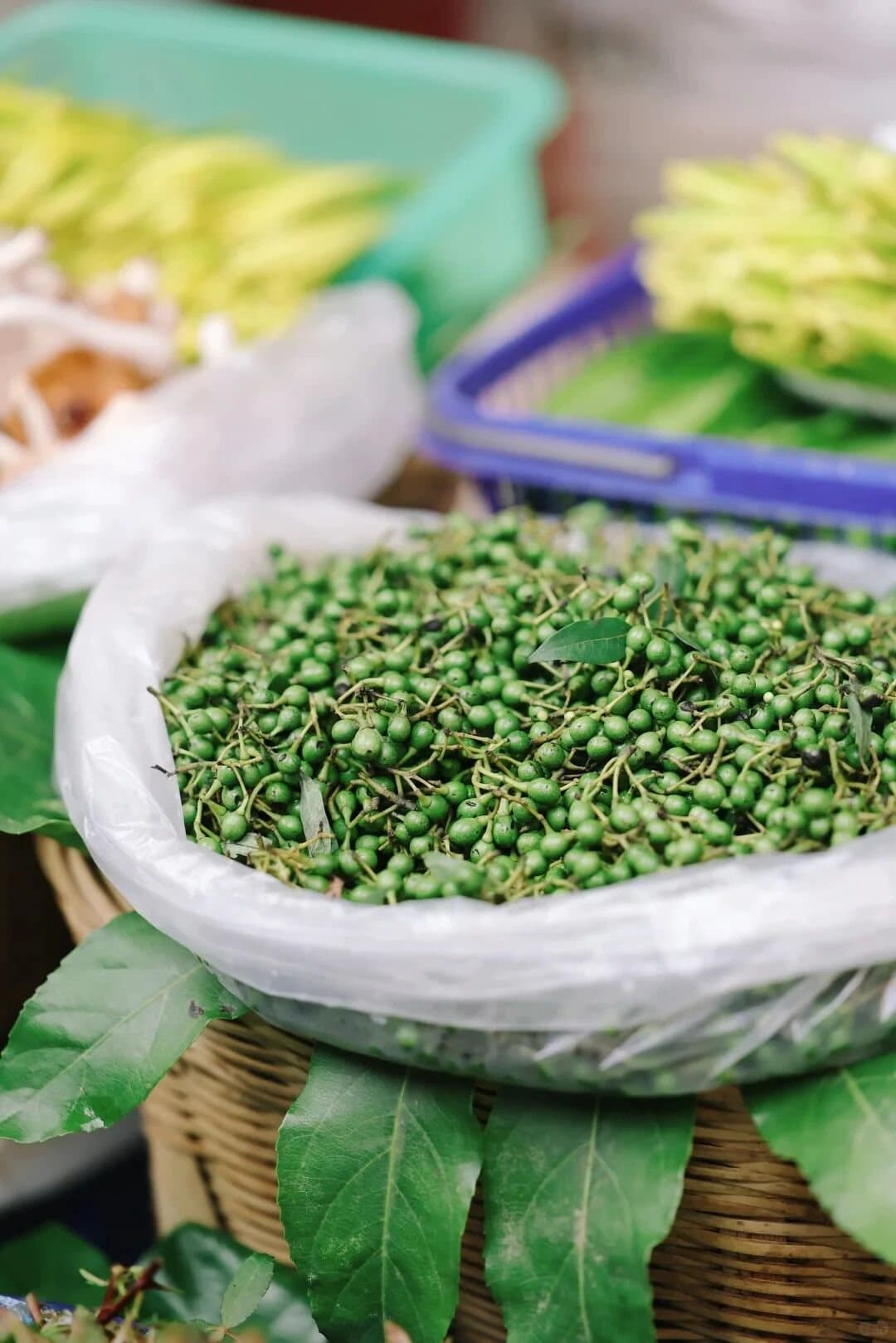
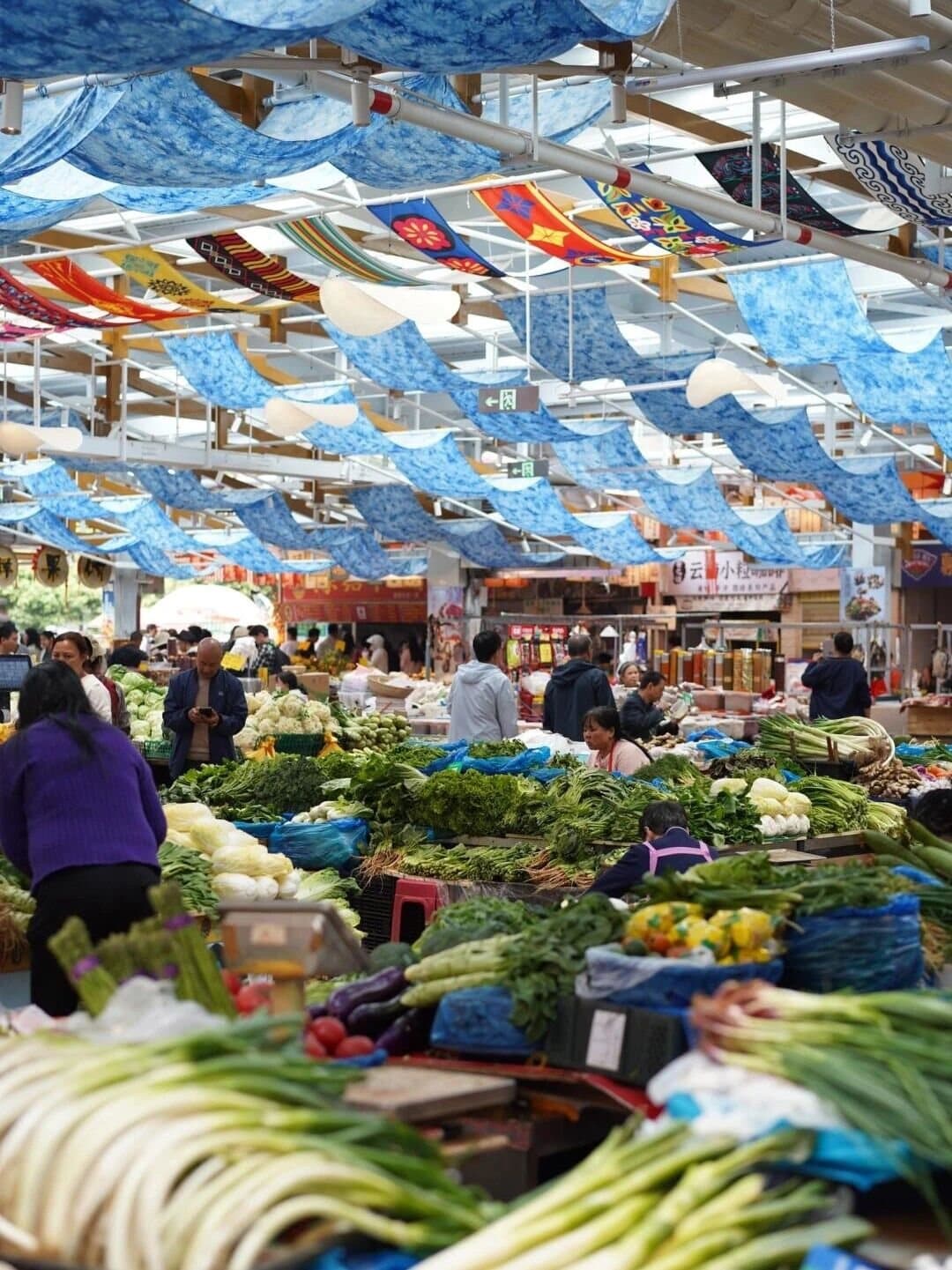
If you only have time for one market in Kunming, go to Zhuanxin Market. This is one of the best places to understand the city. It is crowded, lively, generous, and full of everything. Kunming’s spring does not begin with a tourist brochure. It begins here, among steaming rice noodles, fresh flowers, piles of greens, fruit, pickles, tofu, mushrooms, and breakfast stalls.
At Zhuanxin, the best thing to do is simple: follow the locals. Join a line for a freshly baked Guandu baba, a traditional Yunnan pastry. Stop at a wild vegetable stall and ask the vendor how each green should be cooked. She may tell you that broom flowers are best with eggs, fern shoots should be blanched first, Chinese toon is perfect with tofu, and fish mint should be eaten cold with chili and vinegar.
Then find a small shop for douhua mixian, rice noodles served with soft tofu pudding, and listen to the Kunming dialect rising around you like steam. Zhuanxin is not polished. That is exactly why it is beautiful. It is Kunming at its most alive.
Dali: Buying Flowers With Your Vegetables
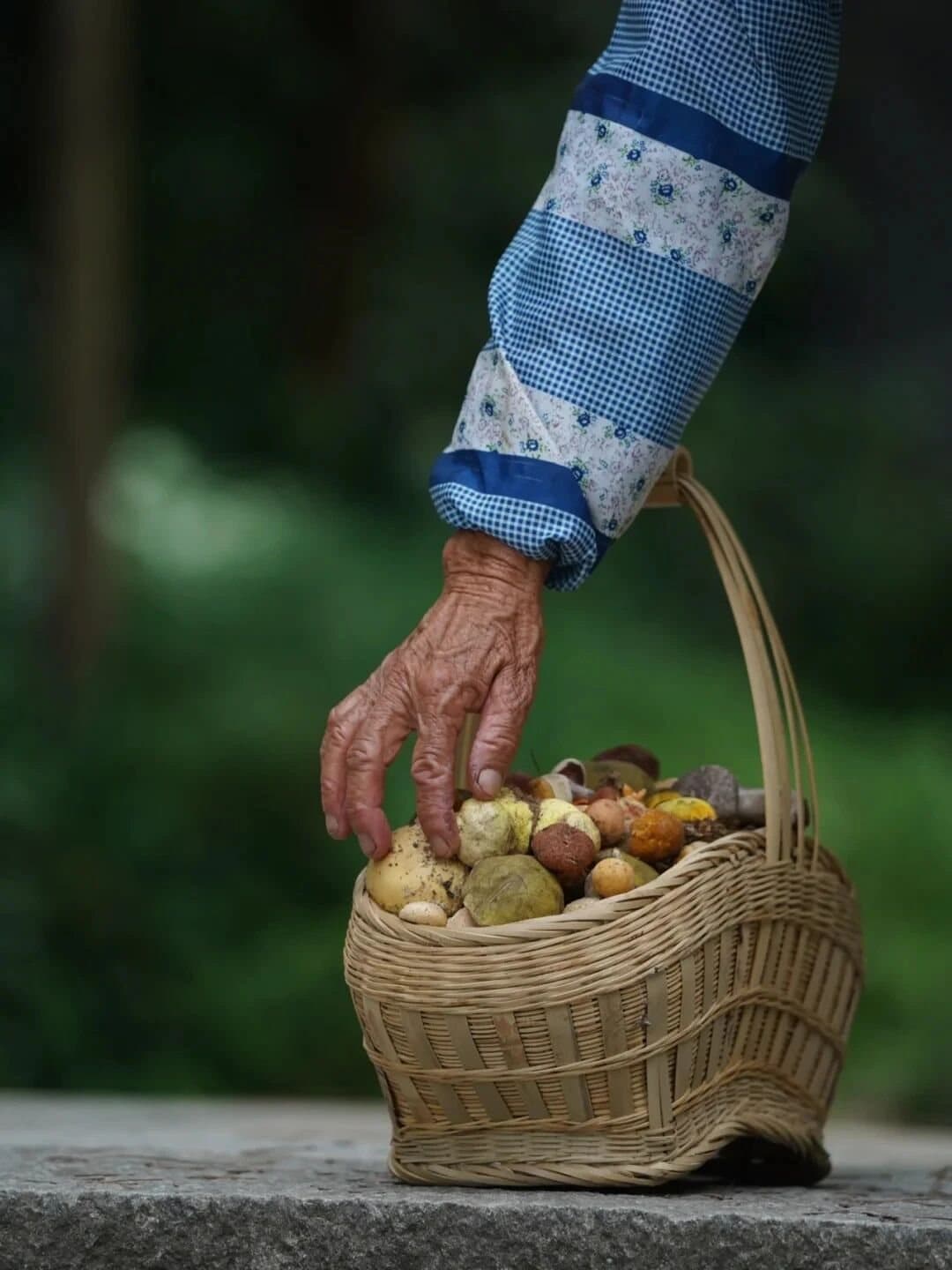
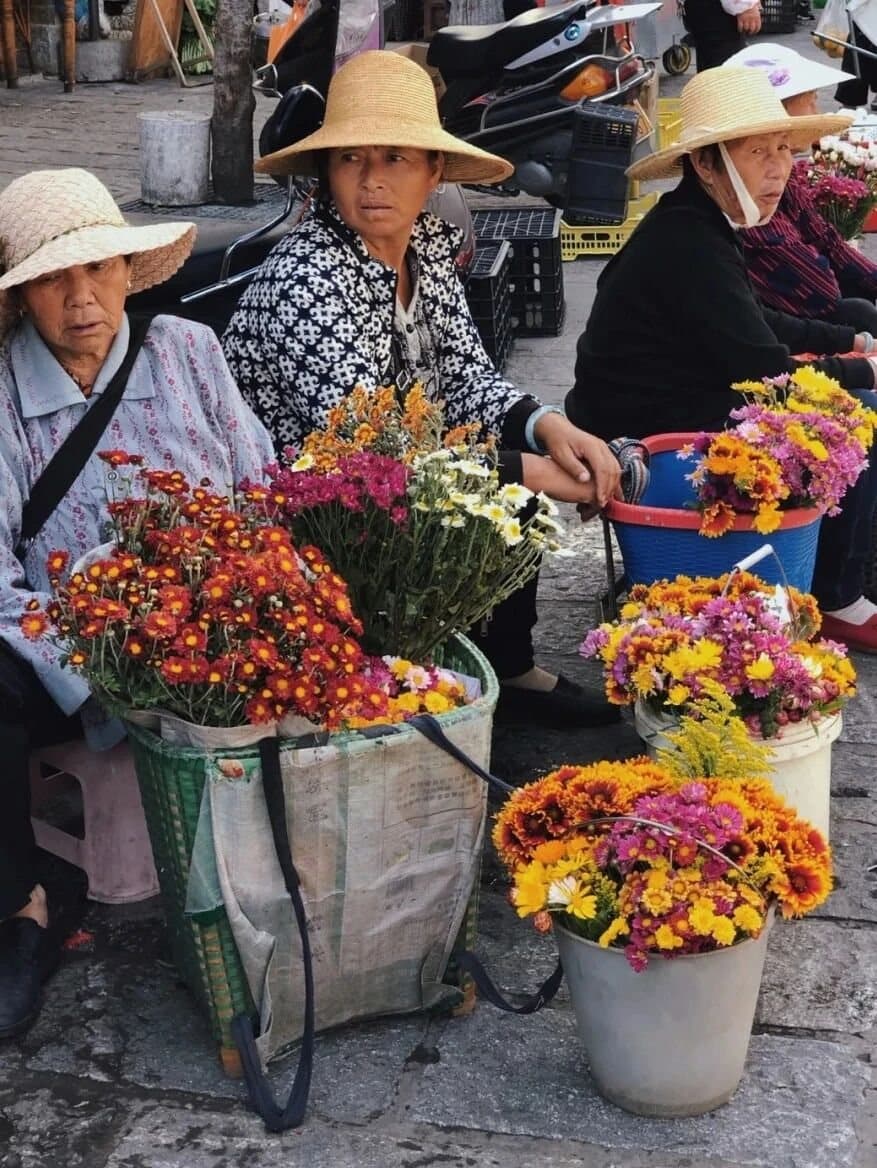
Dali’s markets feel different from Dali Old Town. The old town can be busy with travelers, cafés, and guesthouses. But in the morning markets, especially near the northern gate area, Dali returns to itself. At dawn, Bai grandmothers come down from villages near Cangshan Mountain, carrying baskets on their backs. Inside are vegetables from their own fields, freshly picked peas, muddy roots of fish mint, herbs, flowers, and small seasonal things that may not have names in English.
They do not shout loudly. They simply sit by the roadside with three or five kinds of produce laid out in front of them. Everything looks modest. Everything was likely picked that morning. The most moving part of a Dali market is often the flower stalls at the entrance.
People come to buy vegetables, but they also leave with flowers. Peach branches, plum blossoms, camellias, and seasonal local blooms are sold in generous bundles. A person may carry greens in one hand and flowers in the other, as naturally as if both were necessary for dinner.
In Dali, buying flowers is not a luxury. It is part of daily life. A home without flowers feels incomplete, just as a table without vegetables feels unfinished. If you visit a Dali market in spring, buy a small bunch of local flowers. Eat a bowl of xidoufen, warm pea-flour soup, near the entrance. Watch the mist slowly lift from Cangshan Mountain. Then choose a bundle of spring greens from a Bai grandmother, and ask her how she cooks them at home. That conversation may become your best memory of the morning.
Lijiang: Wild Greens Beneath the Snow Mountain
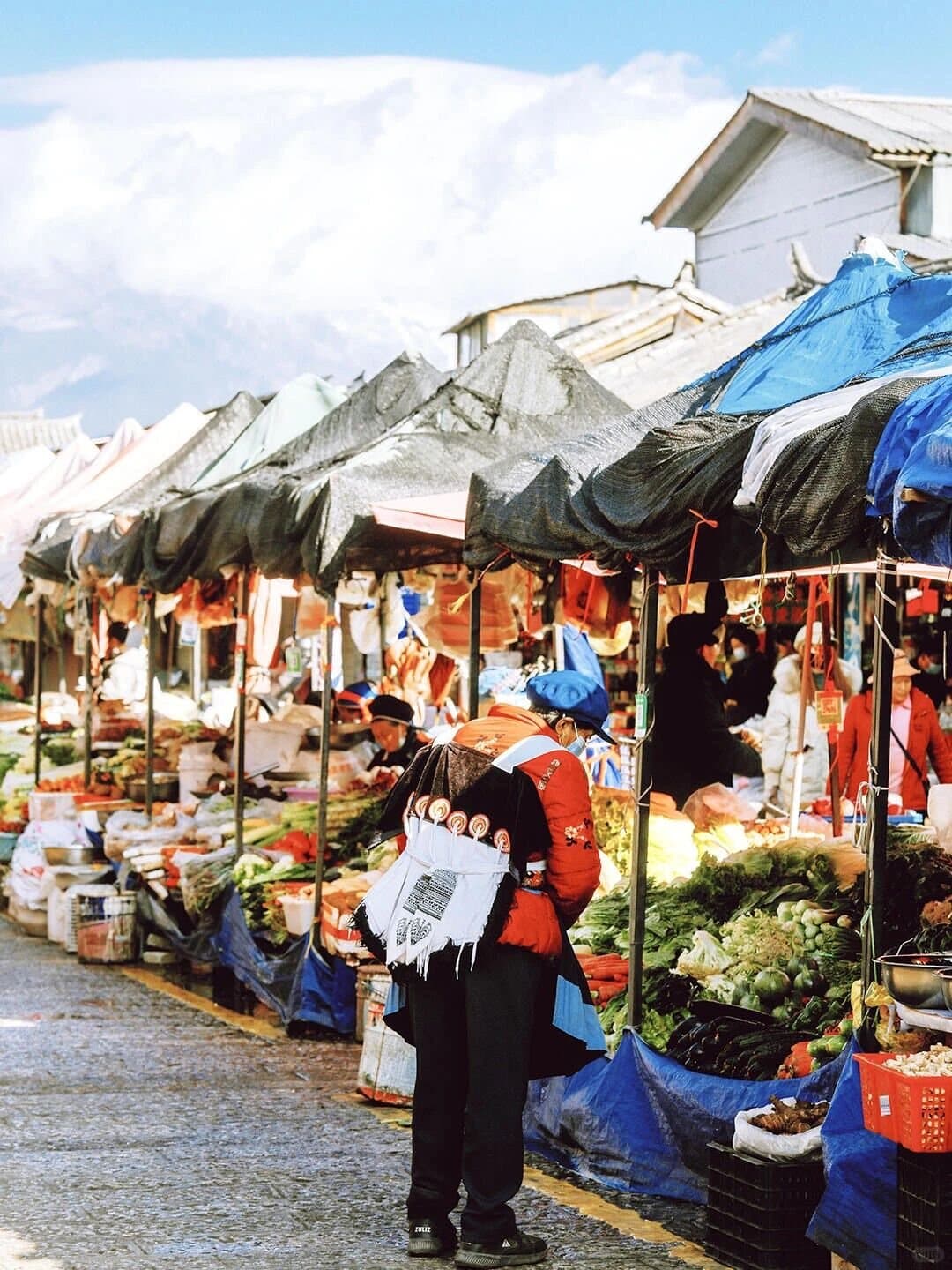
In Lijiang, walk beyond the busy lanes of the old town and enter Zhongyi Market. Here, the scene changes. Above you, if the sky is clear, Jade Dragon Snow Mountain appears in the distance, its white peak shining in the sunlight. Below you, the market is full of voices, smoke, baskets, fruit, meat, flowers, spices, and mountain greens.
In March and April, wild spring vegetables from the surrounding mountains begin to arrive. Local stalls may carry dragon-claw fern, young tree shoots, goji leaves, and greens gathered from higher elevations. Some still seem to carry the coolness of the mountains with them.
The best time to come is early. That is when the freshest produce appears, and when the market feels most local. Buy a freshly baked Lijiang baba and watch how the flatbread turns crisp over the fire. Wander through the vegetable stalls and look for greens you cannot name. Choose a small bundle. Ask how to cook it. Buy some local fruit and eat it as you walk. In Lijiang, spring tastes both bright and cool. Like snowmelt entering the fields.
Jianshui: The Quiet Taste of Caoya
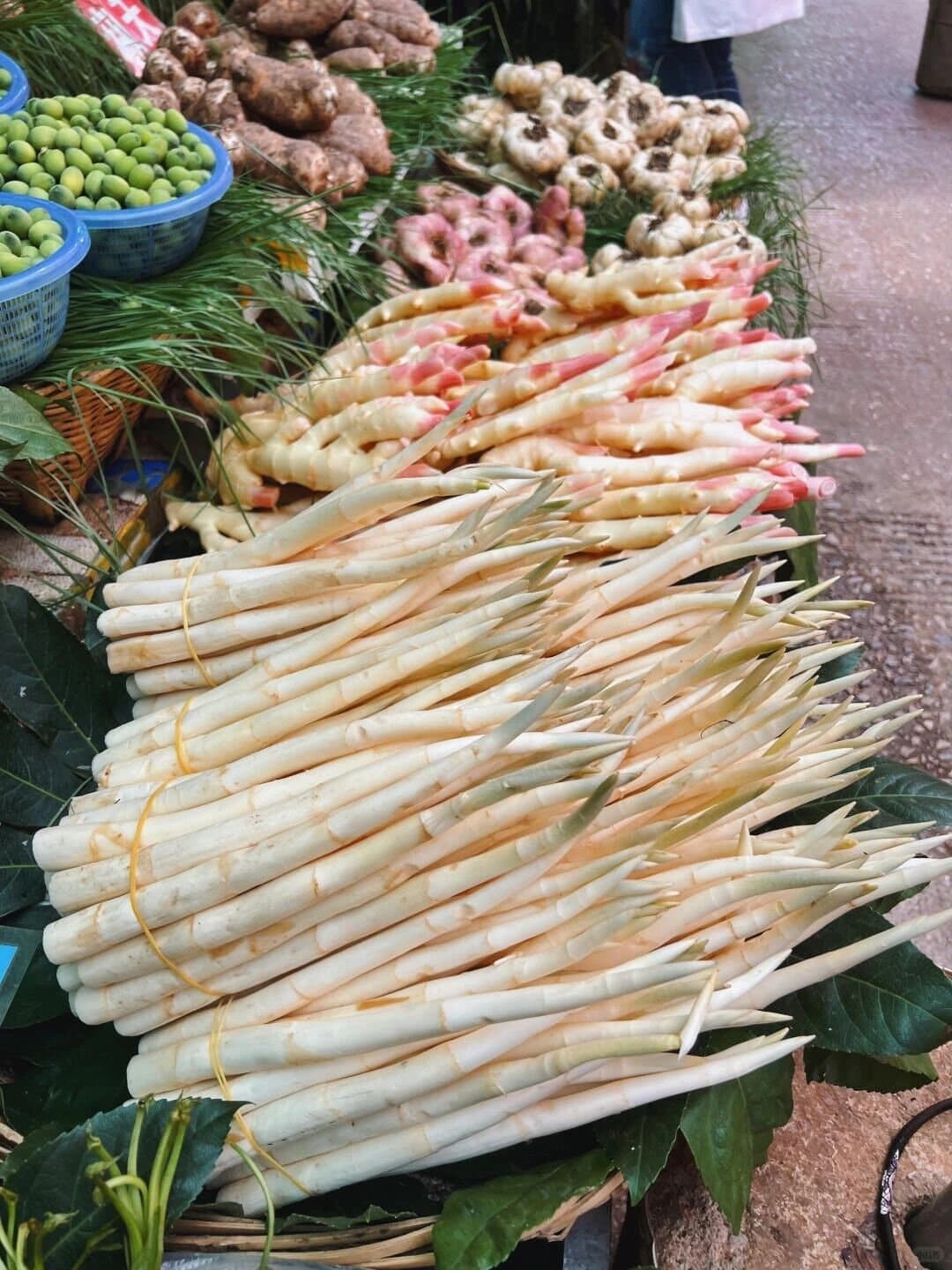
Jianshui’s market culture is quieter, deeper, and less obvious. The old town is known for its wells, tofu, purple pottery, and Confucian heritage, but one of its most interesting spring flavors is hidden in the local markets: caoya. Caoya is a tender aquatic vegetable associated with Jianshui. In spring, it looks pale, crisp, and delicate, almost like a young lotus root. When stir-fried simply, it is fresh, clean, and slightly sweet. One bite feels like opening a window into the season.
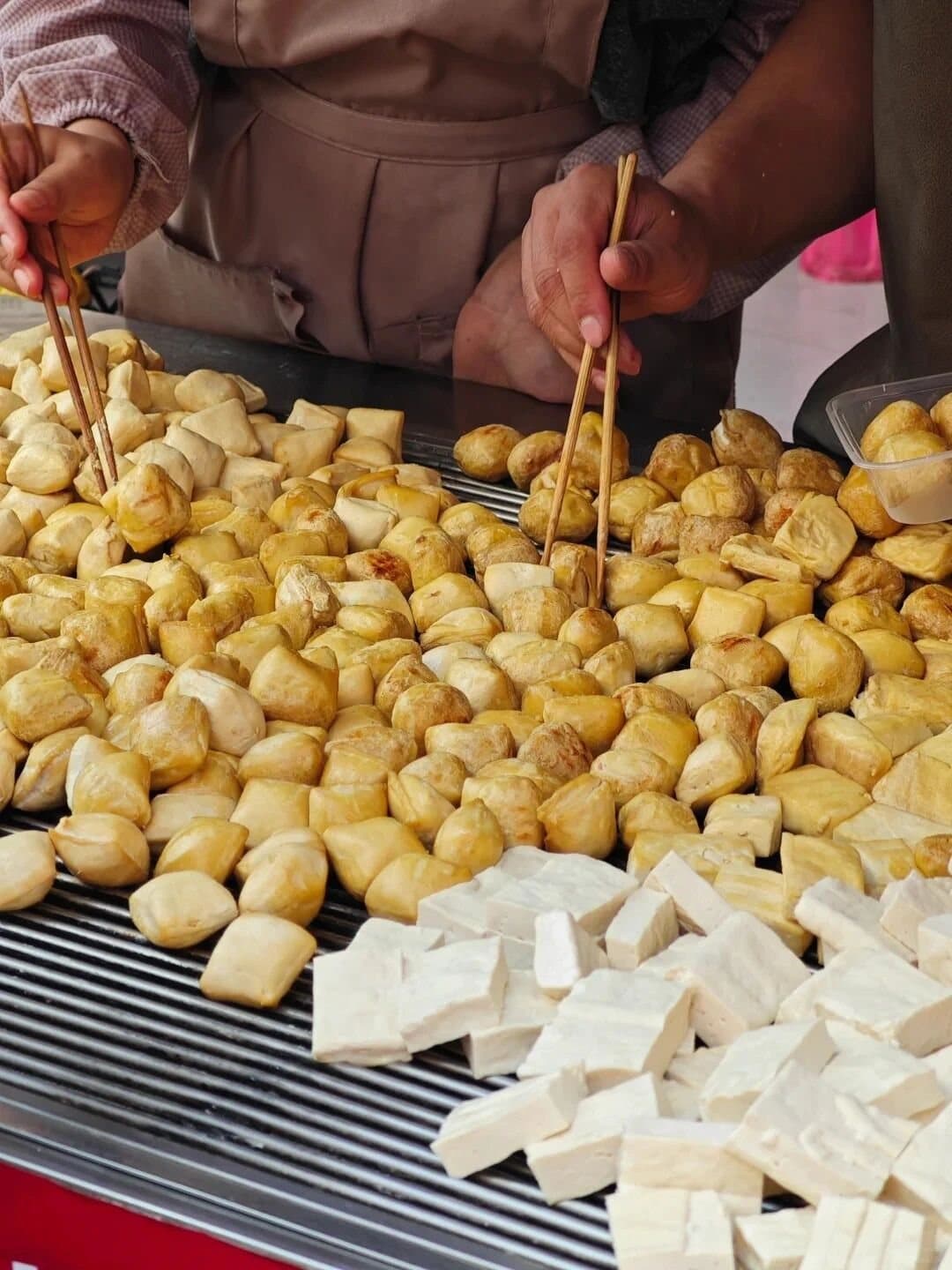
To find it, go toward the market near the west gate area in the morning. The air carries the smell of fresh greens, tofu, smoke, and breakfast. Look for a stall selling caoya and buy a small bundle. Then eat like a local: a bowl of warm porridge with local greens, a plate of Ximen tofu, and a dish of dipping sauce. Watch the tofu slowly puff over charcoal, its skin turning golden while the inside stays soft.
Jianshui does not rush. Its spring is not loud. It is hidden in small bowls, quiet alleys, and the crisp sweetness of something that grows in water.
Pu’er: The Forest Brought Into the Market
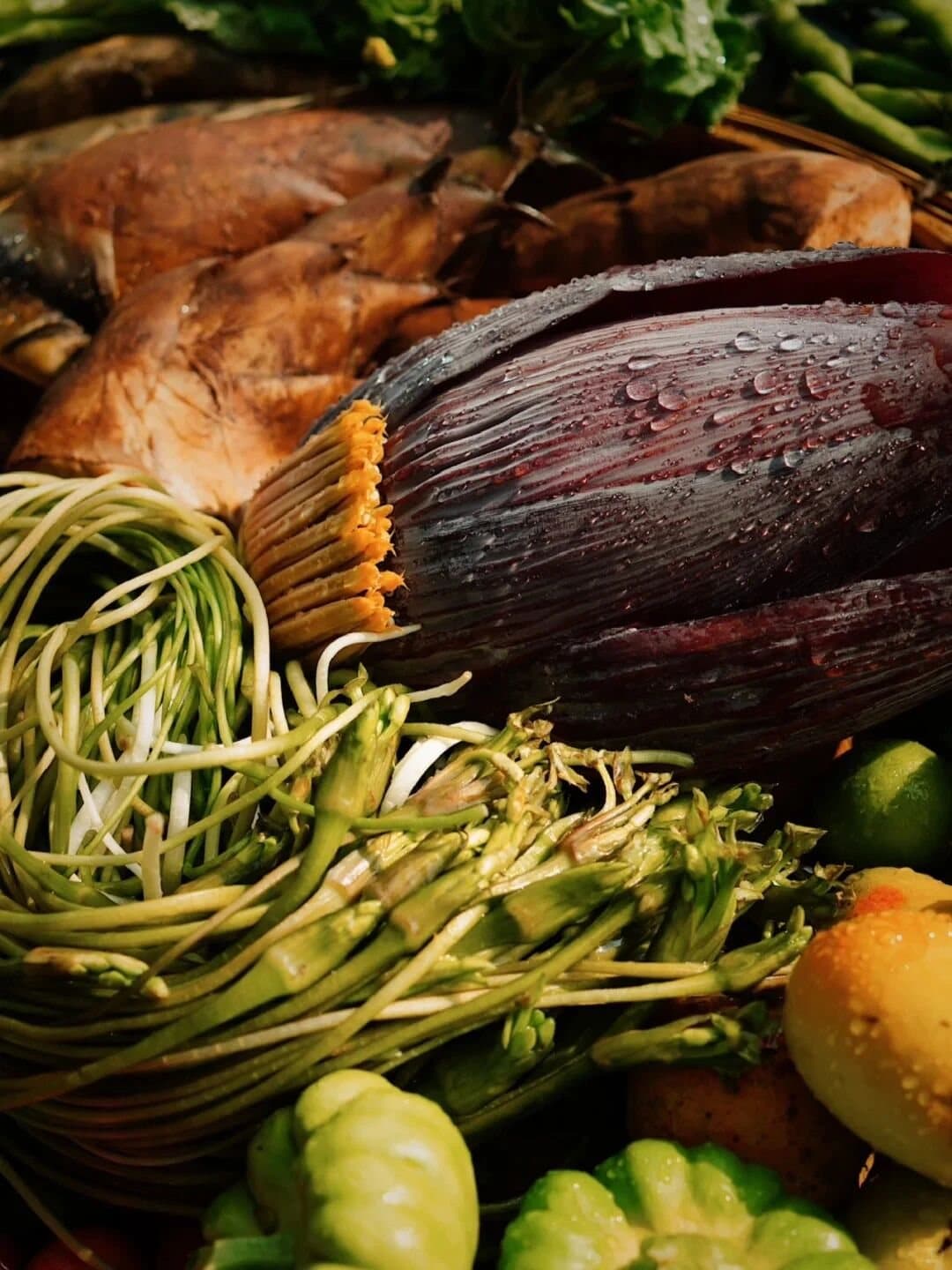
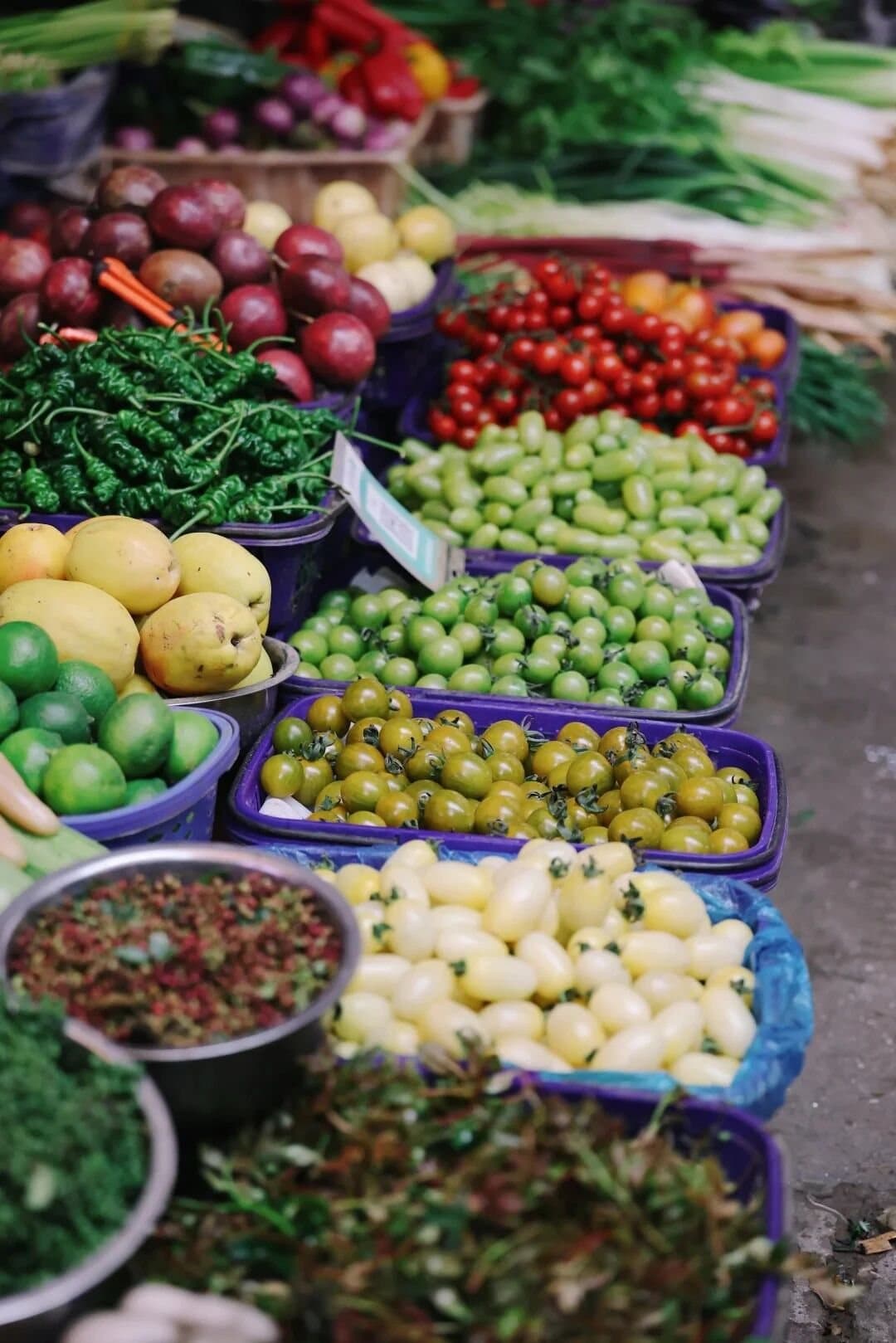
Farther south, in Pu’er, the market feels closer to the forest. Here, the mountain and rainforest seem to arrive directly at the stalls. At Wuyi Market and other local markets, you may see baskets of wild greens, medicinal herbs, edible flowers, banana blossoms, seasonal mushrooms, tree shoots, and plants that are hard to identify if you did not grow up here.
Banana blossoms appear with deep purple-red layers, like a secret still waiting to open. Bitter vine flowers are sold with leaves still attached. Tender shoots from local trees may be used in soup. Other greens are piled on the ground, tied in bundles, or placed in bamboo baskets, carrying the smell of soil, leaves, and rain.
Pu’er is a place where food still feels very close to the mountains. A market visit here is less about checking off famous dishes and more about learning how local people understand plants. What is bitter? What is cooling? What is good in soup? What should be fried with egg? What must be blanched first? What is eaten only for a few weeks each year? Every answer opens a small door into local knowledge.
The Real Spring Is Not Always in the Scenic Spots
Some people love the energy of Zhuanxin Market because it shows Kunming’s everyday life at full volume. Some prefer the quiet rhythm of Jianshui, where spring appears in tofu, porridge, and caoya. Some want to sit in Pu’er’s market and stare at strange forest vegetables while listening to locals explain what each one is used for.
Some are drawn to Dali’s flowers and mountain mist. Some remember Lijiang most clearly in the moment when they look up from a vegetable stall and suddenly see the snow mountain. Each market tells a different story. Together, they reveal something essential about Yunnan: this is a province where food is not separate from season, place, altitude, ethnicity, or memory.
A vegetable is not just a vegetable. It may be a mountain path, a grandmother’s habit, a village recipe, a rainy season, a childhood taste, or a plant that appears for only a few weeks before disappearing again.
How to Visit a Yunnan Market
Go early. Bring cash if you can, though mobile payment is common in China. Do not be afraid to ask questions. Even if you do not speak much Chinese, pointing, smiling, and asking “How do you eat this?” often leads to the most interesting conversations.
Try local breakfast. Buy fruit. Look closely at the flowers. And if you are curious about wild greens, buy them from markets or eat them in trusted local restaurants rather than foraging by yourself. Yunnan’s plant life is rich, but not everything in the mountains is safe to eat without local knowledge.
The best market experiences come with humility. Let the vendors teach you. Let the season guide you. Let the basket decide the day.
Carrying Spring Home
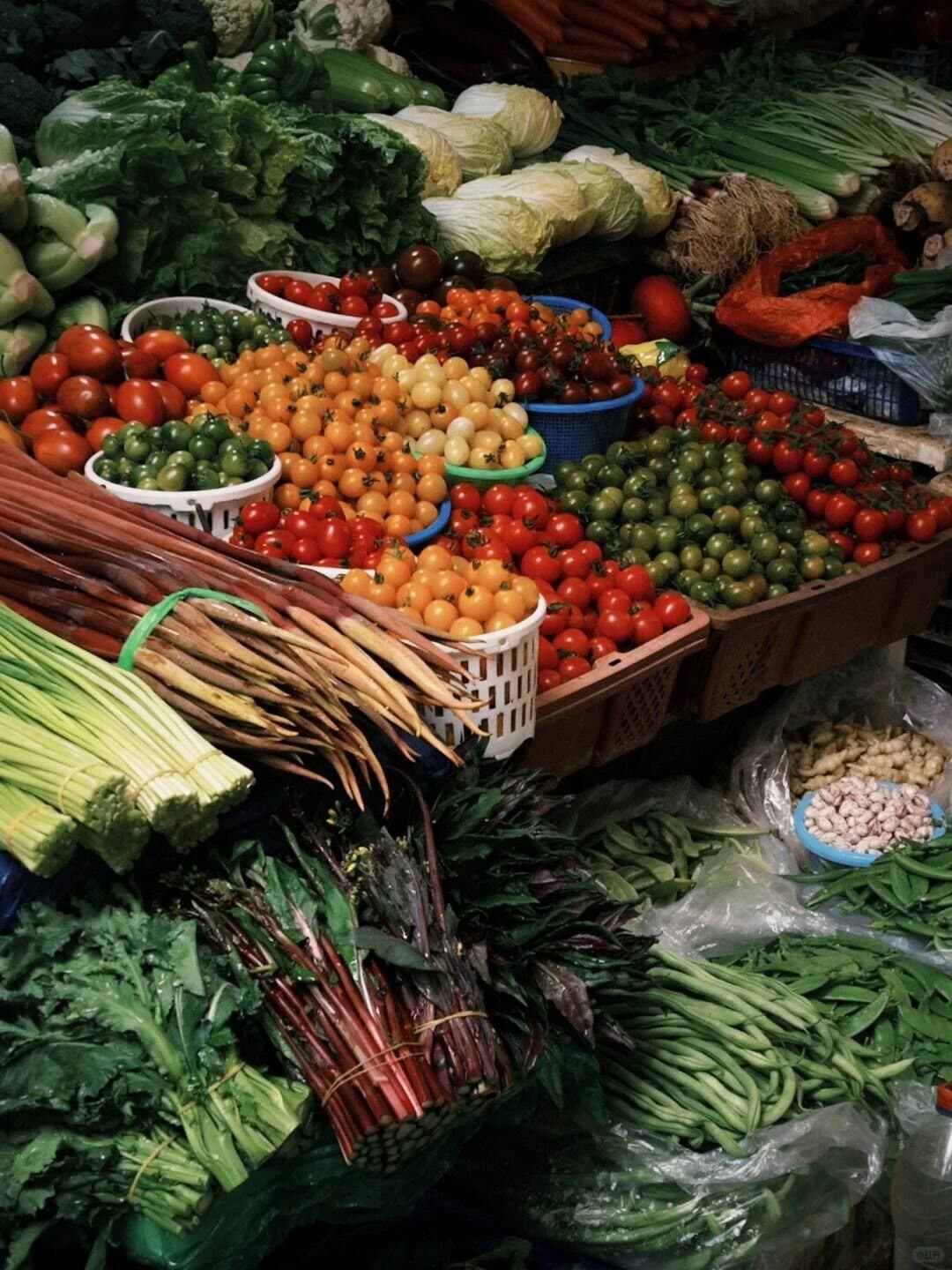
In Yunnan, spring is not only something to see. It is something to hold. A bunch of flowers from Dali. A bundle of wild greens from Kunming. A handful of caoya from Jianshui. A warm Lijiang baba eaten beside the market. A strange forest vegetable from Pu’er whose name you may forget, but whose taste stays with you.
Walk through a Yunnan market in spring, and you leave with more than ingredients. You leave with a sense of how people live with the land. How they wait for the first shoots. How they cook what the season gives. How they turn simple things into daily beauty.
So if you come to Yunnan in spring, slow down. Lower your gaze from the famous mountains and look at the market stalls. The best spring light may not be waiting in a scenic area. It may be resting quietly in a basket of greens. This guide is only a beginning. The rest is waiting for you to discover it, one market, one question, and one bite at a time.